HIGHLIGHTS
- Joby Aviation drew crowds at SF Air Show, signaling sustained market interest in commercial air taxi services despite industry-wide regulatory and infrastructure hurdles.
- Air taxi operations require federal certification, vertiport construction, and airspace management systems—creating challenges Tesla’s ground vehicles never faced.
- Commercial air taxi services are targeted for late 2020s/early 2030s launches in major cities at premium pricing, with profitability still uncertain.
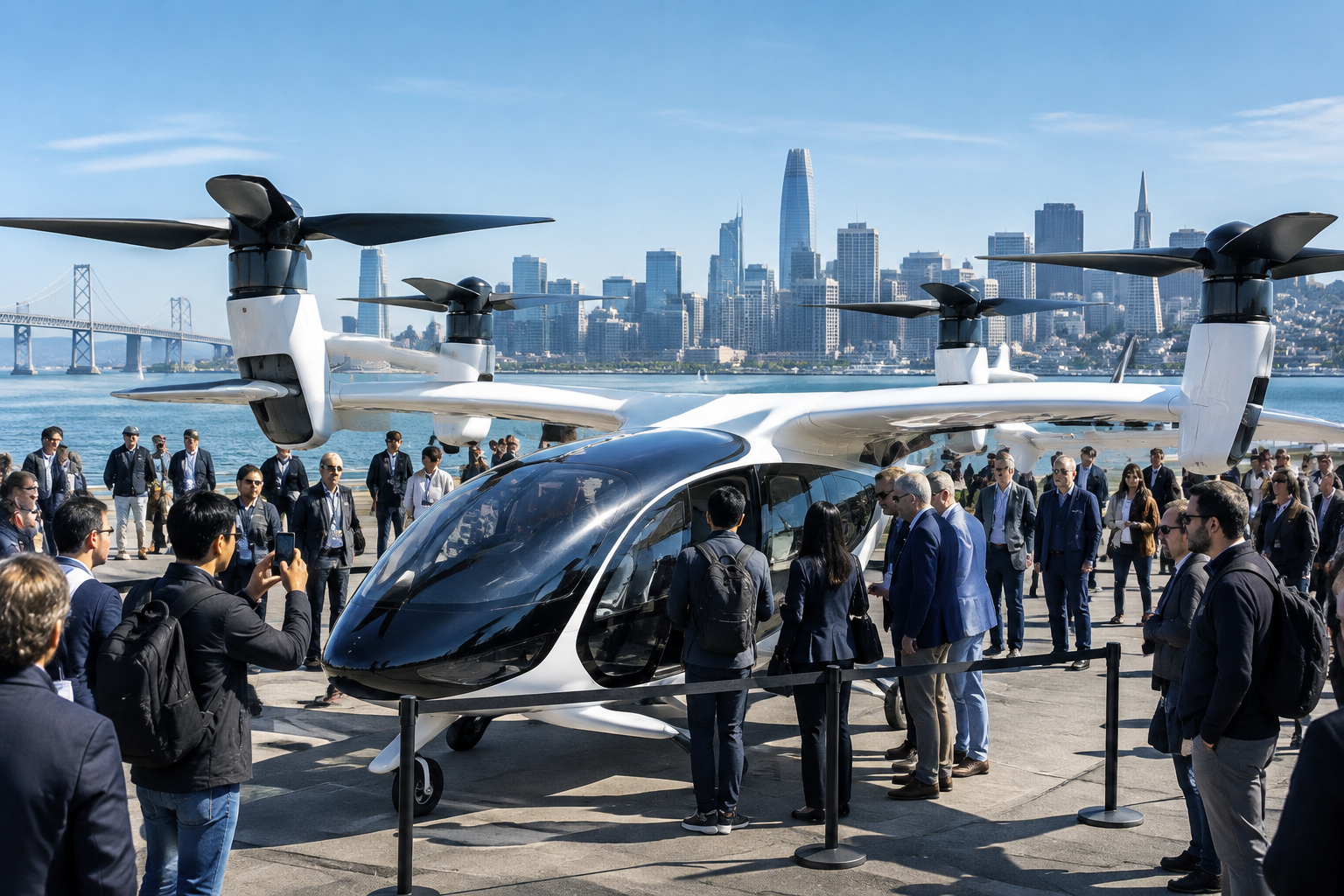
The San Francisco Air Show became a spotlight for the emerging urban air mobility sector, with Joby Aviation commanding significant attention from industry professionals and aviation enthusiasts. While Tesla continues to dominate headlines with its electric vehicle success, the air taxi market faces a critical juncture between consumer excitement and regulatory realities. Joby’s prominent presence at the expo underscores the company’s determination to position itself as a leading player in personal air mobility, even as the industry navigates complex certification and infrastructure challenges.
Joby’s San Francisco Showcase: A Bold Statement
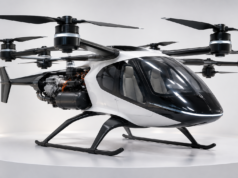
Joby Aviation’s decision to highlight its technology at the San Francisco Air Show represents a strategic move to build public awareness and investor confidence in electric vertical takeoff and landing (eVTOL) aircraft. The company’s presence drew substantial crowds, demonstrating genuine public interest in air taxi solutions for congested urban corridors. The exhibition provided Joby with a platform to showcase its full-scale aircraft and explain its path to commercial operations in major metropolitan areas.
The crowds at Joby’s booth reflected broader curiosity about how personal air mobility could reshape urban transportation. Visitors had the opportunity to learn about the company’s safety systems, battery technology, and operational model. This direct engagement with potential customers and stakeholders proved invaluable for building the brand recognition necessary to support eventual commercial launches.
Beyond product displays, Joby used the air show to reinforce its messaging about reducing urban congestion and offering premium transportation alternatives. The company’s focus on San Francisco specifically is significant, as the region has been identified as a potential early market for air taxi services. Building local support and awareness now establishes crucial groundwork for future commercial operations.
Tesla’s EV Dominance vs. Air Taxi Reality
While Tesla continues to capture mainstream attention and investor excitement through its electric vehicle achievements, the air taxi sector operates in a fundamentally different regulatory and operational environment. Tesla’s rapid market penetration and profitability contrasts sharply with the lengthy, costly path Joby and competitors face toward commercial certification. This disparity highlights the distinct challenges of scaling aviation technology compared to ground vehicles.
Tesla’s success has undoubtedly elevated awareness of electric propulsion and battery technology—areas critical to eVTOL development. However, aviation requires significantly more stringent safety certification, pilot training, and infrastructure development before passenger operations can commence. The general public may draw misleading parallels between Tesla’s rapid commercialization and expectations for air taxi timelines, potentially creating unrealistic market forecasts.
Industry observers note that while ground-based EVs benefit from existing highways and charging infrastructure, air taxis require entirely new traffic management systems, vertiport facilities, and regulatory frameworks. Joby’s challenge, therefore, extends far beyond aircraft design—the company must simultaneously build operational infrastructure and navigate federal approval processes that Tesla avoided entering ground vehicle markets.
Market Expansion Challenges Ahead
The air taxi industry faces significant hurdles before widespread commercial operations become reality. Current estimates suggest passenger services could begin in major cities by the late 2020s or early 2030s, but only in limited routes with premium pricing. Regulatory agencies, including the FAA, are developing certification standards for eVTOL aircraft, yet many operational questions remain unresolved regarding noise, airspace management, and emergency procedures.
Infrastructure represents another substantial barrier to rapid market expansion. Vertiports—specialized landing facilities for air taxis—require significant capital investment and must be strategically located near population centers and major transportation hubs. Most cities currently lack even preliminary vertiport development, meaning infrastructure construction must occur in parallel with aircraft certification and training programs.
Financial sustainability poses a third critical challenge. Air taxi services are projected to operate at premium price points, similar to helicopter charters, during their initial commercial phases. Building sufficient demand at higher price points remains uncertain, particularly if service areas are geographically limited. Joby and competitors must demonstrate sustained demand and regulatory approval before investors commit the capital necessary for large-scale operations.
The Road to Commercial Operations
Joby Aviation has positioned itself as the leading candidate for early commercial air taxi operations, with the company targeting service launches in major markets including San Francisco. The company has secured significant venture capital funding and strategic partnerships with regional transportation authorities. These relationships suggest growing confidence in Joby’s technical approach and business model, though regulatory uncertainty remains substantial.
The company’s participation in the San Francisco Air Show exemplifies its strategy of building stakeholder confidence through transparent communication and technology demonstration. By engaging directly with the public and industry professionals, Joby seeks to normalize air taxi concepts and build political support for necessary vertiport and infrastructure development. This grassroots approach complements its federal regulatory engagement efforts.
Success for Joby depends on multiple factors aligning simultaneously: aircraft certification approval, infrastructure construction, pilot training programs, and sustained public demand. The company has demonstrated technical progress and secured financial backing, yet the timeline to profitability remains highly uncertain. Industry analysts suggest that commercial viability will not be confirmed until actual passenger operations generate revenue data from early-market cities.
Industry Implications and Market Outlook
Joby’s prominence at the San Francisco Air Show signals that major players in urban air mobility remain committed to commercialization despite extended timelines and regulatory complexity. Competitor companies, including Archer Aviation and Lilium, are pursuing similar strategies of public engagement and stakeholder alignment. This competitive pressure may accelerate industry development, as companies race to secure regulatory approval and early market positions.
The air taxi sector could eventually transform urban transportation patterns in ways comparable to ride-sharing disruption over the past decade. However, the path to that outcome requires successfully addressing technical, regulatory, and economic challenges that remain partially unsolved. Joby’s continued investment in public visibility and stakeholder engagement suggests management confidence in ultimate commercial success, despite near-term uncertainties.
For potential investors and transportation planners, Joby’s SF Air Show presence reinforces the reality that air taxi operations are approaching commercialization, even if widespread deployment remains years away. The company’s strategy combines technical advancement with strategic communications, recognizing that public acceptance and regulatory approval require simultaneous progress. As the air mobility sector matures, companies like Joby must continue demonstrating both technical capability and business acumen to ultimately succeed in this emerging market.
Key Takeaways
- Joby Aviation drew significant crowds at the San Francisco Air Show, demonstrating sustained public and investor interest in commercial air taxi operations despite regulatory and infrastructure challenges.
- The air taxi market faces distinct hurdles compared to ground-based EVs like Tesla vehicles, requiring federal certification, vertiport construction, and new airspace management systems before commercial viability.
- Early commercial operations are targeted for the late 2020s or early 2030s in major cities at premium price points, with Joby positioned as a leading candidate but facing substantial financial and regulatory uncertainty.
The intersection of public enthusiasm, technological capability, and regulatory reality will determine whether air taxi services like those developed by Joby Aviation reshape urban transportation as optimistically envisioned. The San Francisco Air Show demonstrated clear public interest, but commercial success requires solving complex operational and infrastructure challenges that extend far beyond aircraft design and manufacturing efficiency.