HIGHLIGHTS
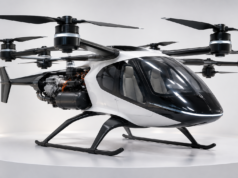
- Indian startup Nalwa successfully completed the first flight of its subscale box-wing eVTOL, marking a major breakthrough for India’s emerging air mobility sector.
- The innovative box-wing design reduces drag, improves structural efficiency, and enables distributed propulsion—critical advantages for urban air mobility applications.
- Nalwa’s achievement positions India as a competitive player in the global eVTOL market and could accelerate indigenous aerospace development across emerging economies.
India’s emerging air mobility sector reached a significant milestone as startup Nalwa successfully completed the first flight of its subscale box-wing electric vertical takeoff and landing (eVTOL) aircraft. This achievement represents a major breakthrough for the Indian aerospace industry and demonstrates the country’s growing capabilities in advanced aviation technology development. The successful test flight validates Nalwa’s innovative box-wing design philosophy and positions the startup as a serious contender in the global personal air mobility market.
Nalwa’s Box-Wing Design Innovation
Nalwa’s subscale eVTOL features a distinctive box-wing configuration, a design approach that offers significant advantages over traditional aircraft layouts. The box-wing design integrates the fuselage with the wings, creating a structure that is inherently more efficient and capable of generating lift from multiple surfaces simultaneously. This configuration reduces drag, improves structural efficiency, and allows for better weight distribution across the airframe, ultimately enhancing overall performance metrics.
The box-wing architecture also provides practical advantages for urban air mobility applications. The design naturally accommodates distributed propulsion systems, which are crucial for eVTOL safety and efficiency. By placing electric motors at strategic points along the wing structure, Nalwa can optimize thrust vectoring and achieve smooth transitions between vertical and horizontal flight phases—a critical capability for urban operations where precision and controllability are paramount.
Indian aerospace engineers at Nalwa have spent considerable time refining the aerodynamic characteristics of the box-wing configuration through computational fluid dynamics simulations and wind tunnel testing. The successful subscale flight represents the culmination of these efforts and provides valuable real-world data that will inform the design of full-scale prototypes. This iterative approach, moving from subscale to full-scale development, is the industry standard for de-risking ambitious aircraft projects.
Significance for India’s Air Mobility Ecosystem
The successful Nalwa flight test occurs amid growing international interest in developing domestic eVTOL capabilities. India has recognized that personal air mobility represents both an economic opportunity and a solution to urban congestion challenges. The government has been gradually building regulatory frameworks and encouraging domestic innovation through research grants and policy initiatives that support aerospace startups like Nalwa.
Nalwa’s achievement demonstrates that India possesses the engineering talent, manufacturing infrastructure, and entrepreneurial spirit necessary to compete in advanced aviation sectors. The startup’s success may inspire additional investment in the Indian eVTOL space and attract international partnerships that could accelerate technology transfer and market development. As urban congestion intensifies across major Indian cities, homegrown air mobility solutions become increasingly valuable from both economic and social perspectives.
The presence of successful eVTOL startups in India also strengthens the nation’s position in international aviation forums and regulatory discussions. As India develops its own certified aircraft, the country gains a seat at the table when global standards and best practices are being established. This influence is crucial for ensuring that international regulations account for regional characteristics and support innovation across diverse markets, not just wealthy Western nations.
Technical Achievements and Flight Test Milestones
The subscale flight test of Nalwa’s box-wing eVTOL represents the successful demonstration of several critical technologies working together seamlessly. The aircraft must autonomously manage battery power distribution across multiple electric motor systems, maintain stable flight control during transitions between vertical and horizontal regimes, and execute precise maneuvering in response to pilot inputs or autonomous guidance commands. Each of these systems performed as designed during the test flight, validating months of engineering and simulation work.
Subscale test flights serve multiple engineering purposes beyond simply proving that the basic design can fly. These flights generate detailed flight data—including thrust characteristics, aerodynamic behavior, control surface effectiveness, and structural response—that engineers use to refine computational models and predict full-scale performance. The data collected during Nalwa’s subscale flight will be invaluable for designing systems, conducting risk assessments, and identifying optimization opportunities for the next development phase.
The successful subscale flight also demonstrates that Nalwa’s regulatory approach has merit. Working with Indian aviation authorities, the company has developed a certification pathway that acknowledges the unique characteristics of eVTOL aircraft and box-wing designs. This collaborative approach between innovators and regulators is essential for advancing the entire industry, as it creates precedent for how novel aircraft designs can be safely certified and integrated into national airspace.
Future Development and Market Potential
With the subscale flight successfully completed, Nalwa can now advance toward full-scale prototype development. The company’s roadmap likely includes building a full-scale technology demonstrator that will undergo more extensive flight testing, durability validation, and operational envelope exploration. These tests will generate the evidence base necessary for formal certification applications with India’s Directorate General of Civil Aviation (DGCA) and potentially the European Union Aviation Safety Agency (EASA) for international market access.
The timeline from subscale success to certified commercial service typically spans several years and requires significant capital investment. Nalwa will need to secure additional funding—through venture capital, strategic investments, or government support programs—to finance the development, certification, and initial production phases. The startup’s demonstrated technical capability provides a compelling investment proposition, as it reduces the risk perceived by potential backers who might have been skeptical of the box-wing concept.
Looking at the broader market opportunity, India’s air mobility sector could potentially address transportation challenges in ways that complement existing infrastructure. Cities like Bangalore, Mumbai, and Delhi face severe traffic congestion, making advanced transportation solutions economically attractive. If Nalwa can develop a certified, affordable eVTOL aircraft tailored to Indian operating conditions and cost structures, the company could secure a substantial domestic market while also competing globally with international manufacturers.
Key Technical and Market Takeaways
- Nalwa’s subscale box-wing eVTOL demonstrated successful autonomous flight with all critical systems performing within design parameters, validating the innovative design approach for Indian air mobility applications
- The flight test generates essential aerodynamic and structural data that will directly inform full-scale prototype development and regulatory certification pathways with DGCA and international authorities
- India’s emerging eVTOL ecosystem, exemplified by Nalwa’s progress, positions the nation as a serious competitor in the global personal air mobility market with unique advantages in cost-efficiency and talent availability
Nalwa’s successful subscale eVTOL flight represents far more than a single company achievement—it signals India’s arrival as a meaningful player in the advanced air mobility revolution. The flight validates the box-wing design philosophy while simultaneously demonstrating that Indian engineering talent can deliver world-class aerospace innovation. As Nalwa progresses toward full-scale development and eventual certification, the company’s journey will serve as a template for how emerging economies can build indigenous capabilities in cutting-edge transportation technology rather than simply importing solutions from established aerospace powers. The global air mobility sector should watch this development closely, as successful Indian eVTOL programs could reshape competition dynamics and accelerate worldwide adoption of personal air mobility.