HIGHLIGHTS
- Joby is ramping production to support its upcoming eVTOL pilot program, signaling confidence in imminent regulatory approval and commercialization.
- The production acceleration demonstrates Joby has achieved technical maturity and manufacturing capability to scale safely while maintaining aviation standards.
- The move sets industry tempo for eVTOL commercialization, suggesting commercial air mobility services could launch within 18-24 months.
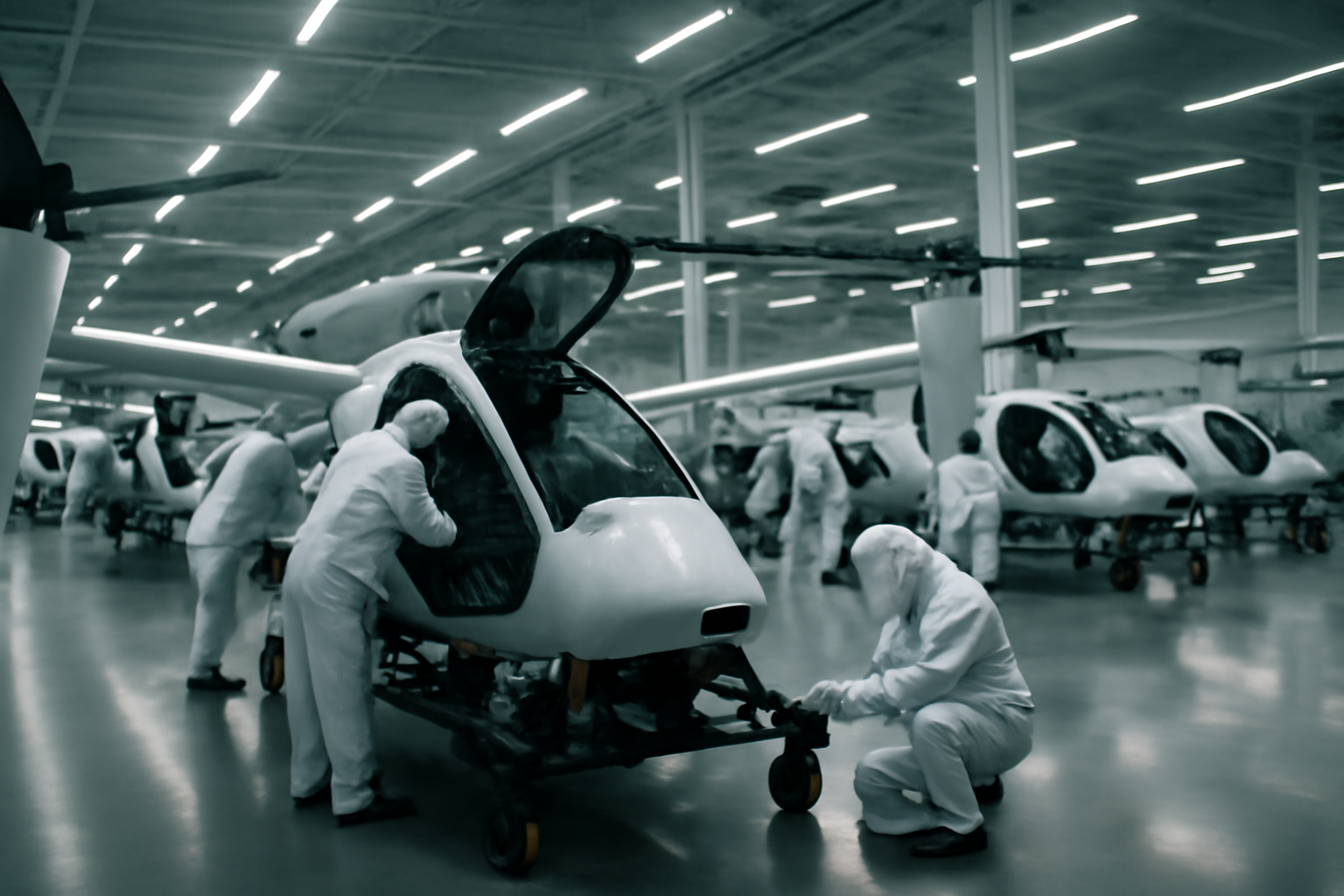
Joby Aviation is making bold moves to scale up its aircraft production capabilities as it prepares for its highly anticipated eVTOL pilot program. The company’s decision to accelerate manufacturing comes at a critical moment for the personal air mobility industry, signaling confidence in near-term commercialization and regulatory approval. This production ramp represents one of the most significant steps forward for Joby since its transition to becoming a public company, and it underscores the growing viability of electric vertical takeoff and landing vehicles as a legitimate transportation solution.
Accelerating Production to Meet Pilot Program Demands
Joby’s acceleration of aircraft production is a strategic response to the timeline requirements of its upcoming pilot program. The company has recognized that having sufficient aircraft on hand is essential for demonstrating operational capability to regulators and potential customers. By ramping up manufacturing now, Joby positions itself to conduct comprehensive testing and operations during the pilot phase, gathering critical data on safety, efficiency, and passenger experience.
The production increase also reflects confidence in Joby’s engineering and manufacturing processes. The company has invested heavily in developing efficient production techniques for its electric vertical takeoff aircraft, and scaling production demonstrates that these processes are mature enough to handle higher volumes. This is a significant milestone for an aircraft manufacturer that has historically produced components in smaller quantities for testing and certification purposes.
Market observers view this move as a sign that Joby expects regulatory approval timelines to accelerate. The company’s willingness to invest in expanded production capacity suggests internal projections indicate commercialization is within reach in the near term, likely within the next 18 to 24 months. This aggressive posture contrasts with some competitors who are taking more cautious approaches to manufacturing scale-up.
Strategic Importance of the Pilot Program
The eVTOL pilot program represents a crucial milestone for Joby and the broader industry. These demonstrations will provide real-world operational data in controlled environments, helping regulatory authorities understand how electric vertical takeoff aircraft perform under actual flight conditions. The pilot will likely include multiple flights with paying passengers, market trials in specific geographic regions, and integration with existing aviation infrastructure.
For Joby specifically, the pilot program is an opportunity to showcase the maturity and reliability of its aircraft design. Successful execution could accelerate regulatory approval processes and build investor confidence in the commercial viability of the eVTOL market. The data gathered during the pilot will be invaluable for addressing any remaining regulatory concerns and for refining operational procedures before full commercialization.
The program also serves as a public relations and market education initiative. By conducting visible, safe, and successful flights with passengers, Joby can build consumer confidence in electric air mobility technology. This public demonstration effect is often underestimated but is critical for developing the regulatory and consumer acceptance necessary for widespread adoption of eVTOL services.
Industry Implications and Competitive Positioning
Joby’s production acceleration sends a clear signal to the broader eVTOL market about the timeline for commercialization. The company has emerged as one of the most advanced programs globally, with strong backing from investors and strategic partners. Its willingness to commit manufacturing resources at this stage suggests the company has high confidence in both its technology and its ability to secure necessary regulatory approvals.
This move also puts pressure on Joby’s competitors to demonstrate similar levels of readiness. Other eVTOL developers will need to show comparable progress in manufacturing scale-up, certification pathways, and pilot program preparations. Joby’s aggressive approach essentially sets a new tempo for the industry, raising expectations about when commercial eVTOL services will actually launch.
The production ramp may also have supply chain implications across the aerospace and aviation technology sectors. As Joby expands manufacturing, it will place increased demand on suppliers of batteries, electrical systems, composites, and avionics. This could drive innovation and efficiency improvements throughout the supply chain while also potentially creating bottlenecks if suppliers cannot scale at the same pace.
Technical and Operational Readiness
Joby’s ability to accelerate production demonstrates that the company has achieved a level of technical maturity and manufacturing confidence that justifies increased output. The aircraft design has been refined through extensive testing, and the company has established quality control processes necessary for scaling up. This is particularly important in aviation, where safety and reliability are non-negotiable requirements.
The production acceleration also indicates that Joby has likely addressed major technical challenges related to battery performance, electric propulsion systems, structural integrity, and aerodynamic efficiency. These are complex engineering problems, and demonstrating readiness to move from small-batch production to higher-volume manufacturing suggests solutions have been validated. The pilot program will provide the final testing ground before full commercialization.
Operational readiness extends beyond just building the aircraft. Joby will need to develop and train pilots, maintenance technicians, and ground operations personnel. The production ramp must be coordinated with human capital development and infrastructure preparation to ensure that increased aircraft availability translates into actual operational capability when the pilot program begins.
Key Takeaways from Joby’s Production Acceleration
- Joby Aviation is significantly ramping up aircraft production in preparation for its eVTOL pilot program, signaling confidence in near-term regulatory approval and commercial launch timelines.
- The production acceleration demonstrates that the company has achieved sufficient technical maturity and manufacturing capability to support higher-volume operations while maintaining aviation safety standards.
- Joby’s aggressive move sets a new industry tempo for commercialization, putting competitive pressure on rival eVTOL developers and signaling that electric air mobility services could become reality within 18-24 months.
Joby Aviation’s decision to accelerate aircraft production ahead of its eVTOL pilot program marks a pivotal moment for the personal air mobility industry. The company’s confidence in its technology, manufacturing processes, and regulatory pathway is reflected in this significant capital commitment to scaled-up production. As the pilot program approaches, the aviation world will be watching closely to see whether Joby can execute on this ambitious plan and deliver the first commercially viable eVTOL operations. Success here could catalyze the broader adoption of electric vertical takeoff aircraft globally, while also validating Joby’s position as a technology leader in personal air mobility. The production ramp is not just a manufacturing milestone—it’s a declaration that the eVTOL era is becoming a near-term reality rather than a distant possibility.