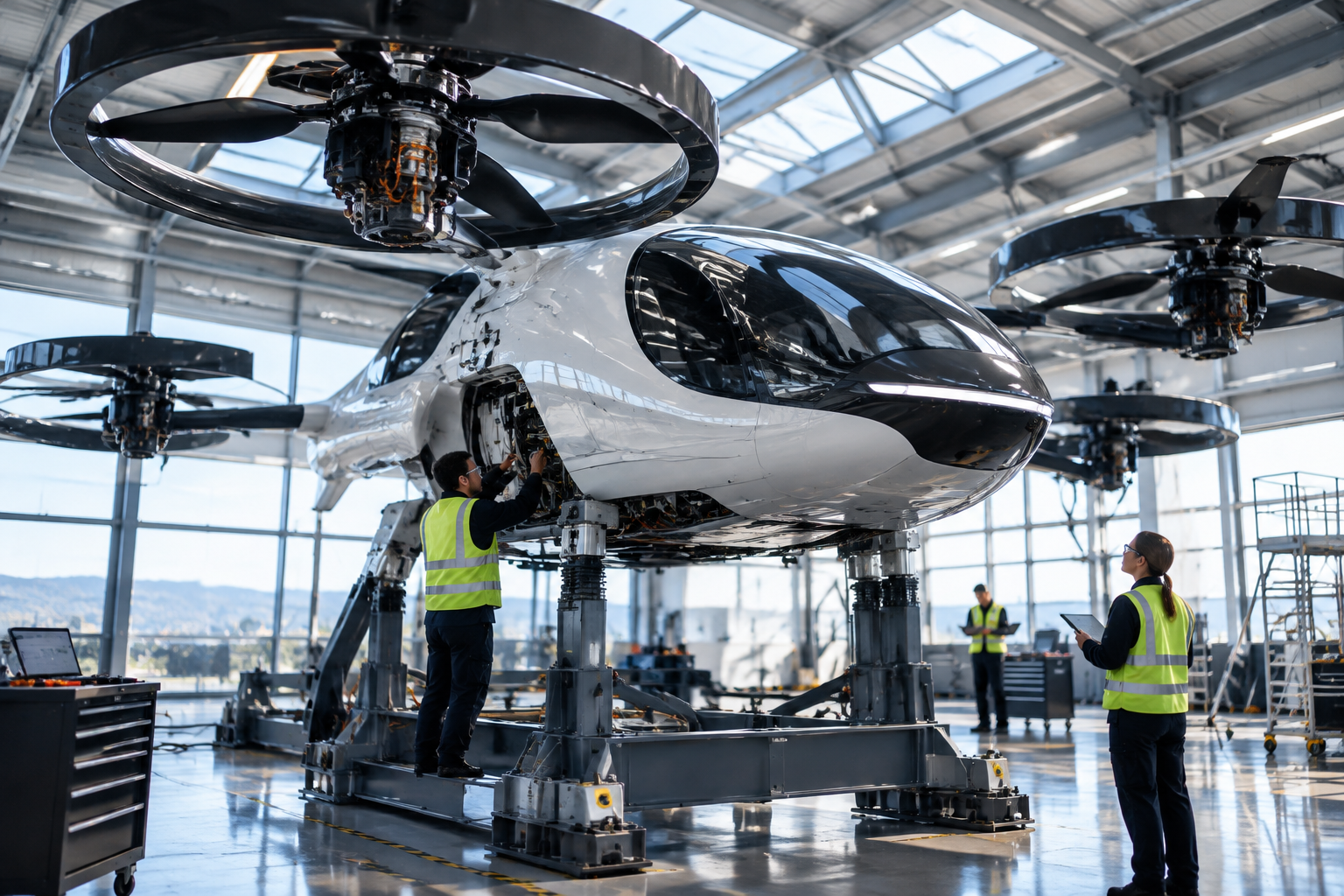
HIGHLIGHTS
- Skyfly secures $10M in funding to advance eVTOL development and reduce time-to-market for commercial personal air mobility aircraft
- Capital injection signals strong investor confidence in Skyfly’s technology platform and competitive positioning in the emerging UAM sector
- Funding milestone accelerates regulatory approvals, prototype testing, and scaling of manufacturing capabilities for next-generation eVTOL vehicles
The personal air mobility sector continues to attract significant venture capital as investor confidence grows in the viability of electric vertical takeoff and landing (eVTOL) aircraft. In a major milestone for the emerging industry, eVTOL developer Skyfly has successfully secured $10 million in funding, marking a pivotal moment in the company’s growth trajectory. This investment underscores the accelerating momentum within the urban air mobility (UAM) ecosystem and demonstrates that well-positioned developers with innovative technology are increasingly able to attract the capital necessary to bring aircraft from concept to commercial operation.
Skyfly’s Funding Achievement and Market Position
Skyfly’s successful closure of a $10 million funding round represents a significant validation of the company’s eVTOL platform and technological approach. The capital raise reflects investor confidence in Skyfly’s engineering team, product roadmap, and ability to navigate the complex regulatory landscape that currently defines the personal air mobility market. This funding achievement places Skyfly among a growing cohort of well-capitalized eVTOL developers working to establish themselves as industry leaders before the market reaches scale.
The timing of Skyfly’s funding announcement is particularly noteworthy, as it comes at a critical juncture in the eVTOL industry. Multiple developers have faced delays, regulatory setbacks, and manufacturing challenges in recent years, making successful capital raises increasingly selective. Skyfly’s ability to secure $10 million signals that the company has demonstrated sufficient progress in prototype development, test flights, or regulatory approvals to warrant investor backing. The funds will be deployed strategically to address the most critical path items required for commercialization.
The competitive landscape for eVTOL funding has become increasingly sophisticated as the sector matures. Investors now evaluate companies not just on technical merit but on their regulatory strategy, manufacturing partnerships, market positioning, and ability to achieve key milestones within defined timelines. Skyfly’s successful fundraise suggests the company has met these rigorous investment criteria and has positioned itself favorably against competing developers seeking similar capital.
Strategic Deployment of Capital and Development Priorities
The $10 million funding will enable Skyfly to accelerate multiple critical workstreams essential to bringing an eVTOL aircraft to commercial operation. Typically, capital raises of this magnitude are allocated across prototype refinement, safety testing, regulatory compliance documentation, manufacturing scale-up, and supply chain development. Skyfly will likely prioritize completing critical design reviews, advancing flight test programs, and gathering the technical data required to support certification applications with aviation regulators such as the Federal Aviation Administration (FAA) or European Union Aviation Safety Agency (EASA).
Prototype development and refinement consume substantial resources in the eVTOL sector, particularly as companies transition from concept demonstrators to certification-ready aircraft. Skyfly’s funding will accelerate the iteration cycle, enabling more frequent test flights, sensor validation, and systems integration activities. This faster development cadence is critical in a competitive market where every month of delay can shift market share among competing platforms. Enhanced test frequency also reduces technical risk by identifying design issues earlier in the development cycle when they are less costly to remediate.
Manufacturing readiness represents another critical allocation area for Skyfly’s newly secured capital. Transitioning from small-batch prototype production to scaled manufacturing requires significant tooling investment, supply chain partnerships, and production facility development. By investing in manufacturing capabilities now, Skyfly can position itself to rapidly scale production once regulatory certifications are achieved, capturing early market demand and establishing manufacturing leadership within the UAM sector.
Regulatory Pathway and Certification Strategy
eVTOL aircraft require comprehensive regulatory certification before commercial operation can begin, a process that typically takes 24-36 months from application to approval. The FAA’s Special Conditions and Certification Specifications for eVTOL aircraft are still evolving, requiring developers to navigate both established aviation regulations and emerging standards specific to electric propulsion systems. Skyfly’s $10 million funding will support the substantial compliance documentation, safety analysis, and engineering reports required to advance regulatory approval processes.
The company will likely allocate resources toward developing Certification Basis documentation, conducting system safety analyses, and demonstrating compliance with new airworthiness standards. These activities require specialized technical expertise and rigorous testing protocols that are expensive and time-consuming. With adequate capital, Skyfly can engage regulatory consultants, conduct necessary flight tests, and coordinate with aviation authorities to achieve certification faster than capital-constrained competitors. This regulatory advantage can translate into meaningful time-to-market benefits in the highly competitive eVTOL sector.
Establishing a strong relationship with aviation regulators early in the development process provides strategic advantages beyond mere certification compliance. Regulatory bodies such as the FAA increasingly emphasize industry input on emerging standards, and well-resourced companies like Skyfly can actively participate in standards development committees. This engagement shapes regulations in ways favorable to their technical approach and can accelerate certification by reducing the need for costly design changes late in the certification process.
Market Growth and Investor Confidence Signals
Skyfly’s successful funding round reflects broader investor confidence in the personal air mobility sector, despite recent setbacks and delays experienced by some prominent eVTOL companies. The continued availability of capital for well-positioned developers indicates that venture investors, strategic investors, and financial institutions remain convinced that eVTOL technology will eventually achieve commercial viability and generate substantial returns. This sustained capital availability is essential for the sector’s continued development, as eVTOL aircraft are capital-intensive to develop and require patient capital willing to absorb extended development timelines.
The eVTOL market opportunity continues to attract investor attention based on projections showing potential market sizes in the tens of billions of dollars annually by the 2030s. Cities worldwide are experiencing congestion challenges that air mobility could help address, regulatory frameworks are gradually becoming more concrete, and battery technology continues to improve in energy density and cost. These favorable macro trends provide a foundation for investor confidence in companies like Skyfly that are executing well-defined development programs.
Skyfly’s funding success also signals positive sentiment about the specific technical approaches being pursued within the eVTOL sector. Different developers are exploring various vehicle architectures, propulsion configurations, and operational concepts. When investors provide capital to a specific developer, they are implicitly validating that company’s technical choices and market strategy. Skyfly’s $10 million raise suggests investors believe the company’s platform offers competitive advantages—whether in energy efficiency, safety systems, regulatory pathway, or manufacturing feasibility.
Industry Implications and Competitive Dynamics
The eVTOL development sector remains intensely competitive, with dozens of companies pursuing certification across multiple countries. Capital raises create both opportunities and pressures within this competitive ecosystem. Companies that successfully raise capital can accelerate development, hire top talent, and establish manufacturing partnerships, potentially gaining competitive advantages. Conversely, companies with limited capital face pressure to demonstrate progress quickly or risk losing investor interest and struggling to raise subsequent funding rounds.
Skyfly’s $10 million funding positions the company to compete effectively within this dynamic market. The capital provides runway to achieve critical development milestones, advance regulatory approvals, and prepare for production scale-up. This funding achievement also enhances Skyfly’s ability to attract top engineering talent, as well-capitalized companies can offer competitive compensation and the security that comes with adequate capital runway. Enhanced recruitment capabilities accelerate technology development by enabling companies to scale engineering teams at critical junctures.
The funding also creates opportunities for Skyfly to establish strategic partnerships with airlines, airports, and urban development entities that are planning for air mobility integration. Well-capitalized companies can invest in market development activities, conduct community engagement, and participate in urban air mobility pilot programs. These activities build demand signals, establish commercial relationships, and create customer feedback loops that inform product development priorities.
Key Takeaways for the Air Mobility Sector
- Skyfly’s $10M funding round demonstrates sustained venture capital confidence in eVTOL technology and validates the company’s development approach and market positioning
- Capital deployment will accelerate prototype refinement, regulatory certification pathways, and manufacturing scale-up required for commercial launch
- The funding achievement reflects broader sector momentum while intensifying competitive pressure on capital-constrained eVTOL developers to demonstrate rapid progress
Skyfly’s $10 million funding round represents a significant milestone for both the company and the broader eVTOL sector. The successful capital raise demonstrates that investors remain committed to funding personal air mobility development despite industry challenges and setbacks. This capital injection will enable Skyfly to accelerate critical development activities, advance regulatory approvals, and position itself for commercial operations. As the eVTOL sector continues to mature, capital availability will remain a crucial factor determining which developers achieve certification and market success. Skyfly’s funding success suggests the company is well-positioned to be among the market leaders in the emerging urban air mobility ecosystem.