HIGHLIGHTS
- Malaysia’s Education Minister challenges vocational students to develop drone-based security solutions for their schools, merging STEM education with practical campus safety improvements.
- The initiative addresses workforce shortages in the expanding personal air mobility sector by providing hands-on drone experience and creating portfolio pieces for student employment prospects.
- Success requires coordinated effort on funding, regulatory partnerships with aviation authorities, instructor training programs, and data security protocols for school-based drone operations.
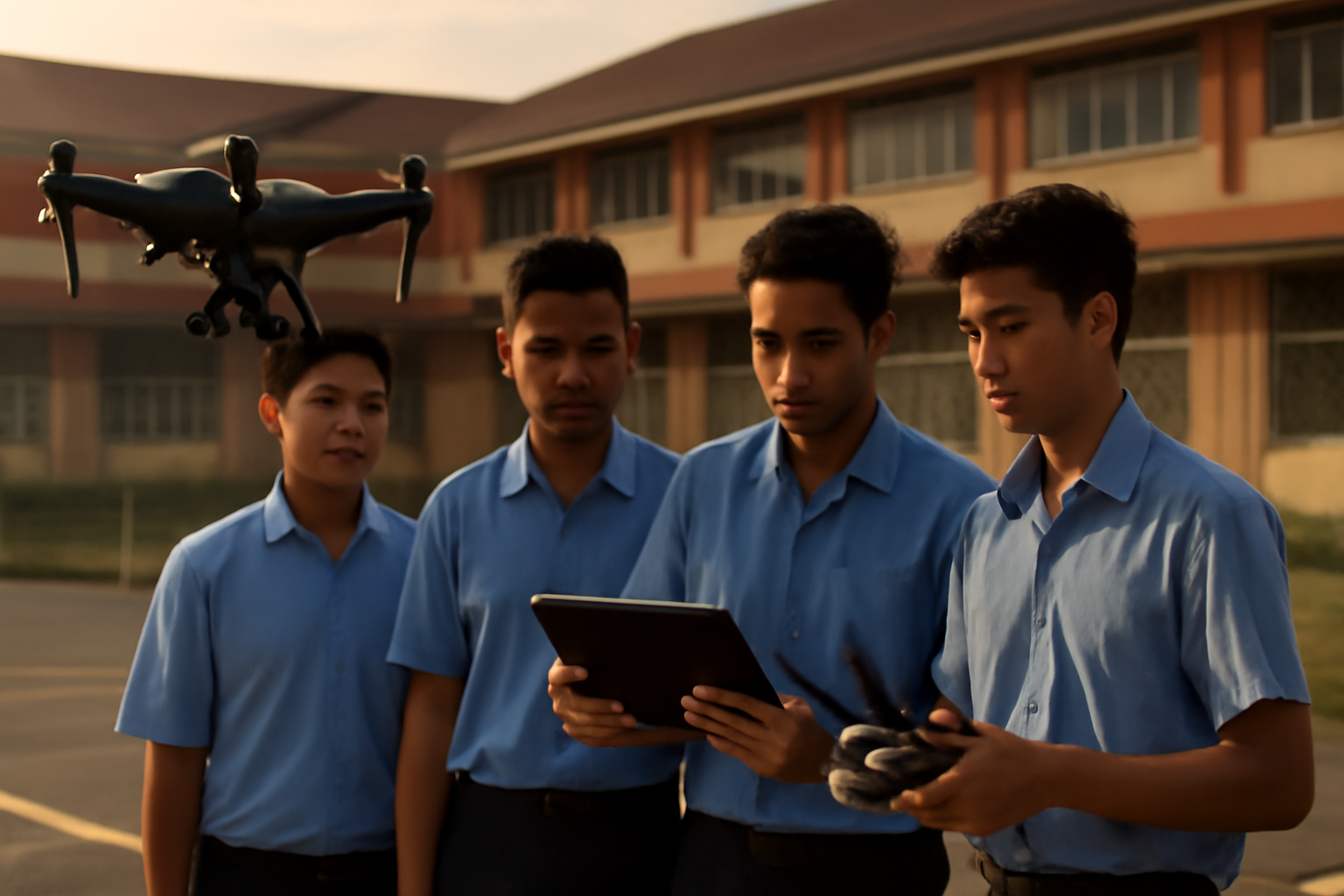
In a groundbreaking initiative that merges vocational education with real-world problem-solving, Malaysia’s Education Minister has challenged vocational students to leverage drone technology to improve school security. This innovative program represents a significant shift in how educational institutions are addressing campus safety while simultaneously providing students with hands-on experience in rapidly emerging drone technologies. The challenge underscores the growing recognition that drones are no longer novelty devices but essential tools for modern security infrastructure.
Bridging Education and Drone Innovation
The Education Minister’s challenge taps into a critical gap in vocational education where students often lack exposure to cutting-edge technology applications. By encouraging students to develop drone-based security solutions, the program creates a direct pathway between classroom learning and industry-relevant skills. This approach recognizes that vocational students represent a crucial workforce for the expanding personal air mobility sector, which includes commercial drone operations and security applications.
Vocational institutions across Malaysia are well-positioned to participate in this initiative, as many already have electrical engineering, mechanics, and technical programs that provide foundational knowledge for drone systems. The challenge motivates students to apply their existing skills toward innovative security applications, creating a bridge between traditional vocational training and emerging technologies. This integration helps students understand how their technical education translates into solving real problems at their own educational institutions.
The program also highlights the importance of early exposure to drone technology in educational settings. By starting with school security applications, students gain practical experience with battery systems, flight control, surveillance cameras, and data analysis—all critical competencies for careers in the EV drone and personal air mobility industries. This hands-on approach significantly outpaces traditional classroom-only instruction in preparing students for competitive job markets.
Practical Applications in School Security
Drones present multiple security advantages for educational campuses, from perimeter monitoring to rapid emergency response coordination. Student-designed solutions could include automated patrol routes, real-time surveillance over large outdoor areas, and rapid deployment capabilities during security incidents. These applications extend beyond simple surveillance, potentially incorporating AI-powered anomaly detection and integrated alert systems that provide school administrators with unprecedented situational awareness.
The challenge encourages creative approaches to campus safety that traditional security infrastructure cannot easily provide. For instance, student teams might develop drone swarms capable of comprehensive facility monitoring or design hybrid systems that combine ground-based sensors with aerial observation. The flexibility of drone technology allows vocational students to experiment with different configurations, payloads, and operational protocols tailored specifically to their school’s unique layout and security challenges.
Furthermore, implementing student-designed drone security systems creates cost-effective solutions compared to purchasing commercial systems. Schools benefit from reduced surveillance infrastructure expenses while students gain portfolio pieces and real deployment experience. This creates a compelling model where educational institutions improve their security posture while simultaneously investing in student skill development and career preparation.
Expanding the Personal Air Mobility Workforce
The Education Minister’s initiative directly addresses workforce shortages in the rapidly expanding personal air mobility sector. As eVTOL companies, drone delivery services, and aerial surveillance operators scale up, demand for trained technicians, pilots, and engineers continues to accelerate. By introducing drone applications in vocational education, Malaysia positions itself to develop a skilled labor force ready to support this emerging industry.
Vocational education has traditionally focused on established trades, but the drone revolution requires institutions to evolve their curricula. This challenge serves as a catalyst for curriculum development, encouraging vocational schools to incorporate drone systems, battery technologies, and autonomous flight control into their standard programs. Students who participate gain credentials and experience that significantly enhance their employability in the expanding personal air mobility sector.
The initiative also demonstrates government recognition of the strategic importance of drone technology to economic development. By channeling educational resources toward drone innovation, Malaysia signals its commitment to becoming a regional hub for personal air mobility technology and services. This supportive policy environment attracts investment from commercial drone operators and manufacturers, creating additional employment opportunities beyond the immediate school security applications.
Challenges and Implementation Considerations
Scaling this initiative nationwide requires addressing several practical challenges, including funding for drone equipment, instructor training, and regulatory compliance. Vocational schools must ensure that student activities comply with aviation regulations, including airspace restrictions and operational certifications. Schools will need to partner with regulatory authorities to establish safe testing environments where students can develop and validate their drone security solutions.
Instructor expertise represents another critical consideration. Vocational teachers require specialized training to safely supervise drone operations and guide students toward technically sound solutions. The Education Ministry will likely need to establish teacher development programs or partner with industry organizations to build instructional capacity. This investment in human resources ensures that the program maintains high safety and educational standards across participating institutions.
Data security and privacy concerns also merit careful attention, particularly when deploying surveillance systems on school campuses. Student-designed systems must incorporate appropriate protections to prevent unauthorized access to security footage and ensure compliance with privacy regulations. Addressing these concerns early in the program development process helps establish best practices and builds confidence among parents, students, and school administrators about the responsible deployment of drone technology in educational settings.
Key Implementation Takeaways
- Secure adequate funding and equipment access for participating vocational schools to ensure equitable program participation across regions
- Develop regulatory partnerships with aviation authorities to establish safe operating procedures and legal compliance frameworks for student drone operations
- Establish comprehensive instructor training programs to build technical expertise among vocational educators in drone systems and security applications
Malaysia’s Education Minister has launched an initiative with significant implications for vocational education, personal air mobility workforce development, and school security innovation. By empowering vocational students to design and implement drone-based security solutions, the program creates a compelling model for integrating emerging technologies into practical education. As the personal air mobility sector continues its rapid expansion, initiatives like this one will prove increasingly valuable in ensuring that educational systems produce the skilled workforce this dynamic industry demands. The success of this challenge could inspire similar programs across other nations seeking to align vocational education with the technology-driven job market of the future.