HIGHLIGHTS
- Archer Aviation strategically launches AI advancement demonstration before earnings announcement to showcase technology leadership and investor confidence in development roadmap.
- AI integration addresses critical regulatory requirements for autonomous systems, predictive maintenance, and safe urban air mobility operations in complex airspace environments.
- Machine learning optimization of flight performance and operational efficiency creates competitive advantages against rival eVTOL manufacturers in the race toward commercial viability.
Archer Aviation, a leading electric vertical takeoff and landing (eVTOL) manufacturer, is making a significant push into artificial intelligence capabilities ahead of its upcoming earnings report. This strategic move demonstrates the company’s commitment to leveraging cutting-edge technology to optimize operations, enhance safety protocols, and accelerate its path toward commercial deployment. The timing of this AI integration announcement suggests Archer is positioning itself as a tech-forward innovator in the highly competitive personal air mobility sector.
Archer’s AI Strategy in eVTOL Development
The integration of artificial intelligence into Archer Aviation’s operations represents a watershed moment for the eVTOL industry. As manufacturers race to bring aircraft to market, the ability to optimize flight operations, predict maintenance needs, and improve autonomous capabilities has become a critical differentiator. Archer’s investment in AI signals confidence in the company’s technical roadmap and its understanding of what regulators and customers will demand from next-generation aircraft.
AI technologies are being applied across multiple domains within Archer’s development pipeline. Machine learning algorithms can analyze vast datasets from test flights, simulation environments, and prototype operations to identify optimization opportunities that human engineers might overlook. This data-driven approach accelerates the innovation cycle and reduces development risks by enabling predictive modeling of aircraft performance under various operational scenarios.
The company’s AI capabilities extend beyond mere optimization; they’re fundamental to achieving the autonomous or semi-autonomous flight characteristics that will make eVTOLs commercially viable at scale. By demonstrating progress in AI integration before earnings, Archer is communicating to investors, regulators, and potential customers that the technology stack underpinning its aircraft is mature and well-architected.
Market Timing and Investor Confidence
The strategic timing of Archer’s AI announcement—just before earnings disclosure—is noteworthy. In the eVTOL sector, which remains pre-revenue for most manufacturers, technological milestones and capability demonstrations often carry more weight than traditional financial metrics. By showcasing AI advancement during this critical window, Archer is setting narrative expectations around its competitive positioning and technical maturity.
Investors in eVTOL companies are increasingly scrutinizing not just the aircraft itself, but the entire ecosystem of software, automation, and operational intelligence that will enable commercial viability. Archer’s high-stakes AI push demonstrates management’s recognition that the race for market leadership isn’t solely about airframe design—it’s about building the most intelligent, efficient, and reliable flying systems possible. This technological narrative can significantly influence post-earnings stock performance and analyst sentiment.
For a company operating in the pre-commercial phase, demonstrating technological leadership becomes a proxy for future operational success. Archer’s emphasis on AI capabilities before earnings suggests the company is confident in its development trajectory and believes investors will reward forward-looking technology bets, particularly when they address real operational challenges like predictive maintenance, flight optimization, and autonomous systems integration.
Regulatory and Safety Implications
The implementation of advanced AI systems in eVTOL aircraft carries significant implications for certification and regulatory approval. The Federal Aviation Administration (FAA) and international regulators are developing frameworks to evaluate autonomous and semi-autonomous aircraft systems. Archer’s demonstrated AI capabilities provide evidence that the company is building aircraft systems that will meet evolving regulatory standards for safety, reliability, and human-machine interaction.
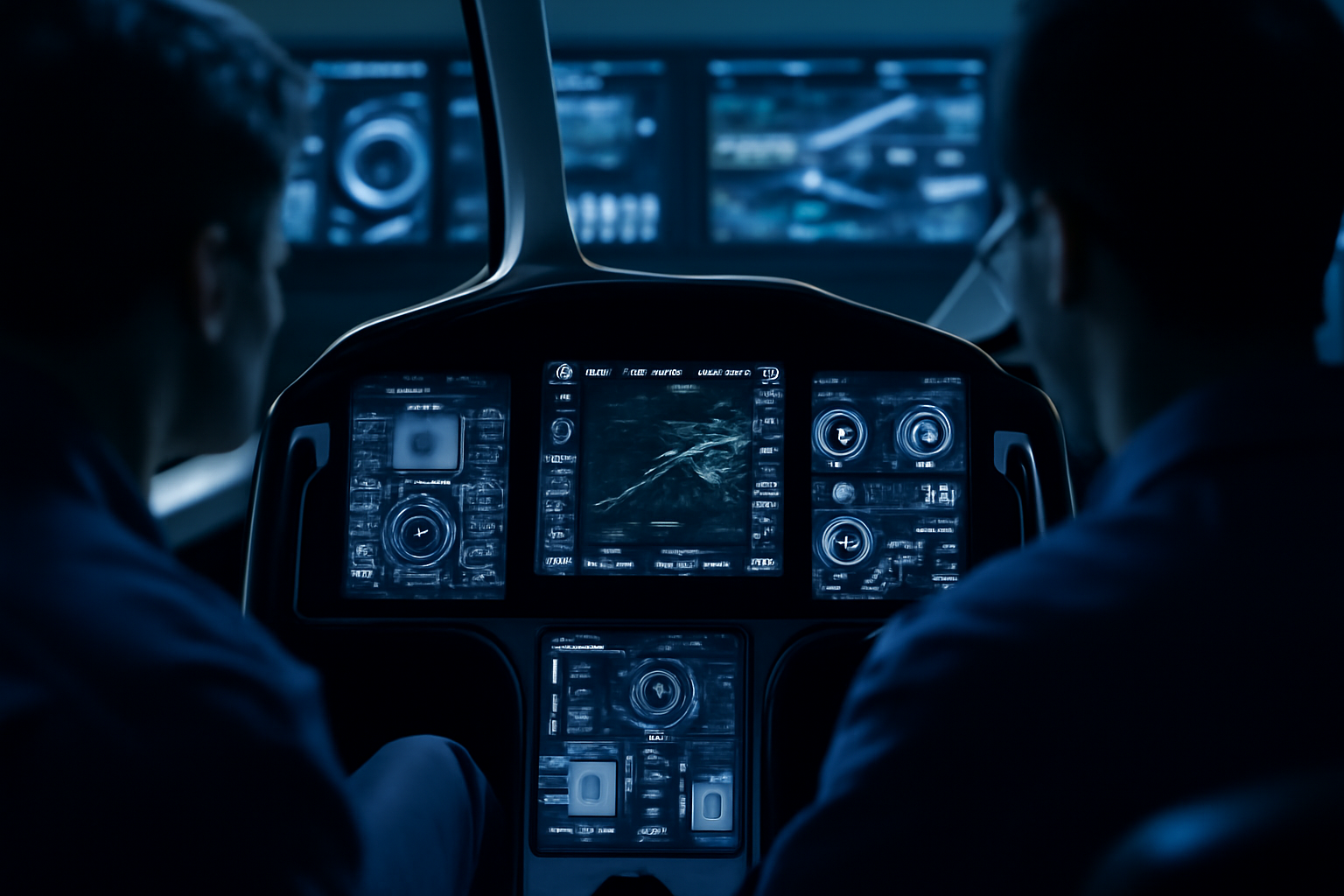
AI-driven systems can enhance flight safety through real-time monitoring of aircraft systems, predictive analysis of potential failures, and optimization of flight paths to avoid adverse weather or airspace conflicts. These capabilities are particularly important in urban air mobility environments where eVTOLs will operate in complex, three-dimensional airspace alongside traditional aviation, drones, and other emerging air traffic. Regulators will want to see that manufacturers have invested in the technological infrastructure to handle this operational complexity safely.
By highlighting its AI push before earnings, Archer is signaling to regulators that the company takes safety and compliance seriously. The company is demonstrating that it’s not just building an aircraft but engineering a complete intelligent system designed to operate safely and reliably in the demanding environment of urban and regional air transportation. This regulatory-aligned approach strengthens Archer’s certification pathway and positions the company favorably in the eyes of government agencies overseeing eVTOL deployment.
Competitive Positioning in the eVTOL Landscape
The personal air mobility sector is crowded with competitors, each claiming technological superiority and regulatory readiness. Joby Aviation, Lilium, Beta Technologies, and numerous other manufacturers are pursuing similar certifications and commercial timelines. In this environment, Archer’s deliberate emphasis on AI capabilities differentiates the company from rivals and provides a narrative advantage in attracting investors, partnerships, and talent.
AI integration also impacts operational scalability and cost efficiency—two factors that will determine which eVTOL manufacturers achieve profitable commercial operations. Machine learning can optimize maintenance schedules, reduce unplanned downtime, and improve energy efficiency of aircraft operations. These capabilities translate directly into competitive advantages in fleet operations and eventually in customer acquisition, as operators will gravitate toward aircraft systems that deliver superior reliability and lower operating costs.
Archer’s high-profile AI push before earnings positions the company as a serious contender in the race to establish operational dominance in urban air mobility. By communicating advanced technology integration and forward-thinking strategy, Archer is competing not just on hardware specifications but on the intelligence, efficiency, and reliability of the complete system. This positions the company favorably against competitors that may be lagging in software and AI integration maturity.
Key Developments in Archer’s AI Strategy
- Advanced machine learning algorithms optimizing flight performance, battery efficiency, and predictive maintenance across Archer’s eVTOL development and testing programs
- Integration of AI-driven autonomous systems supporting regulatory pathways for safe urban air mobility operations and certification readiness
- Strategic emphasis on intelligent system architecture creating competitive advantages in scalability, reliability, and operational cost efficiency
Archer Aviation’s high-stakes AI push before earnings represents a critical milestone in the company’s evolution from aircraft manufacturer to intelligent mobility provider. As the eVTOL industry matures, technological differentiation through advanced AI and autonomous systems integration will increasingly determine which companies succeed commercially. By demonstrating robust AI capabilities and forward-looking engineering strategy before presenting financial results, Archer is positioning itself as a leader in next-generation personal air mobility technology. The coming weeks will reveal how investors and analysts interpret these technological advances, but the message is clear: Archer views AI not as a nice-to-have feature but as a fundamental component of competitive success in the emerging urban air transportation market.