HIGHLIGHTS
- Archer acquires three Boeing subsidiaries, gaining aerospace manufacturing expertise and infrastructure that eVTOL startups typically build from scratch at enormous cost
- The deal provides regulatory credibility, FAA relationships, and certification pathway knowledge that accelerates aircraft approval timelines compared to competitors like Joby and Lilium
- Successful integration is critical to realizing benefits; risks include workforce management, facility conversion complexity, and potential delays to aircraft certification if execution falters
In a groundbreaking move that reshapes the competitive landscape of electric vertical takeoff and landing (eVTOL) aircraft, Archer Aviation has announced the acquisition of three Boeing subsidiaries in a transformative deal that signals accelerated progress toward commercial deployment of urban air mobility solutions. This strategic acquisition represents one of the most significant consolidations in the emerging personal air mobility sector, combining established aerospace manufacturing expertise with innovative eVTOL technology.
The Strategic Significance of Archer’s Boeing Acquisition
Archer Aviation’s decision to acquire three Boeing subsidiaries marks a pivotal moment for the company’s trajectory in the eVTOL market. By integrating Boeing’s specialized aerospace manufacturing capabilities and engineering infrastructure, Archer gains access to critical production resources, supply chain networks, and technical expertise that have historically been confined to traditional aircraft manufacturers. This acquisition dramatically reduces the technological and operational barriers that startup eVTOL companies typically face when scaling manufacturing operations.
The deal positions Archer not merely as an aircraft developer but as an integrated aerospace manufacturing entity with heritage connections to one of the world’s largest aerospace and defense corporations. Boeing’s subsidiaries bring decades of experience in aircraft production, quality assurance systems, and regulatory compliance—areas where many eVTOL startups have historically struggled. This infusion of institutional knowledge and proven manufacturing protocols accelerates Archer’s path to volume production and commercial viability.
From an investor perspective, the acquisition signals Archer’s confidence in the near-term viability of eVTOL markets and its commitment to establishing itself as a tier-one supplier in the urban air mobility ecosystem. The deal demonstrates that traditional aerospace giants recognize the strategic importance of electric aviation technology, even if indirectly through subsidiary sales. This validation from Boeing strengthens market confidence in Archer’s business model and regulatory pathway.
Manufacturing Capacity and Production Scaling
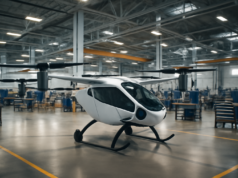
One of the most immediate benefits of acquiring Boeing subsidiaries is the dramatic expansion of Archer’s manufacturing capacity and production capabilities. The subsidiary facilities bring established manufacturing infrastructure, including fabrication equipment, assembly lines, and quality control systems designed to meet stringent aerospace standards. Rather than building these systems from scratch—a process that typically requires years and hundreds of millions of dollars—Archer can rapidly retrofit and repurpose existing aerospace-grade production facilities for eVTOL aircraft assembly.
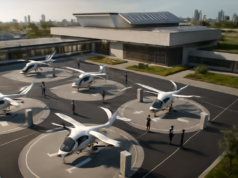
The acquisition provides Archer with production facilities that can be scaled incrementally to meet growing demand for eVTOL aircraft as commercial services launch in major metropolitan areas. This scalability is crucial for meeting the anticipated surge in orders from mobility operators, corporate fleets, and emergency services organizations that are lined up waiting for certified eVTOL aircraft. Boeing’s subsidiaries have already demonstrated the capacity to manage complex supply chains, coordinate with hundreds of component suppliers, and maintain production schedules that meet aerospace delivery timelines.
Furthermore, the inherited manufacturing expertise allows Archer to begin producing aircraft at volumes that would have required independent capital investment of $500 million to $1 billion. This capital efficiency represents substantial value for shareholders and enables Archer to allocate resources toward certification, market development, and product enhancement rather than bricks-and-mortar manufacturing facility construction. The acquired facilities also provide geographic manufacturing diversity, reducing concentration risk and enabling distributed production centers that support regional eVTOL network deployments.
Regulatory and Certification Advantages
Boeing’s subsidiaries bring existing relationships and established credibility with federal aviation authorities, including the Federal Aviation Administration (FAA), that can materially accelerate Archer’s aircraft certification timeline. Boeing has been navigating aerospace regulatory frameworks for over a century, and its subsidiaries maintain institutional knowledge about special conditions, certification pathways, and regulatory expectations that are particularly valuable for novel eVTOL designs. This regulatory roadmap can save Archer years of exploratory testing and certification activity.
The acquired facilities likely include engineering documentation systems, quality management procedures, and compliance tracking infrastructure that align with FAA requirements and aerospace industry standards. This regulatory-grade operational foundation positions Archer to move through certification phases more efficiently than competitors who are building these systems independently. Additionally, Boeing’s track record of regulatory cooperation and compliance history may facilitate smoother interactions with oversight bodies evaluating Archer’s certification applications.
The acquisition also signals to regulators that Archer is serious about establishing itself as a responsible aerospace manufacturer with appropriate governance structures and compliance mechanisms. Boeing’s subsidiaries operate under stringent quality assurance protocols that exceed many eVTOL startups’ current capabilities. By integrating these systems, Archer demonstrates a commitment to operational excellence and safety standards that regulators expect from manufacturers seeking to operate in U.S. airspace.
Competitive Positioning in the eVTOL Market
With this acquisition, Archer significantly strengthens its competitive position relative to other eVTOL manufacturers like Joby Aviation, Lilium, and Archer’s other rivals. Joby and Lilium have pursued alternative strategies—Joby through strategic partnerships and government contracts, Lilium through European market development—but neither has secured manufacturing assets comparable to those Archer is now acquiring. This manufacturing asymmetry could translate into speed-to-market advantages and cost efficiencies that Archer can leverage to gain first-mover advantage in high-value urban air mobility markets.
The ability to produce aircraft at industrial scale, combined with Archer’s existing technological advantages and market partnerships, positions the company to capture disproportionate market share as commercial eVTOL services launch in the late 2020s and early 2030s. Airlines, charter operators, and air taxi services are waiting for manufacturers with proven production capacity and regulatory certification to place bulk orders. Archer’s acquisition of Boeing subsidiaries demonstrates that it can fulfill those orders, making the company an attractive partner for potential customers finalizing their eVTOL service business plans.
The deal also provides Archer with leverage in negotiations with potential strategic partners, regulatory authorities, and supply chain partners. Owning manufacturing facilities equivalent to those of a tier-one aerospace supplier elevates Archer’s status within the aerospace ecosystem and strengthens its bargaining position for component sourcing, technology licensing, and market access agreements. This transformation from startup to integrated aerospace manufacturer fundamentally alters Archer’s negotiating dynamics across the industry.
Integration Challenges and Execution Risk
Despite the strategic benefits, integrating three Boeing subsidiaries into Archer’s organization presents significant operational, cultural, and financial challenges that could impact execution timelines. Large-scale acquisitions in aerospace manufacturing historically encounter unforeseen technical complications, workforce integration difficulties, and supply chain disruptions. Archer must successfully merge Boeing’s legacy operational procedures with its own agile development processes while maintaining momentum on aircraft certification and market development initiatives.
The acquired subsidiaries likely employ thousands of workers with expectations, compensation structures, and union relationships that differ from Archer’s corporate culture. Managing this workforce integration while maintaining productivity, preventing talent departure, and preserving institutional knowledge represents a multifaceted human capital challenge. Additionally, converting Boeing-subsidiary facilities from traditional aircraft production to eVTOL manufacturing requires targeted capital investment and process redesign that could encounter unexpected technical obstacles.
Financial integration represents another complexity. Archer must ensure that the acquisition does not strain its balance sheet or consume capital that would otherwise fund critical development, certification, and market entry activities. The company must also navigate any pre-existing liabilities, contractual obligations, or regulatory compliance issues that transfer with the subsidiary acquisition. If integration distracts senior management or consumes resources disproportionately, Archer’s core eVTOL development and certification timelines could face delays, negating some strategic benefits of the acquisition.
Key Takeaways from Archer’s Boeing Subsidiary Acquisition
- Archer gains aerospace-grade manufacturing facilities, supply chain networks, and regulatory expertise previously unavailable to eVTOL startups, dramatically accelerating production scaling and certification timelines
- The acquisition positions Archer as an integrated aerospace manufacturer with competitive advantages over rivals like Joby and Lilium, potentially enabling first-mover advantages in commercial eVTOL markets launching in the late 2020s
- Successful integration is critical; execution risks include workforce management, facility conversion complexity, and potential resource diversion that could delay aircraft certification and market entry
Archer Aviation’s acquisition of three Boeing subsidiaries represents a watershed moment for the eVTOL industry, demonstrating that capital-intensive aerospace manufacturing can be consolidated with emerging electric aviation technology to create a formidable competitive entity. The deal validates the commercial viability of the eVTOL market while simultaneously raising the competitive bar for companies lacking equivalent manufacturing infrastructure. As Archer executes this integration and channels the acquired capabilities toward aircraft production and certification, the company has the potential to emerge as the dominant manufacturer in the urban air mobility ecosystem, fundamentally reshaping how people move within and between cities over the next decade.