HIGHLIGHTS
- Martian Aircraft scaled its electric boxwing eVTOL demonstrator, advancing the innovative dual-wing design toward commercial viability.
- The boxwing configuration reduces induced drag and improves stability, optimizing efficiency and payload capacity for urban air mobility operations.
- Phased testing validates safety, propulsion integration, and thermal management—critical data needed for regulatory certification and commercial deployment.
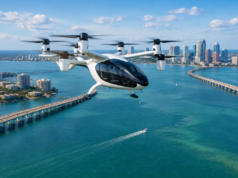
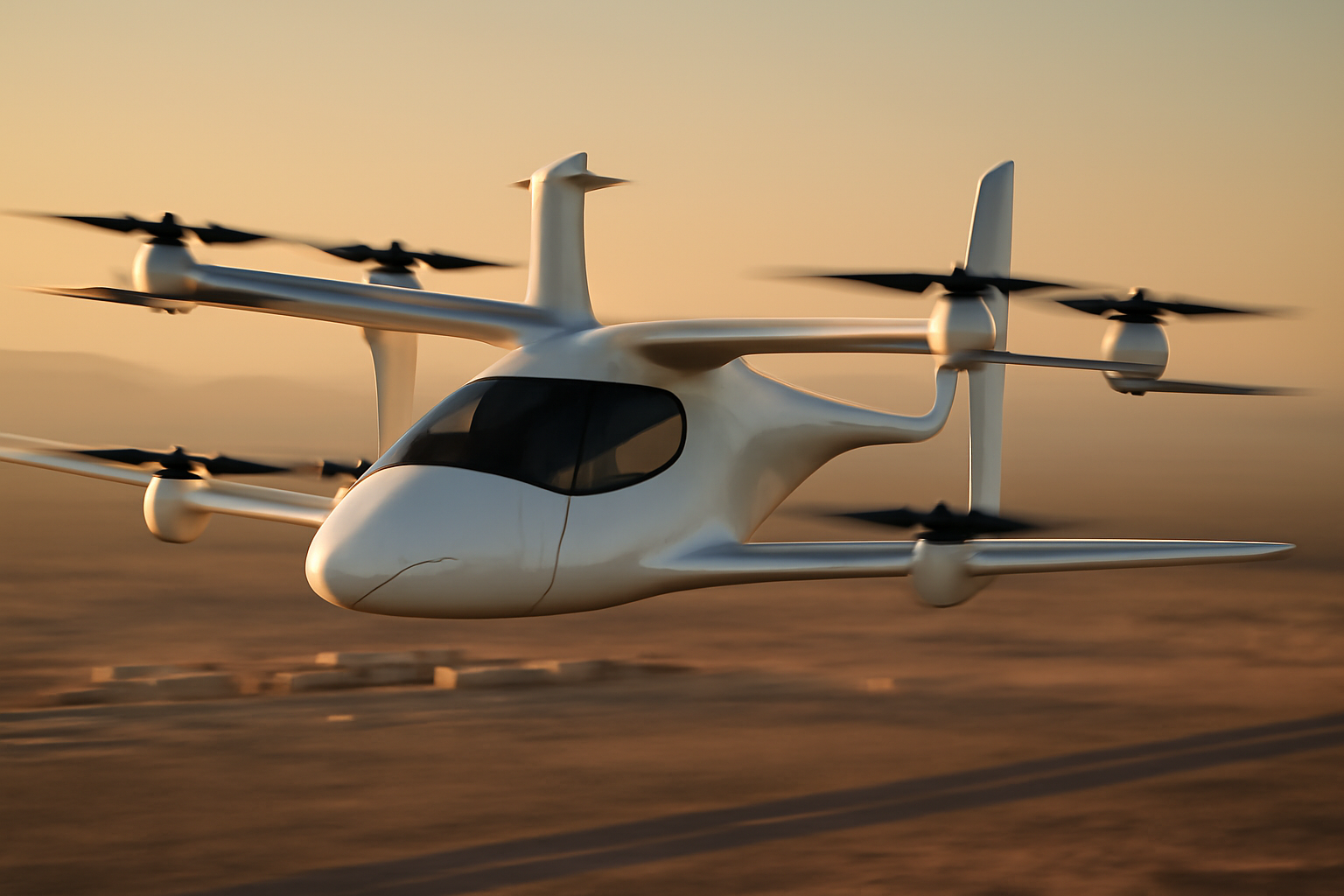
Martian Aircraft has unveiled a significant milestone in the development of electric vertical takeoff and landing (eVTOL) technology by scaling up its innovative electric boxwing demonstrator aircraft. This advancement represents a crucial step forward in the commercialization of personal air mobility solutions and showcases how unconventional aerodynamic designs can optimize efficiency in urban air transport. The scaled demonstrator brings Martian Aircraft closer to proving the viability of boxwing configurations for practical, sustainable aviation applications.
The Boxwing Design Advantage
The boxwing configuration represents a paradigm shift in aircraft design, departing from traditional monoplane and biplane architectures. This innovative structure consists of two main lifting surfaces—one positioned above and one below—connected by vertical winglets that create a closed-loop aerodynamic profile. The design inherently reduces induced drag, the resistance aircraft experience when generating lift, making it exceptionally efficient for electric propulsion systems with limited energy reserves.
Martian Aircraft’s commitment to the boxwing design stems from fundamental aerodynamic principles that favor efficiency. The closed-wing structure allows for better load distribution across the aircraft, reducing the stress on individual components and extending the lifespan of critical structures. Furthermore, the design provides superior stability characteristics, which is particularly valuable for autonomous or semi-autonomous operations in urban environments where precision and safety are paramount.
The boxwing configuration also offers practical advantages for eVTOL vehicles operating in confined urban airspace. The compact footprint and streamlined profile reduce the effective rotor disc area needed for vertical lift, allowing operators to design lighter, more efficient propulsion systems. This translates directly to extended flight range and increased payload capacity—two critical factors determining commercial viability for air taxi services and medical transportation applications.
Scaled Demonstrator Development Milestones
The new scaled demonstrator represents Martian Aircraft’s latest iteration in a methodical development approach. Rather than immediately committing to full-scale production prototypes, the company has adopted a phased validation strategy that allows engineers to test and refine critical systems at manageable scale before investing in larger, costlier platforms. This risk-mitigation approach has become standard practice among leading eVTOL developers seeking to minimize development costs and accelerate time-to-market.
The scaled demonstrator incorporates Martian Aircraft’s latest advances in electric propulsion technology, battery integration, and flight control systems. By operating the aircraft under real-world conditions, engineers gather invaluable performance data on motor efficiency, thermal management, structural response, and aerodynamic behavior. Each test flight provides insights that inform refinements to materials, control algorithms, and component selection for subsequent generations of the platform.
Scaling considerations present unique challenges in aircraft development. Performance characteristics that work at small scale don’t always translate predictably to larger designs due to changes in Reynolds number and structural dynamics. Martian Aircraft’s engineers must validate that the boxwing design maintains its aerodynamic advantages as the aircraft grows larger, while ensuring that propulsion systems, battery capacity, and structural materials scale appropriately to support commercial operations carrying multiple passengers or significant cargo payloads.
Electric Propulsion and Battery Technology Integration
Modern eVTOL success depends critically on advances in electric motor and battery technology. Martian Aircraft’s demonstrator leverages contemporary battery chemistries and high-efficiency electric motors optimized for vertical takeoff operations. The vertical lift phase represents the most power-intensive aspect of eVTOL flight, requiring propulsion systems capable of delivering peak power for 30-60 seconds while maintaining reliability and thermal stability.
The scaled demonstrator provides Martian Aircraft with a platform to optimize energy distribution between vertical lift motors and forward-flight propellers. Unlike conventional helicopters that use a single rotor system for all flight phases, many eVTOL designs employ distributed electric motors that transition their operational mode from hover to forward flight. This hybrid approach allows aircraft to minimize energy consumption during cruise phases while maintaining hovering capability for takeoff, landing, and emergency operations.
Battery thermal management emerges as a critical design consideration validated through the demonstrator program. High-power electric motors generate significant heat during vertical takeoff, requiring sophisticated cooling systems to maintain battery performance and longevity. The scaled platform allows Martian Aircraft engineers to test thermal management strategies in realistic flight conditions, ensuring that future commercial aircraft can operate reliably across diverse environmental conditions and flight profiles.
Path to Commercial Certification and Deployment
Regulatory certification represents perhaps the most formidable challenge facing eVTOL manufacturers. Aviation authorities worldwide are developing specialized certification frameworks for electric vertical takeoff aircraft, distinct from both traditional helicopter and fixed-wing aircraft standards. Martian Aircraft’s scaled demonstrator serves as a testbed for establishing safety records and operational procedures that will ultimately inform the company’s certification applications to agencies including the FAA, EASA, and others.
The demonstrator program generates crucial safety data regarding structural integrity, propulsion redundancy, and emergency procedures specific to boxwing eVTOL operations. By thoroughly characterizing aircraft behavior across normal and degraded operational modes, Martian Aircraft builds the technical foundation necessary to convince regulators that its design meets or exceeds existing safety standards. This evidence-based approach accelerates the certification process compared to manufacturers lacking demonstrated operational experience.
Commercial deployment timelines for Martian Aircraft’s technology depend on successful completion of certification activities and securing investment for production-scale manufacturing. The scaled demonstrator represents tangible progress that attracts investor confidence and attracts partnerships with infrastructure operators, municipalities, and potential operators evaluating adoption of urban air mobility services. Success at this development stage positions Martian Aircraft for accelerated progression toward commercial operations in the following years.
Key Development Takeaways
- Martian Aircraft’s scaled electric boxwing demonstrator validates the aerodynamic efficiency advantages of the boxwing configuration for practical eVTOL applications.
- Phased demonstration and testing approach reduces commercial development risk while gathering real-world performance data across critical systems and operational scenarios.
- Successful scaling of the boxwing design positions Martian Aircraft for accelerated progression toward regulatory certification and eventual commercial deployment of electric air mobility services.
Martian Aircraft’s advancement of electric boxwing eVTOL technology demonstrates the continued innovation driving personal air mobility toward commercial reality. The scaled demonstrator validates not only the aerodynamic principles underlying the boxwing design but also Martian Aircraft’s engineering capability to manage the complex integration challenges inherent in modern electric aircraft. As regulatory frameworks mature and supporting infrastructure develops across major urban centers, companies like Martian Aircraft that have invested in fundamental design validation and safety demonstration will be positioned to lead the transition toward sustainable, efficient urban air transport. The coming months will reveal whether the boxwing configuration maintains its theoretical advantages when deployed at commercial scale, potentially establishing a new standard for eVTOL aircraft design.