HIGHLIGHTS
- Volatus Aerospace deploys autonomous, electric-powered aircraft for real-time wildfire detection and monitoring across Canada without crew fatigue limitations.
- Autonomous systems operate safely in hazardous smoke and weather conditions that ground crewed aircraft, while eliminating pilot exposure to extreme danger.
- Real-world emergency deployment validates autonomous aircraft technology beyond urban air mobility, demonstrating commercial viability and regulatory acceptance in specialized applications.
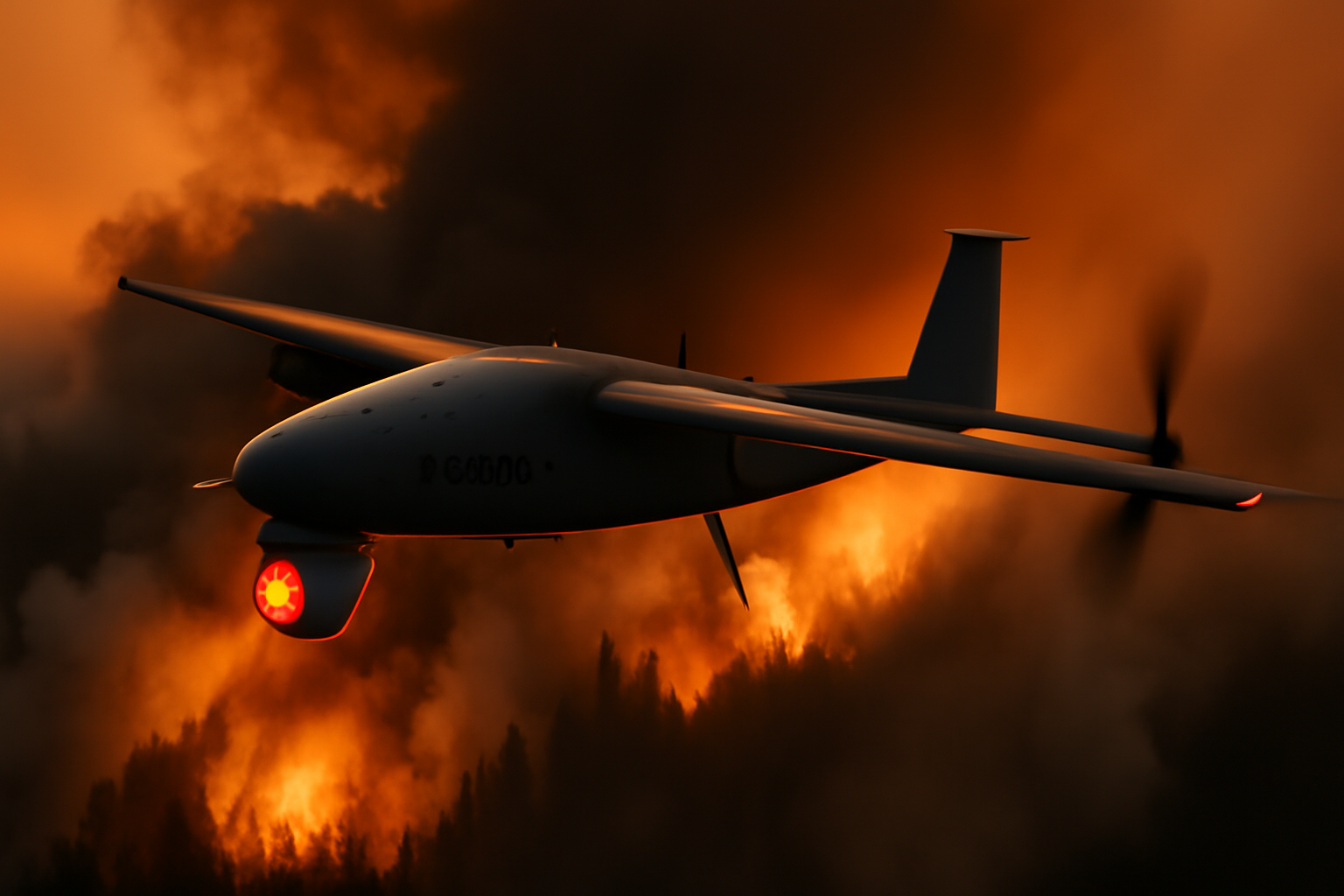
Canadian aerospace innovator Volatus Aerospace has announced a groundbreaking initiative to deploy autonomous aircraft technology in the battle against devastating wildfires sweeping across the nation. This strategic move represents a significant milestone in the practical application of electric vertical takeoff and landing (eVTOL) and autonomous aircraft systems for emergency response and disaster management. As Canada faces increasingly severe wildfire seasons, innovative solutions like those developed by Volatus Aerospace are proving essential to protecting communities, infrastructure, and natural resources.
Volatus Aerospace’s Autonomous Platform
Volatus Aerospace has established itself as a leader in Canadian aviation innovation, focusing on the development of autonomous and remotely piloted aircraft systems tailored for demanding operational environments. The company’s commitment to advancing electric propulsion and autonomous flight technologies positions it at the forefront of the emerging air mobility revolution. Their latest initiative demonstrates how specialized aviation platforms can address critical real-world challenges beyond traditional commercial applications.
The autonomous aircraft being deployed by Volatus Aerospace leverages state-of-the-art flight control systems, advanced sensors, and AI-powered decision-making capabilities. These systems enable the aircraft to operate with minimal human intervention, allowing for extended mission durations and improved operational efficiency in hazardous environments where manned aircraft operations are often limited. The integration of autonomous capabilities significantly reduces pilot fatigue and enhances safety during long-duration wildfire monitoring and suppression support missions.
By combining autonomous flight technology with electric propulsion systems, Volatus Aerospace’s platform offers environmental advantages alongside operational benefits. Electric-powered aircraft generate zero direct emissions, reduce acoustic pollution, and minimize the environmental footprint of emergency response operations. This approach aligns with Canada’s broader sustainability goals while providing critical emergency services with next-generation tools.
Wildfire Monitoring and Response Applications
Autonomous aircraft are revolutionizing how emergency responders detect, monitor, and respond to wildfires across Canada’s vast geography. These unmanned platforms can conduct continuous surveillance over large areas, providing real-time data to incident commanders and firefighting teams on the ground. The ability to maintain persistent observation without crew rest requirements enables faster detection of new fire starts and better tracking of fire behavior and spread patterns.
The deployment of autonomous aircraft for wildfire response offers several critical advantages over traditional manned operations. These systems can access airspace and conduct missions during conditions that would be unsafe or impossible for crewed aircraft, including low-visibility scenarios, extreme smoke conditions, and turbulent weather. Additionally, autonomous platforms eliminate pilot exposure to hazardous environments, reducing occupational risks for aviation personnel engaged in emergency response operations.
Volatus Aerospace’s aircraft can be equipped with various payloads to support different wildfire management tasks. Beyond surveillance and thermal imaging for fire detection, these platforms can carry communication relay equipment to maintain connectivity in remote areas, sensors for atmospheric data collection, or even deliver supplies to isolated communities affected by wildfires. The versatility of the autonomous platform enables emergency managers to adapt to evolving situational requirements throughout a wildfire event.
Regulatory Pathway and Industry Innovation
The deployment of Volatus Aerospace’s autonomous aircraft for wildfire management represents a significant step forward in regulatory acceptance of advanced air operations in Canada. Transport Canada’s regulatory framework has been evolving to accommodate innovative unmanned and autonomous systems, recognizing their potential to deliver public benefits in emergency response scenarios. This initiative demonstrates how regulatory agencies are working with industry partners to enable practical applications of emerging aviation technologies.
Volatus Aerospace’s backing and operational capability reflect growing confidence in autonomous aircraft systems among stakeholders in the Canadian aviation ecosystem. The company’s ability to move from development to real-world deployment indicates that technological readiness and regulatory maturity are advancing in parallel. This momentum is critical for the broader eVTOL and autonomous aircraft industry, as successful emergency response applications build public confidence and demonstrate tangible value propositions.
The success of this wildfire response initiative may serve as a template for other emergency applications of autonomous aircraft technology. Provincial and federal emergency management agencies are likely monitoring this deployment closely, with implications for future procurement decisions and operational protocols. As regulatory frameworks continue to mature, additional public safety applications—from search and rescue to disaster assessment—may follow similar pathways to deployment.
Broader Implications for eVTOL and Air Mobility
Volatus Aerospace’s wildfire initiative demonstrates that electric and autonomous aircraft are transitioning from theoretical concepts to practical tools addressing urgent societal challenges. While much of the eVTOL industry focuses on urban air mobility and passenger transportation, applications in emergency response and disaster management represent equally important segments of the emerging market. This diversification of use cases strengthens the overall business case for investment in electric aircraft technology and autonomous systems.
The Canadian context is particularly significant, as the nation faces escalating wildfire activity driven by climate change and prolonged drought conditions. Autonomous aircraft represent a scalable response to the growing demands on emergency response resources. Unlike traditional aircraft acquisition, which requires significant capital investment and ongoing operational costs, electric autonomous platforms offer improved operational economics over time, especially when deployed across multiple seasons and disaster scenarios.
Volatus Aerospace’s backing for this initiative also reflects investor confidence in the commercial viability of autonomous aircraft systems beyond the currently dominant focus on passenger transportation. Venture capital and corporate investment in specialized applications like wildfire response suggest that the eVTOL industry is developing a more balanced portfolio of use cases. This maturation reduces reliance on the urban air mobility segment alone and creates multiple pathways for technology monetization and growth.
Key Takeaways: Autonomous Aircraft for Wildfire Management
- Volatus Aerospace’s autonomous aircraft enable persistent wildfire monitoring and detection without crew fatigue, providing real-time data to emergency responders across Canada’s vast geography.
- Electric autonomous platforms operate safely in hazardous smoke and weather conditions unsafe for crewed aircraft, eliminating pilot exposure to extreme dangers while maintaining zero-emission operations.
- This real-world deployment accelerates regulatory acceptance and demonstrates viable commercial applications beyond urban air mobility, validating investor confidence in autonomous aircraft technology.
The deployment of Volatus Aerospace’s autonomous aircraft to combat Canadian wildfires represents a watershed moment for the eVTOL and autonomous aviation industry. By demonstrating practical value in a critical public safety application, this initiative proves that advanced air mobility technologies can deliver immediate, tangible benefits to society. As wildfire seasons continue to intensify and emergency response resources face increasing pressure, autonomous aircraft systems will likely become integral to Canada’s disaster management infrastructure, paving the way for similar innovations across North America and globally.