
HIGHLIGHTS
- The world’s first dedicated commercial eVTOL vertiport has received regulatory approval, marking a historic transition from concept to operational urban air mobility infrastructure.
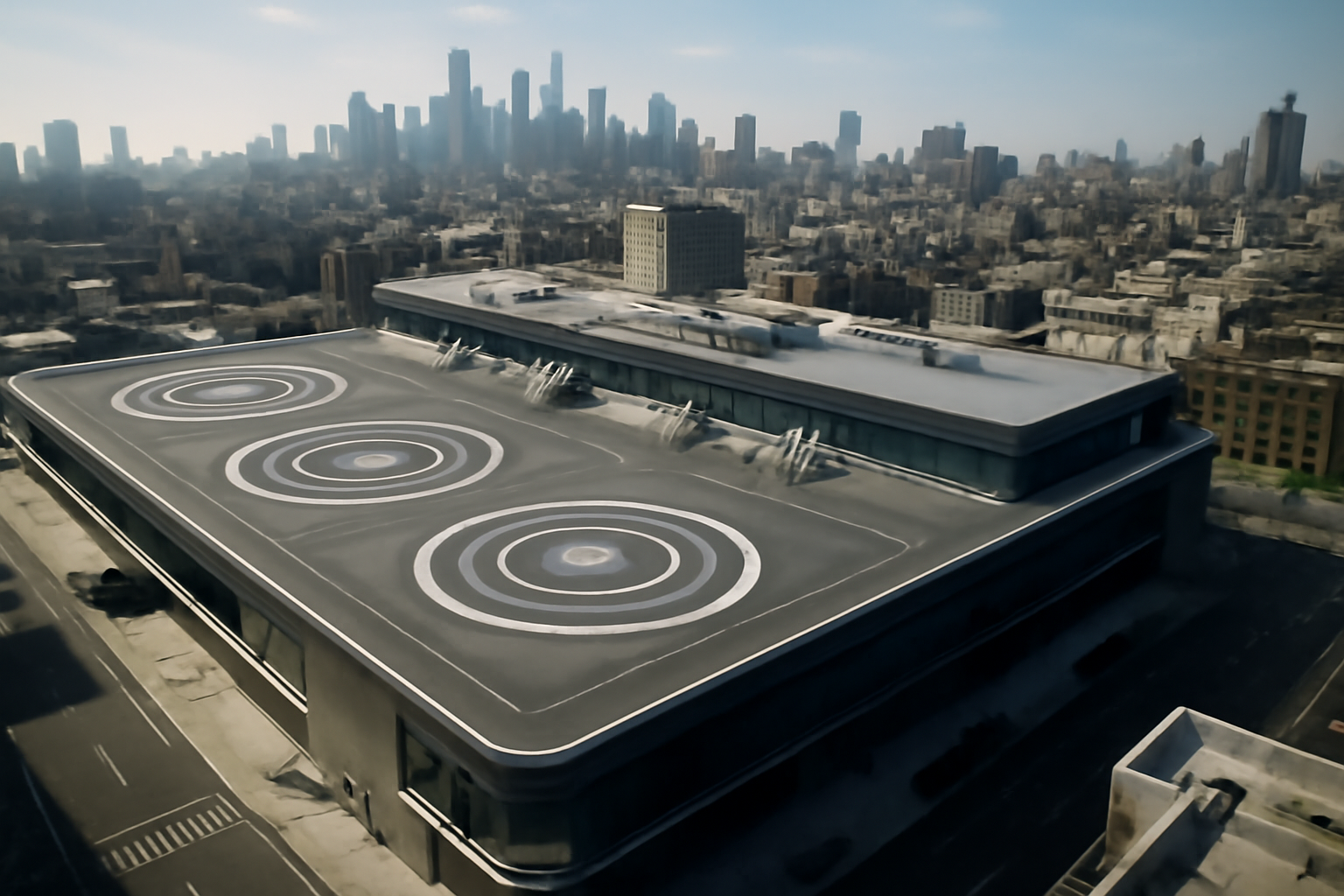
- The facility includes purpose-designed features: multi-pad landing areas, fast-charging systems for battery-powered aircraft, noise mitigation, and seamless ground transportation integration.
- Commercial eVTOL operators can now launch revenue-generating flying taxi services with proven regulatory pathways and infrastructure, accelerating global vertiport expansion and passenger adoption.
The skies just opened up for commercial urban air mobility. On August 19, 2026, a landmark moment arrived when regulatory authorities granted approval for the world’s first dedicated commercial vertiport designed to serve eVTOL flying taxi operations. This groundbreaking development marks a turning point in the transition from concept to real-world air transportation, signaling that the infrastructure for personal air mobility is finally becoming a regulated, operational reality.
A Historic Regulatory Milestone
The approval of a purpose-built commercial vertiport represents far more than a simple construction permit—it is a watershed moment for the eVTOL industry. For years, manufacturers and operators have worked toward this goal, designing aircraft and business models while waiting for the regulatory framework and physical infrastructure to catch up. The green light for this facility demonstrates that aviation authorities now consider eVTOL operations mature enough to support dedicated infrastructure investment.
This vertiport is not a makeshift rooftop or adapted parking garage. It is a purpose-designed facility engineered specifically for the unique demands of electric vertical takeoff and landing aircraft. Such dedication signals regulatory confidence that eVTOL flying taxis are no longer speculative technology but emerging transportation services that merit specialized infrastructure. The approval process itself likely required extensive safety analysis, operational protocols, and environmental assessments—all of which are now formally validated.
The timing is significant as well. As of August 2026, the eVTOL sector is reaching critical mass: multiple manufacturers are approaching or completing certification, pilot programs in major cities are expanding, and passenger demand research shows growing public acceptance. The vertiport approval slots neatly into this accelerating timeline, providing the physical anchor point that operators need to launch commercial services at scale.
Infrastructure Requirements for Urban Air Mobility
A modern eVTOL vertiport is fundamentally different from traditional airport infrastructure. These facilities must accommodate aircraft with zero runway requirements, enable rapid passenger turnover, integrate with ground transportation networks, and function within urban or suburban environments. The approved facility likely features multiple landing pads, passenger terminals, aircraft charging infrastructure, and weather monitoring systems—all consolidated into a compact footprint suitable for metropolitan deployment.
The electrical grid connection for vertiport operations is a critical infrastructure question that this approval addresses. eVTOL aircraft operate entirely on battery power, meaning vertiports must supply massive amounts of fast-charging capability between flights. The successful approval suggests that utility planning and grid integration have been thoroughly evaluated, removing one major uncertainty that has previously hindered development timelines. This represents a tangible solution to one of the industry’s most pressing operational challenges.
Noise mitigation, safety zones, and aircraft traffic management are additional infrastructure considerations that this vertiport design clearly addresses. Located in an environment where it can operate without excessive noise complaints or safety conflicts, this facility likely sits at an ideal intersection of urban accessibility and operational feasibility. Future vertiports will learn directly from this pioneering site’s design choices, operational procedures, and integration approaches.
Regulatory Framework Taking Shape
The approval process itself reveals how aviation regulators worldwide are evolving their frameworks to enable eVTOL operations. Rather than forcing electric aircraft into existing airplane or helicopter categories, authorities are developing new regulatory pathways that account for eVTOL unique characteristics: autonomous-capable systems, urban operations, battery safety, vertiport design standards, and pilot certification requirements. This vertiport approval couldn’t have happened without corresponding regulatory development.
The facility represents a testing ground for operational procedures that will scale across the industry. How passenger screening occurs at a vertiport, how weather impacts flight operations, how ground crew coordinates with aircraft systems, and how emergency procedures function in urban settings—all these questions get answered through real-world operations at this facility. The regulatory authority overseeing this vertiport gains practical experience that will inform certification standards for future operations and locations.
International implications are substantial. Other nations watching this approval can now adapt similar frameworks for their own jurisdictions, potentially accelerating the global timeline for eVTOL service launches. The approval demonstrates that the regulatory path is traversable, that operational standards can be established rigorously, and that communities can support vertiport facilities safely. This reduces uncertainty for manufacturers, operators, and investors worldwide who are betting on urban air mobility’s rapid expansion.
Commercial Operations on the Horizon
With infrastructure approval secured, the final piece of the eVTOL puzzle—the operational interface between aircraft and passenger—can move from planning into execution. Operators have been waiting for exactly this moment: regulatory certainty combined with approved infrastructure where they can begin generating revenue and building passenger volume. The vertiport opening likely triggers a cascade of operator announcements, route planning, and pre-launch marketing campaigns.
The economic model for eVTOL flying taxi operators depends critically on vertiport availability and utilization. Higher throughput per facility means lower per-flight overhead costs and more attractive pricing for passengers. This first commercial vertiport will establish baseline utilization metrics, revenue patterns, and operational costs that the industry has been estimating but never validating. Early commercial performance at this site will directly influence investment decisions for dozens of additional vertiports planned globally.
Passenger experience design is another dimension that becomes concrete with operational infrastructure in place. How arriving passengers flow through the vertiport, how they access aircraft, how flight crew interfaces with ground operations—these human factors can now be observed and refined in real commercial conditions. The vertiport becomes a living laboratory where the entire eVTOL service delivery model gets tested and optimized before rapid scaling.
Key Takeaways from This Vertiport Milestone
- Regulatory approval of the first dedicated commercial eVTOL vertiport marks a watershed moment, transitioning urban air mobility from concept to operational reality with purpose-built infrastructure designed specifically for electric aircraft operations.
- The facility must integrate charging systems for battery-powered aircraft, noise mitigation, safety protocols, and seamless ground transportation connections, solving major infrastructure questions that previously hindered industry development.
- With infrastructure and regulatory frameworks now proven viable, operators can launch commercial flying taxi services, generating real operational data and revenue models that will drive rapid expansion of vertiports globally.
The world’s first commercial eVTOL vertiport represents the inflection point where urban air mobility transitions from emerging technology into established transportation infrastructure. With regulatory approval, physical infrastructure, and operational frameworks now in place, the pieces are aligning for commercial eVTOL services to launch at meaningful scale. This facility will serve not just as an operational hub for flying taxi passengers, but as a proof point that urban air mobility’s rapid expansion can proceed confidently. The sky, quite literally, is opening up for personal air mobility.