HIGHLIGHTS
- AIR ONE features distributed electric propulsion with multiple independent motors for redundancy—a single motor failure doesn’t compromise flight safety.
- Multi-channel fail-safe architecture enables the aircraft to isolate faulty components and maintain safe operations across independent flight control systems.
- Advanced battery management with real-time cell monitoring and thermal regulation prevents power system failures from creating critical safety vulnerabilities.
The eVTOL industry is rapidly advancing toward commercial operations, but safety remains the paramount concern for regulators, manufacturers, and the general public. AIR, an emerging player in the personal air mobility space, has made a bold commitment to safety-first engineering with its AIR ONE eVTOL. The company’s recent emphasis on a safety-focused flight control philosophy represents a critical milestone in demonstrating how urban air vehicles can be designed with redundancy, reliability, and fail-safe systems at their core.
The Foundation of Safe eVTOL Design
Safety-focused flight control philosophy isn’t merely a marketing slogan—it’s an engineering discipline that requires rethinking every system from the ground up. AIR ONE’s approach begins with the fundamental principle that no single component failure should jeopardize the aircraft or its occupants. This philosophy echoes aerospace standards developed over decades but adapted for the unique challenges of eVTOL operations.
Traditional rotorcraft and fixed-wing aircraft rely on proven safety methodologies that have been refined through countless flight hours and regulatory iterations. However, eVTOLs introduce new complexities: distributed electric propulsion, autonomous or semi-autonomous flight capabilities, and operations in dense urban environments. AIR’s philosophy acknowledges these challenges by implementing redundancy at multiple levels—from propulsion systems to flight control computers to energy management systems.
The AIR ONE design prioritizes what engineers call “graceful degradation,” where system failures don’t result in catastrophic loss of function but instead trigger controlled, safe responses. This could mean automatically shifting propulsion to redundant motors, reducing speed, or initiating a controlled descent to a designated landing zone.
Redundancy in Propulsion and Power Systems
The most visible manifestation of AIR ONE’s safety philosophy appears in its distributed electric propulsion architecture. Rather than relying on a small number of large motors, the aircraft employs multiple independent propulsion units. This redundancy ensures that even if one or more motor units fail, the remaining propellers can maintain flight control and generate sufficient thrust for safe operations.
Battery management represents another critical safety frontier. Lithium-ion batteries, while energy-dense and ideal for electric aviation, require sophisticated monitoring and thermal management. AIR ONE integrates real-time battery health monitoring, individual cell monitoring, and advanced thermal management systems designed to prevent thermal runaway events. The flight control system continuously monitors battery state-of-charge and can adapt power distribution to maintain safe operating margins.
Energy reserve management is built into the flight envelope itself. The AIR ONE’s operational protocols ensure that pilots always maintain adequate battery reserve to return to a designated landing zone, similar to how traditional aircraft maintain fuel reserves for diversions. This systematic approach to energy management prevents the battery from becoming a single point of failure that could force an unsafe landing.
Autonomous Flight Control and Fail-Safe Architecture
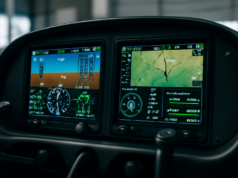
Modern eVTOLs like the AIR ONE increasingly incorporate autonomous or semi-autonomous flight capabilities. However, automation introduces new safety considerations: what happens when sensors disagree, when GPS signals are degraded, or when automated systems encounter unexpected conditions? AIR’s philosophy addresses these scenarios through a tiered fail-safe architecture.
The AIR ONE employs multiple independent flight control channels, each capable of independently stabilizing and controlling the aircraft. These channels operate in parallel, constantly cross-checking data and decisions. If one channel detects an anomaly—such as sensor disagreement or computational error—the system can isolate the faulty component and rely on the remaining channels to maintain safe flight.
Sensor fusion represents another key element. Rather than relying on any single sensor type—GPS, inertial measurement units, cameras, or radar—the AIR ONE integrates data from multiple sensors to create a robust understanding of its state and environment. If GPS becomes unavailable, the aircraft can continue safe operations using visual and inertial references. This layered approach ensures that no single sensor failure can incapacitate the aircraft.
Testing, Validation, and Regulatory Alignment
Safety-focused design philosophy must be backed by rigorous testing and validation. AIR’s commitment to safety extends beyond theoretical engineering to comprehensive ground testing, simulation, and flight testing protocols. The company works closely with aviation regulators to ensure that its safety systems meet or exceed regulatory expectations established for manned and unmanned aircraft.
The AIR ONE undergoes extensive testing in scenarios ranging from normal operations to edge cases and failure conditions. Flight control systems are validated through both simulation and real-world testing. Propulsion system redundancy is verified through controlled failure tests. Battery management systems are stress-tested under various environmental and operational conditions.
Regulatory alignment is embedded into AIR’s design philosophy from the start. Rather than designing an aircraft and then attempting to comply with certification requirements, the company integrates regulatory considerations throughout development. This approach streamlines the certification process and ensures that the final product meets aviation safety standards comparable to traditional aircraft while accommodating the unique aspects of eVTOL technology.
The Path Forward for Passenger Confidence
Public adoption of urban air mobility depends critically on safety perception and demonstrated safety performance. AIR’s emphasis on safety-focused flight control philosophy directly addresses both technical and psychological aspects of this challenge. Technically, the redundant systems and fail-safe architectures provide genuine protection. Psychologically, transparent communication about safety systems helps build passenger confidence.
The industry as a whole benefits when manufacturers like AIR prioritize safety-first engineering. It establishes safety benchmarks, demonstrates commitment to passenger protection, and creates competitive pressure for other manufacturers to invest equally in safety systems. As the eVTOL industry moves toward commercial operations in cities worldwide, safety-focused design becomes a differentiator and a requirement.
AIR’s AIR ONE represents a significant step in the right direction. By emphasizing safety-focused flight control philosophy and backing it with comprehensive engineering and testing, the company demonstrates that advanced air mobility can be developed responsibly. This approach doesn’t guarantee perfect safety—no transportation mode can achieve that—but it provides the foundation for operations that are as safe as, or safer than, comparable traditional aviation systems.
Key Takeaways
- AIR ONE incorporates distributed electric propulsion with multiple independent motor units to ensure continued flight control even if individual motors fail.
- Multi-layered fail-safe architecture and redundant flight control channels allow the aircraft to isolate faulty components while maintaining safe operations.
- Real-time battery monitoring, thermal management systems, and energy reserve protocols prevent power system failures from becoming critical safety issues.
The development of safe urban air mobility requires commitment to safety-first principles at every stage of design and operation. AIR’s philosophy provides a roadmap for how eVTOL manufacturers can build public confidence while advancing this transformative transportation technology.