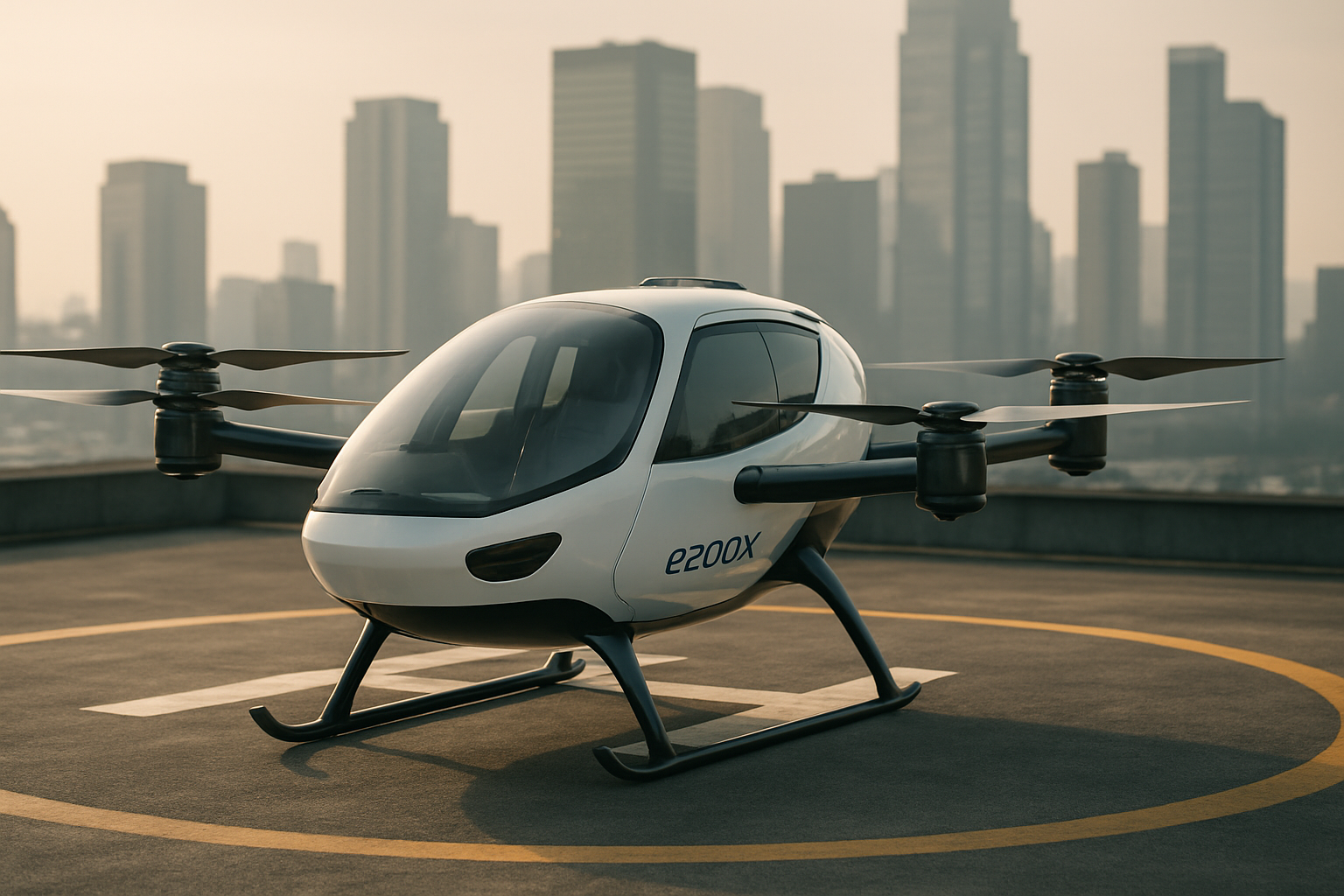
A groundbreaking innovation has emerged from India’s premier engineering institution, as an IIT Madras incubated startup unveils the e200X, which claims to be the world’s most compact passenger eVTOL air taxi. This development marks a significant milestone in the evolution of personal air mobility, bringing practical urban air transportation one step closer to mainstream adoption. The compact design of the e200X addresses one of the major challenges facing the eVTOL industry: creating vehicles that can operate efficiently in densely populated urban environments while maintaining passenger comfort and safety standards.
The e200X: Redefining Compact Air Mobility
The e200X represents a paradigm shift in how electric vertical takeoff and landing aircraft are designed and conceived. By focusing on compactness without sacrificing passenger capacity, this startup has tackled a fundamental challenge in urban air mobility development. The vehicle’s streamlined form factor makes it ideally suited for operations from existing urban infrastructure, potentially eliminating the need for expansive new vertiport facilities that would be required for larger eVTOL vehicles.
The engineering team at the IIT Madras incubated startup has demonstrated exceptional ingenuity in optimizing every aspect of the aircraft’s design. From its propulsion system to its structural components, every element has been carefully engineered to achieve maximum efficiency in a minimal footprint. This approach not only enhances the vehicle’s practical applicability but also reduces manufacturing complexity and material costs compared to larger competitors.
Compact eVTOL design is particularly crucial for markets in densely populated regions, where space constraints and regulatory requirements demand innovative solutions. The e200X’s unveiling suggests that Indian aerospace companies are poised to compete globally in the rapidly expanding personal air mobility sector, potentially offering solutions tailored specifically to the unique needs of emerging markets.
Technological Innovations Behind the Design
The e200X incorporates cutting-edge electrical and aeronautical technologies that enable its remarkable compactness. The vehicle’s power system, battery configuration, and motor arrangement have all been optimized to deliver performance comparable to larger aircraft while maintaining a significantly reduced physical profile. This technical achievement requires sophisticated integration of multiple complex systems working in perfect harmony.
Advanced materials and manufacturing techniques play a crucial role in the e200X’s construction. Lightweight composite materials reduce the overall weight of the aircraft, allowing for more efficient energy consumption and extended flight ranges. The startup’s access to IIT Madras research facilities and expertise has undoubtedly contributed to these technological breakthroughs, providing them with access to cutting-edge resources and intellectual capital.
The electrical architecture of the e200X demonstrates the maturity of modern eVTOL technology. High-density battery systems, efficient electric motors, and intelligent power management systems work together to provide reliable, sustained performance. These components have been rigorously tested and validated to meet the stringent safety and reliability standards required for passenger-carrying aircraft, ensuring that compactness does not come at the expense of operational safety.
Market Implications for Urban Air Mobility
The introduction of the e200X could fundamentally change the economic viability of urban air mobility services. Smaller, more efficient aircraft require less charging infrastructure and can operate from locations where larger eVTOLs would be impractical. This opens up possibilities for point-to-point transportation in cities where space is at a premium and existing infrastructure limitations have previously constrained eVTOL deployment.
For operators and service providers, the e200X’s compact design translates to lower operating costs, reduced energy consumption per passenger, and more flexible deployment options. These factors collectively improve the business case for commercial urban air mobility operations, potentially accelerating the timeline for widespread adoption in cities across India and globally.
The competitive landscape for eVTOL vehicles is intensifying as multiple manufacturers race to capture market share in this emerging industry. The e200X’s unveiling demonstrates that Indian companies are not content to be followers in this space but are actively developing solutions that could set new industry standards. The vehicle’s focus on practical compactness may prove to be exactly what the market needs to transition from niche applications to mainstream urban transportation.
Future Prospects and Development Timeline
While the e200X has been unveiled, the path to commercial deployment still requires completion of extensive testing, certification, and regulatory approvals. The startup must navigate complex airworthiness standards established by aviation authorities, obtain necessary certifications, and conduct comprehensive safety validation. These processes are essential for ensuring that the aircraft meets all required standards before carrying passengers in commercial operations.
The IIT Madras incubation ecosystem provides the startup with exceptional advantages in pursuing these development goals. Access to research facilities, collaboration opportunities with faculty and students, and connections within the aerospace and technology sectors can accelerate the journey toward commercialization. The institution’s reputation and credibility also enhance the startup’s standing with regulatory bodies and potential investors.
Looking ahead, the successful commercialization of the e200X could establish India as a significant player in the global eVTOL manufacturing landscape. The combination of innovative design, cost-effective manufacturing capabilities, and the ability to serve underserved markets positions Indian companies to capture substantial market opportunities in the personal air mobility sector.
Key Takeaways
- The e200X represents a breakthrough in compact eVTOL design, potentially revolutionizing urban air mobility in space-constrained cities
- IIT Madras incubated startups demonstrate India’s growing capability and innovation in advanced aerospace technologies
- Compact aircraft designs could significantly improve the economics of eVTOL operations and accelerate mainstream adoption
- The e200X’s development showcases how tailored solutions for specific market needs can create competitive advantages in emerging mobility sectors
- Regulatory approval and certification remain critical next steps before the aircraft can enter commercial service
The unveiling of the e200X by an IIT Madras incubated startup marks an important moment in the evolution of personal air mobility. By prioritizing compactness without compromising on passenger capacity or safety, this innovative aircraft addresses real-world challenges facing urban air transportation. As the startup progresses through development, testing, and certification phases, the global aviation community will be watching closely. The success of the e200X could validate the business case for compact eVTOL aircraft and inspire similar innovations worldwide. India’s contribution to the future of urban air mobility is clearly gaining momentum, and the e200X is a powerful testament to the innovative spirit emerging from the country’s leading technical institutions.