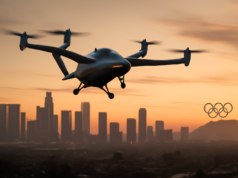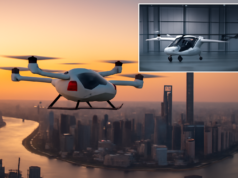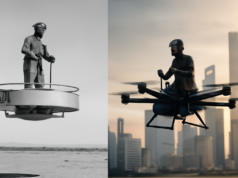

India has taken a significant stride in the personal air mobility revolution by unveiling its first electric flying taxi prototype. This groundbreaking development represents a critical milestone for the country’s emerging urban air mobility sector, with ambitious plans to launch air ambulance services as early as 2028. The initiative positions India as a major player in the global eVTOL market and demonstrates the country’s commitment to developing sustainable transportation solutions for its densely populated metropolitan areas.
India’s Historic eVTOL Prototype Announcement
The unveiling of India’s first electric flying taxi prototype marks a transformative moment for the nation’s transportation landscape. This aircraft represents years of research, development, and innovation from Indian aerospace and technology companies working in collaboration with government agencies. The prototype showcases India’s technical capabilities in designing and engineering advanced aerial vehicles capable of revolutionizing urban mobility.
The development of this eVTOL aircraft comes at a time when major global players like Joby Aviation, Archer Aviation, and Lilium are accelerating their own commercialization timelines. India’s entry into this competitive market demonstrates that developing nations are not merely adopting foreign technologies but are actively innovating and creating homegrown solutions tailored to their unique geographic and demographic challenges.
The prototype’s successful unveiling has generated considerable excitement within India’s tech and aerospace communities. Industry experts view this achievement as validation of India’s engineering prowess and as a catalyst that could attract significant investment in the country’s urban air mobility sector, potentially creating thousands of jobs in manufacturing, maintenance, and operations.
Air Ambulance Service Launch Timeline and Benefits
Perhaps the most exciting aspect of India’s eVTOL initiative is the planned launch of air ambulance services by 2028. This application represents a practical and humanitarian use case for the technology, addressing critical gaps in emergency medical transportation across India’s vast geography. Air ambulances could dramatically reduce response times in remote areas and during traffic congestion in major cities, potentially saving thousands of lives annually.
The 2028 timeline provides sufficient runway for regulatory approval, infrastructure development, and operational readiness. Indian aviation authorities will need to establish comprehensive frameworks governing eVTOL operations, pilot training, maintenance protocols, and emergency response procedures. This regulatory period will also allow the government to develop the necessary ground infrastructure, including vertiports and charging stations, particularly in major metropolitan areas and medical facilities.
Air ambulance operations represent an ideal initial use case for eVTOL technology. Unlike passenger transport, which requires large-scale adoption, air ambulances need only a limited number of aircraft and route corridors to make an immediate impact. This focused approach reduces complexity and allows operators to refine procedures and build public confidence before expanding to broader commercial services.
Challenges and Infrastructure Development
Despite the excitement surrounding India’s eVTOL announcement, significant challenges lie ahead. The country must address critical issues including regulatory framework development, pilot certification programs, and public safety standards specific to electric vertical takeoff and landing aircraft. These regulations must balance innovation with safety, ensuring that new aircraft meet international standards while accommodating India’s unique operational environment.
Infrastructure represents another substantial challenge. India will need to develop a network of charging stations, maintenance facilities, and vertiports across multiple cities to support the air ambulance service. These facilities require careful planning to integrate with existing healthcare infrastructure, particularly at major hospitals and medical emergency centers. Additionally, the electrical grid capacity in India’s cities must be assessed and potentially upgraded to support large-scale eVTOL charging operations.
Environmental and noise considerations also demand attention. While eVTOL aircraft are significantly quieter and produce zero direct emissions compared to traditional helicopters, regulatory authorities must establish noise limits, establish flight corridors that minimize disruption to residential areas, and conduct comprehensive environmental impact assessments. Public acceptance of regular electric aircraft operations will depend on demonstrating that these vehicles operate safely and with minimal community impact.
Global Context and Market Implications
India’s eVTOL initiative arrives at a critical juncture in the global personal air mobility market. Several international companies have received certification from aviation authorities, and the first commercial air taxi services are expected to launch in cities like Los Angeles, Singapore, and Japan within the next two to three years. India’s entry strengthens the global momentum toward urban air mobility adoption and demonstrates that this technology will eventually serve markets beyond wealthy developed nations.
The Indian eVTOL sector could benefit significantly from the country’s strong software engineering talent and competitive manufacturing ecosystem. India’s ability to produce affordable electronics, batteries, and aerospace components at scale could enable the development of cost-effective eVTOL solutions suited to emerging markets. This positions India not just as a consumer of eVTOL technology but potentially as a manufacturer and exporter serving Asia-Pacific and African markets.
The prototype announcement also signals to international eVTOL manufacturers that India represents a significant future market. With a population exceeding 1.4 billion people, widespread urban congestion, and growing healthcare demands, India offers compelling commercial opportunities for companies willing to invest in local partnerships and tailor their solutions to the Indian context.
Key Takeaways from India’s eVTOL Breakthrough
- India has unveiled its first electric flying taxi prototype, establishing the country as an active participant in the global eVTOL revolution
- Air ambulance services are planned for launch by 2028, offering a practical initial application with significant life-saving potential
- Substantial infrastructure development will be required, including vertiports, charging stations, and maintenance facilities across multiple cities
- Regulatory frameworks must be established to ensure safety while enabling innovation and rapid commercialization
- India’s large population, engineering talent, and manufacturing capabilities position it as both a significant market and potential producer of eVTOL technology
- The timeline allows adequate preparation for successful integration of electric aircraft into India’s aviation ecosystem
India’s unveiling of its first electric flying taxi prototype represents a watershed moment for personal air mobility in the Asia-Pacific region. The ambitious 2028 air ambulance service launch demonstrates that eVTOL technology is transitioning from a futuristic concept to a practical reality with immediate humanitarian applications. As India navigates the challenges of regulation, infrastructure development, and public acceptance, the success of this initiative could accelerate the global adoption of electric aircraft and inspire similar programs across developing nations. The coming years will be critical in determining whether India can translate its technological achievement into operational success, establishing a blueprint for sustainable urban air mobility that serves not just the wealthy but the broader population.