HIGHLIGHTS
- Joby Aviation advancing manufacturing automation and supply chain optimization to scale production toward commercial aircraft delivery
- FAA certification pathways becoming increasingly defined, supporting Joby’s timeline for near-term commercial operations launch
- Strong operating partner interest and market demand for urban air mobility validates eVTOL business model and revenue projections
Joby Aviation (NYSE:JOBY) released its second-quarter 2026 earnings results, marking another significant milestone in the company’s journey toward commercializing electric vertical takeoff and landing (eVTOL) aircraft. The earnings call provided investors and industry observers with critical updates on manufacturing progress, regulatory milestones, and the pathway to revenue generation as the company approaches its initial operations launch window.
Manufacturing and Production Readiness
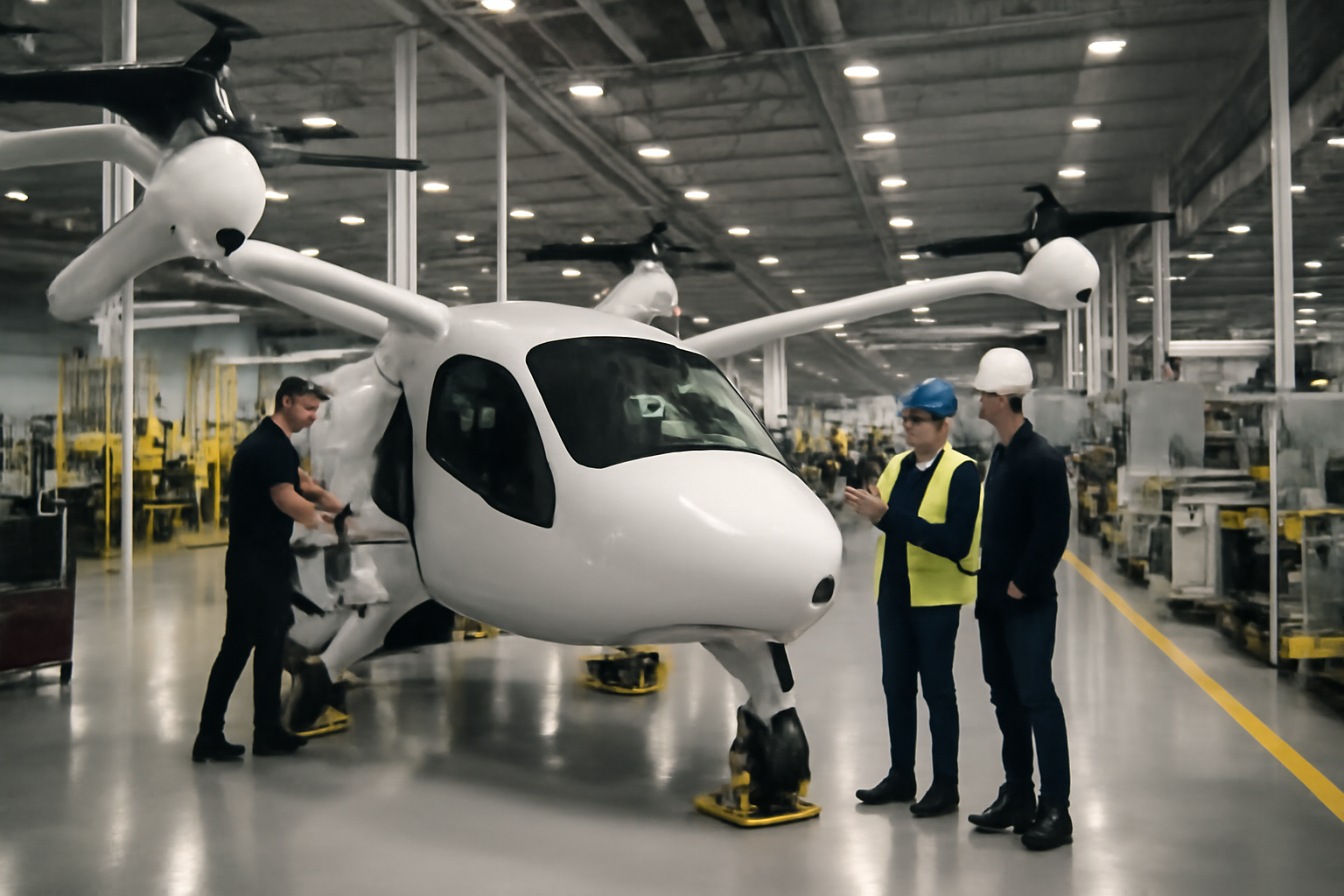
Joby Aviation continues to advance its manufacturing capabilities to support its commercial launch timeline. The company has made substantial progress in scaling production processes at its facilities, with a focus on ensuring quality and safety standards that meet regulatory requirements. This manufacturing infrastructure represents a crucial foundation for the company’s ability to deliver aircraft to operating partners.
During the earnings call, management highlighted investments in automation and supply chain optimization to improve efficiency and cost management. These efforts are designed to position Joby competitively as production volumes increase from prototype and test aircraft toward commercial aircraft delivery.
The company’s manufacturing strategy balances speed to market with the rigorous testing and validation required for a new aircraft category. This careful approach reflects Joby’s commitment to delivering safe, reliable aircraft that can earn public trust as eVTOL services begin operations.
Regulatory Progress and Certifications
A major focus of the Q2 earnings call centered on Joby’s interactions with the Federal Aviation Administration (FAA) and international aviation authorities. The company has been working closely with regulators to define certification pathways for its eVTOL design, which involves establishing new performance standards and operational procedures for electric vertical aviation.
Joby outlined its compliance strategy, demonstrating how the company’s aircraft design and operational protocols align with emerging regulatory frameworks. The FAA’s Special Conditions and continued special authorization process have provided clarity on the certification requirements that Joby must meet before commercial operations can begin.
International regulatory conversations have also progressed, with Joby engaging with aviation authorities in markets where the company plans to operate. These parallel efforts position Joby to pursue simultaneous certification pathways and accelerate time to revenue across multiple jurisdictions.
Market Demand and Partnership Strategy
During the earnings presentation, Joby discussed strong interest from potential operating partners and customers eager to integrate eVTOL services into their mobility networks. The company’s partnership approach focuses on collaborating with established air taxi operators, urban air mobility platforms, and transportation providers who can leverage Joby’s aircraft in their operations.
Management emphasized that market demand for point-to-point, high-speed urban transportation continues to grow as congestion in major metropolitan areas increases. Joby’s aircraft design—optimized for efficiency, noise reduction, and passenger comfort—positions the company to address this demand effectively while maintaining strong unit economics.
The company also highlighted pilot programs and trial operations being evaluated in strategic markets, which will serve as proof-of-concept demonstrations for commercial viability. These limited-scale operations generate valuable operational data while building customer confidence and public acceptance of eVTOL technology.
Financial Outlook and Path to Revenue
Joby’s Q2 earnings call provided updates on the company’s financial position, capital requirements, and projected timeline to achieving operational revenue. The company has secured strategic investments and financing to support development through initial commercial operations, with a clear pathway to sustainable profitability.
Management articulated a phased revenue model beginning with limited commercial operations in the near term, followed by rapid scaling as manufacturing capacity increases and regulatory approvals expand. This staged approach reduces financial risk while allowing the company to optimize operations and validate business assumptions in real-world conditions.
Cost management and operational efficiency remain central to Joby’s financial strategy. The company is focused on reducing unit costs through manufacturing improvements, supply chain optimization, and operational standardization—factors critical to achieving the affordable pricing necessary for sustained market demand.
Key Takeaways from the Earnings Call
- Joby Aviation is advancing manufacturing capacity and automation to support commercial aircraft production and delivery schedules
- Regulatory progress with the FAA and international authorities continues on track, with certification pathways becoming increasingly defined
- Strong market interest from operating partners and demand for urban air mobility services positions Joby for near-term commercial launch and revenue generation
Joby Aviation’s Q2 2026 earnings results demonstrate the company’s continued progress toward becoming a commercial-stage eVTOL manufacturer. With regulatory clarity improving, manufacturing capabilities advancing, and market demand crystallizing, Joby stands at a critical inflection point in the development of electric vertical aviation. The coming quarters will be essential as the company transitions from development toward sustained commercial operations and revenue growth. For investors and industry observers, Joby’s execution against its stated milestones will be a bellwether for the broader viability and timeline of the eVTOL industry.