
HIGHLIGHTS
- Gadfin officially begins serial production of the Spirit One HD eVTOL, transitioning from prototype development to full-scale commercial manufacturing
- Production milestone confirms successful regulatory certification and manufacturing readiness, accelerating market deployment timelines
- Spirit One HD’s commercial success will influence investor confidence, vertiport infrastructure development, and competitive positioning across the eVTOL industry
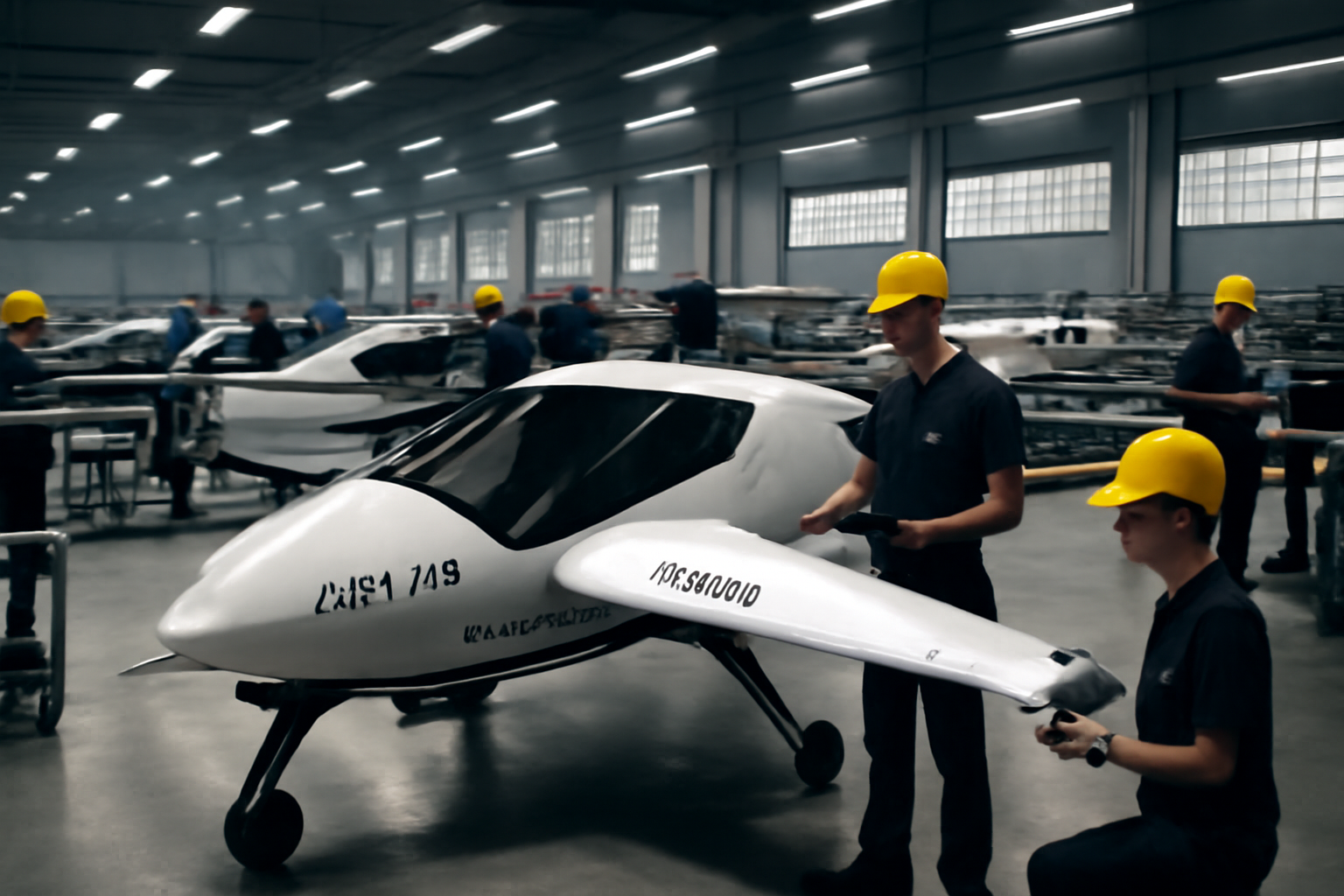
Gadfin has officially begun serial production of its Spirit One HD eVTOL aircraft, a significant milestone that brings electric vertical takeoff and landing technology closer to widespread commercial deployment. This announcement represents a major step forward for the emerging urban air mobility market, as the company transitions from prototype development to full-scale manufacturing operations.
The Spirit One HD: Engineering Excellence Meets Commercial Viability
The Spirit One HD represents Gadfin’s commitment to delivering a practical, efficient eVTOL solution for personal air mobility. With advanced electric propulsion systems and vertical takeoff capabilities, the aircraft is designed to operate in urban and suburban environments where traditional fixed-wing aircraft cannot operate effectively. The HD designation indicates the high-definition operational capabilities and enhanced performance features incorporated into this production model.
The aircraft’s design incorporates lessons learned from extensive prototyping and flight testing phases. Gadfin’s engineering team has optimized battery efficiency, motor performance, and structural integrity to ensure the Spirit One HD meets both regulatory requirements and real-world operational demands. The focus on reliability and safety has been paramount throughout the development process.
Serial production enables Gadfin to manufacture units at scale while maintaining quality standards essential for commercial aviation. The transition from prototype to production represents a technical and logistical achievement, requiring investment in manufacturing facilities, supply chain management, and workforce development specialized in eVTOL assembly.
Market Timing and Commercial Deployment Strategy
The launch of serial production comes at an opportune moment for the eVTOL industry, as regulatory frameworks evolve and consumer interest in air mobility solutions grows. Gadfin’s decision to enter production demonstrates confidence in market demand and the company’s ability to deliver certified aircraft to customers seeking innovative transportation options.
Deployment strategies for the Spirit One HD will likely focus on initial markets with supportive regulatory environments and established vertiport infrastructure. Urban areas with high congestion, long commute times, and strong demand for premium transportation are prime candidates for early commercial operations. Gadfin’s approach to market entry will shape expectations for other eVTOL manufacturers following similar production timelines.
The company’s production capacity and delivery timeline will be critical indicators of market readiness. As units begin leaving the assembly line, real-world operational data will provide valuable insights into the performance, reliability, and commercial viability of electric aircraft in practical flight operations.
Regulatory Pathway and Certification Achievements
Serial production of the Spirit One HD indicates that Gadfin has successfully navigated regulatory certification processes required for commercial aircraft manufacturing. Unmanned Systems Technology and other regulatory bodies have likely approved design specifications, manufacturing standards, and operational protocols that govern production and deployment.
The certification process for eVTOL aircraft involves rigorous testing of flight performance, safety systems, battery management, and pilot interface design. Gadfin’s achievement of production-ready status demonstrates competence in meeting these demanding regulatory standards, which vary by jurisdiction but increasingly align toward international aviation norms.
Continued regulatory evolution will shape how quickly the Spirit One HD and competing eVTOL models can expand operations beyond initial markets. Air traffic integration, pilot licensing requirements, and operational airspace designations remain areas of active regulatory development that will influence commercial timelines.
Industry Implications and Competitive Landscape
Gadfin’s serial production launch strengthens the competitive dynamics of the personal air mobility sector. Multiple manufacturers now pursuing production milestones, creating a race to capture early market share and establish brand leadership in this nascent industry. The Spirit One HD joins a growing roster of aircraft approaching or entering commercial service.
Success of Gadfin’s production initiative will likely accelerate decision-making among investors, operators, and technology suppliers supporting the eVTOL ecosystem. Demonstration of manufacturing capability and product reliability encourages ecosystem participants to commit resources to vertiport development, ground infrastructure, and operational support services.
Competition in the eVTOL market extends beyond aircraft design to include customer service, operational support, and integration with broader mobility networks. Gadfin’s ability to support operators through training, maintenance, and continuous improvement will be essential for long-term commercial success and market differentiation.
Key Takeaways from Gadfin’s Production Milestone
- Gadfin’s Spirit One HD enters serial production, marking the transition from development to commercial manufacturing of certified eVTOL aircraft
- Production achievement indicates successful regulatory certification and manufacturing readiness for urban air mobility operations
- Market deployment strategy and operational support infrastructure will determine commercial viability and competitive positioning in the rapidly evolving eVTOL sector
Gadfin’s serial production of the Spirit One HD eVTOL aircraft represents a pivotal moment for the personal air mobility industry. As manufacturing operations ramp up and the first production units reach customers and operators, the aviation community will gain critical insights into the commercial feasibility of electric aircraft. The Spirit One HD’s success or challenges will influence investment decisions, regulatory policy, and technological development across the entire eVTOL sector. This milestone underscores the industry’s transition from theoretical possibility to operational reality, promising transformative changes to urban transportation in the coming years.