HIGHLIGHTS
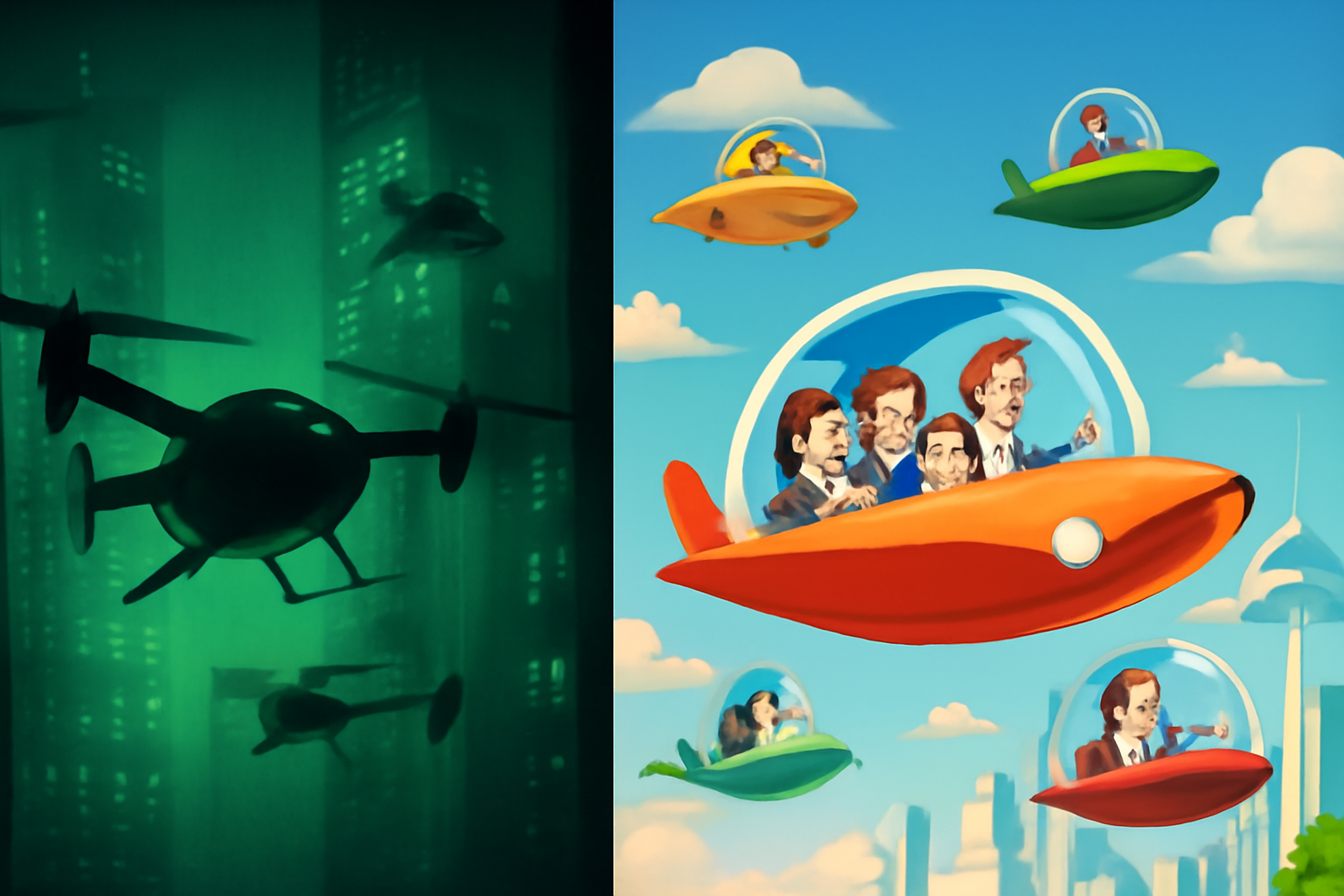
- Warner Bros. green-lights both Matrix 5 and Jetsons adaptations, creating a cultural showdown between dystopian and utopian visions of eVTOL technology in urban life.
- Entertainment narratives substantially influence public acceptance of emerging technologies; optimistic framing accelerates adoption while skeptical narratives drive critical policy design.
- Real-world eVTOL success requires balancing Jetsons-style aspiration with Matrix-style scrutiny of surveillance, equity, and democratic control over aerial infrastructure.
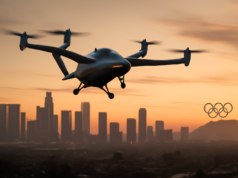
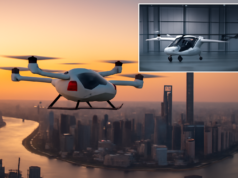
Warner Bros.’ decision to move forward with both a Matrix 5 sequel and a Jetsons adaptation has sparked fascinating discussions about how Hollywood envisions the future of urban air mobility. These two projects represent fundamentally different approaches to depicting personal aerial transportation—one grounded in a dystopian, tech-noir reality, and the other rooted in optimistic, utopian imagination. As the eVTOL industry accelerates toward commercialization, these cultural narratives may shape public perception of how flying vehicles will integrate into modern life.
The Matrix’s Cyberpunk Vision of eVTOL Technology
The Matrix franchise has always presented technology as a tool of control, surveillance, and corporate dominance. In the context of a potential Matrix 5, urban air mobility would likely be portrayed as part of an increasingly centralized surveillance infrastructure, where eVTOL vehicles serve as platforms for monitoring, tracking, and managing populations. This darker interpretation aligns with contemporary concerns about data privacy and the concentration of technological power in corporate hands.
The original Matrix trilogy established a world where advanced technology exists to maintain systemic control. A modern reimagining would naturally incorporate autonomous eVTOL networks that monitor city streets, enforce regulations, and create invisible layers of oversight. Rather than celebrating the freedom of flight, a dystopian narrative would explore how aerial vehicles could become instruments of oppression, particularly in densely populated urban centers where air traffic control systems could theoretically track every movement.
This narrative tension reflects real-world anxieties about the eVTOL revolution. As companies like Joby Aviation, Lilium, and Archer Aviation prepare for commercial operations, questions persist about who controls these systems, how data is collected, and whether the technology will truly democratize urban transportation or further entrench inequality. The Matrix’s pessimistic framing of technology serves as a cultural counterweight to industry optimism.
The Jetsons’ Optimistic Urban Air Mobility Future
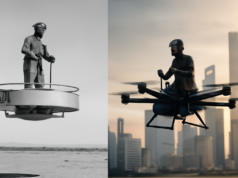
Conversely, the Jetsons adaptation promises to deliver the flying car fantasy that has captivated audiences since the 1960s cartoon debuted. The Jetsons universe depicts eVTOL-equivalent technology as seamlessly integrated into daily life—personal aerial vehicles that whisk families to work, school, and recreation with effortless convenience. This vision reflects the industry’s aspirational messaging about how air mobility will solve traffic congestion, reduce commute times, and enhance quality of life for urban residents.
The Jetsons approach romanticizes innovation and assumes that technological progress naturally leads to human flourishing. Flying vehicles are depicted as accessible, reliable, and fundamentally positive additions to society. They enable social mobility, create new job opportunities, and foster a sense of progress and possibility. For the eVTOL industry, this narrative is invaluable—it pre-frames flying vehicles as desirable, inevitable, and beneficial before the technology even arrives in consumers’ hands.
However, the real-world split difference between these two narratives is where the actual story lies. The Jetsons assumes abundant energy resources and perfect infrastructure. The Matrix assumes technology without moral guardrails. Reality will likely be messier, more contested, and more dependent on regulatory choices, economic accessibility, and social equity than either dystopian or utopian narratives suggest.
How Entertainment Shapes Technology Adoption
Cultural narratives matter enormously in determining whether emerging technologies gain public acceptance or face resistance. The way Hollywood depicts eVTOL vehicles influences how regulators, investors, and consumers perceive their role in society. When major studios like Warner Bros. invest in competing visions of the future, they’re not just making entertainment—they’re engaged in a form of cultural forecasting that influences real-world innovation trajectories.
Studies in technology sociology demonstrate that public acceptance of disruptive innovations depends significantly on cultural messaging. Self-driving cars, for instance, faced adoption barriers partly because they were introduced during a period of intense skepticism and dystopian narratives about job displacement. In contrast, when SpaceX’s Starship landings are framed as heroic achievements, they generate enthusiasm and investment momentum. The Jetsons’ optimistic framing of aerial vehicles could significantly accelerate consumer demand and regulatory acceptance.
The Matrix narrative, meanwhile, taps into legitimate concerns about surveillance capitalism and corporate control over critical infrastructure. By portraying eVTOL systems as potential instruments of oppression, it encourages audiences to think critically about governance structures, regulatory frameworks, and who benefits from air mobility systems. This skepticism, when channeled productively, can drive better policy design and more equitable distribution of benefits.
The Real-World Middle Ground: Building Sustainable Air Mobility
Between the Jetsons’ unbridled optimism and the Matrix’s cautious dystopia lies the actual challenge facing the eVTOL industry: building air mobility systems that are safe, sustainable, equitable, and genuinely beneficial to urban communities. This requires thinking beyond entertainment narratives to address practical questions about energy sources, infrastructure costs, noise pollution, and economic accessibility.
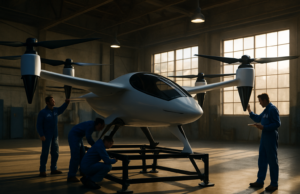
The real constraint isn’t technological—major manufacturers have proven that eVTOL vehicles can be designed and built safely. The constraint is systemic: energy grids must support millions of electric aircraft, cities must redesign airspace management, regulatory frameworks must balance innovation with safety, and the technology must remain economically viable while remaining accessible to broader populations. These challenges demand sustained investment in infrastructure, policy innovation, and social consensus-building that transcends simple optimistic or pessimistic narratives.
Warner Bros.’ dual commitment to both the Matrix and Jetsons franchises inadvertently reflects the industry’s actual task. The Jetsons provides the inspirational north star—the vision of seamless, accessible urban air mobility. The Matrix provides the critical guardrails—the requirement to think carefully about power structures, surveillance, and who controls technology. The real eVTOL revolution will unfold through the productive tension between these two impulses: aspiration and skepticism, innovation and regulation, possibility and precaution.
Key Takeaways: Entertainment’s Role in Shaping Air Mobility’s Future
- Warner Bros.’ Matrix 5 and Jetsons adaptations present opposing cultural narratives about eVTOL technology—one dystopian and surveillance-focused, the other utopian and convenience-centered
- Cultural narratives significantly influence technology adoption rates; optimistic framing accelerates acceptance while skeptical framing encourages critical policy design
- Real-world eVTOL success depends on navigating between aspirational visions and legitimate concerns about equity, sustainability, and democratic control over critical infrastructure
As the eVTOL industry moves from speculation toward commercial deployment, these competing cultural narratives will increasingly shape public expectations, regulatory decisions, and investment priorities. Neither the Jetsons’ optimism nor the Matrix’s skepticism captures the complete picture, but together they frame the essential conversation about what kind of air mobility future we actually want to build. The next decade will reveal whether the industry can learn from both narratives—maintaining the aspiration while addressing the legitimate concerns—to create air mobility systems that genuinely improve urban life for all communities, not just the privileged few.