HIGHLIGHTS
- Japanese eVTOL developer WEFLY secures ¥100M ($14.9M) Series A led by Suzhou Capital Group, accelerating commercialization timeline for Asian urban air mobility
- Suzhou Capital’s investment provides manufacturing expertise and supply chain access across East Asia’s advanced aviation and battery technology ecosystem
- Funding positions WEFLY to achieve regulatory certification and launch initial commercial operations within 24-36 months, supported by favorable Asian regulatory environment
WEFLY, a Japanese developer of electric vertical takeoff and landing aircraft, has announced a successful Series A funding round of ¥100 million (approximately $14.9 million USD) led by Suzhou Capital Group. This significant capital injection represents a major milestone for the emerging eVTOL industry in Asia and signals growing investor confidence in Japan’s role as a regional innovation hub for urban air mobility solutions.
WEFLY’s Vision for Urban Air Mobility
WEFLY was founded with a clear mission to revolutionize urban transportation through electric aircraft technology. The company focuses on developing practical, commercially viable eVTOL systems designed to address congestion and emissions challenges in densely populated metropolitan areas across Asia. By combining Japanese engineering precision with innovative design philosophy, WEFLY positions itself as a key player in the global race to establish sustainable personal air mobility infrastructure.
The company’s approach emphasizes passenger safety, operational efficiency, and environmental sustainability. Unlike some competitors focused purely on luxury or experimental applications, WEFLY targets the broader market opportunity represented by daily urban commuters and logistics operations. This strategic positioning aligns with global trends toward scalable, accessible air mobility solutions rather than niche luxury services.
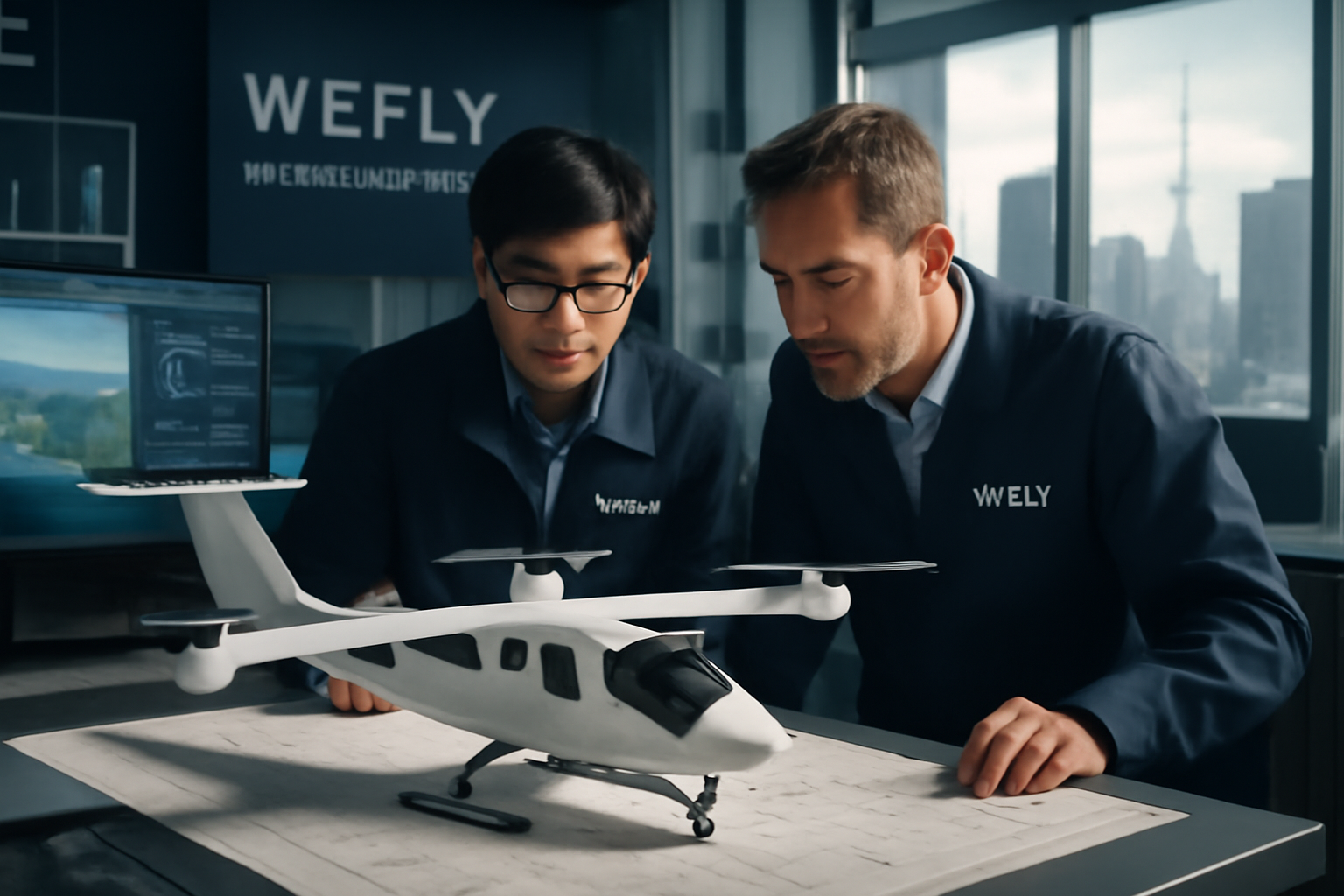
WEFLY’s team brings together aerospace engineers, software specialists, and aviation industry veterans with decades of combined experience. Their technical foundation enables rapid prototyping and iterative development cycles, accelerating progress toward certification and commercial deployment across Asia-Pacific markets.
Strategic Importance of Suzhou Capital Group’s Leadership
Suzhou Capital Group’s decision to lead WEFLY’s Series A round underscores the increasing focus of Asian venture investors on eVTOL technology. Suzhou, China’s dynamic innovation hub near Shanghai, has become a nexus for advanced manufacturing, semiconductor development, and emerging mobility solutions. By backing WEFLY, Suzhou Capital Group expands its portfolio in high-growth transportation technology sectors.
This investment partnership connects WEFLY with valuable resources beyond capital. Suzhou Capital Group brings access to manufacturing expertise, supply chain networks, and regulatory relationships throughout China and Asia. Such connections are invaluable for eVTOL developers requiring specialized battery suppliers, electric motor manufacturers, and composite material producers—resources concentrated in East Asia’s industrial ecosystem.
The funding reflects broader recognition that Japan-led innovation in robotics, automation, and precision engineering creates unique advantages for eVTOL development. Investors increasingly view Japanese companies in this space as capable of achieving both technological excellence and manufacturing scalability simultaneously, differentiating them from Western competitors pursuing similar goals.
Market Catalysts Driving eVTOL Investment in 2026
The timing of WEFLY’s Series A arrives amid accelerating industry maturation. Multiple eVTOL programs globally are approaching or completing certification processes, while existing players secure operational licenses and begin scheduled service trials. This convergence of regulatory progress and commercial readiness attracts institutional capital seeking exposure to the sector’s transition from development to revenue generation phases.
Asia-Pacific markets present particularly compelling investment opportunities due to population density, rising middle-class wealth, government incentives for clean transportation, and limited legacy infrastructure constraining traditional transport expansion. Cities like Tokyo, Singapore, Seoul, and Shanghai face acute congestion challenges, making eVTOL adoption economically rational for both operators and passengers willing to pay premium prices for time savings.
Government support across Asia also accelerates adoption timelines. Japan’s regulatory framework has become increasingly accommodating toward experimental and commercial eVTOL operations, while Chinese authorities actively promote electric aircraft development as part of broader clean technology initiatives. This regulatory tailwind reduces market entry barriers and de-risks investment in regional champions like WEFLY.
WEFLY’s Path to Commercial Operations
With ¥100 million in Series A capital, WEFLY can accelerate multiple development milestones simultaneously. Funding priorities likely include advancing prototype certification, expanding engineering teams, scaling battery and propulsion system performance, and establishing partnerships with potential operators. This capital enables the company to compress development timelines typically measured in years, potentially positioning it for commercial services launch within 24-36 months.
The Series A round also provides resources for regulatory engagement, a critical yet often underestimated aspect of eVTOL commercialization. Navigating certification requirements from Japanese Civil Aviation Bureau, preparing for eventual FAA/EASA interactions, and establishing safety protocols requires dedicated regulatory affairs expertise. Strong capitalization ensures WEFLY can maintain compliance teams and documentation standards expected by aviation authorities.
Additionally, these funds support business development activities including operator partnerships, vertiport site identification, and customer acquisition. Early partnerships with logistics companies, corporate transportation services, or tourism operators can provide revenue validation and operational learning before scaling to mass-market urban commuting applications.
Key Strategic Imperatives for WEFLY’s Next Phase
- Achieve certification milestones with aviation regulators while demonstrating safety and performance specifications exceeding industry standards
- Establish exclusive partnerships with regional operators to secure initial commercial deployment routes and build market proof-of-concept in high-value corridors
- Secure supply chain agreements for battery cells, electric motors, and composite materials ensuring cost-effective manufacturing at scale
WEFLY’s ¥100 million Series A funding round represents more than a typical venture capital transaction—it symbolizes investor confidence in Japanese innovation, Asian market leadership in eVTOL development, and the sector’s transition toward commercial reality. As the company advances from prototype development toward operational certification and initial revenue generation, WEFLY joins a growing cohort of regional champions reshaping urban mobility across Asia-Pacific. The next 12-18 months will be critical, with certification achievements and early partnership announcements likely determining whether WEFLY becomes a defining success story or one of many valiant efforts ultimately consolidating into larger aerospace players.