HIGHLIGHTS
- Archer Halo eVTOL is based on Anduril’s military Thunder Attack VTOL platform, bringing defense-grade engineering to commercial passenger and cargo operations
- Military-proven architecture exceeds FAA certification standards, accelerating regulatory approval and reducing technical risk for commercial deployment
- This defense-to-commercial technology transfer model could reshape the eVTOL industry, establishing collaborations with aerospace contractors as the preferred development path over solo startups
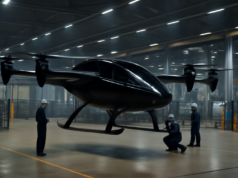
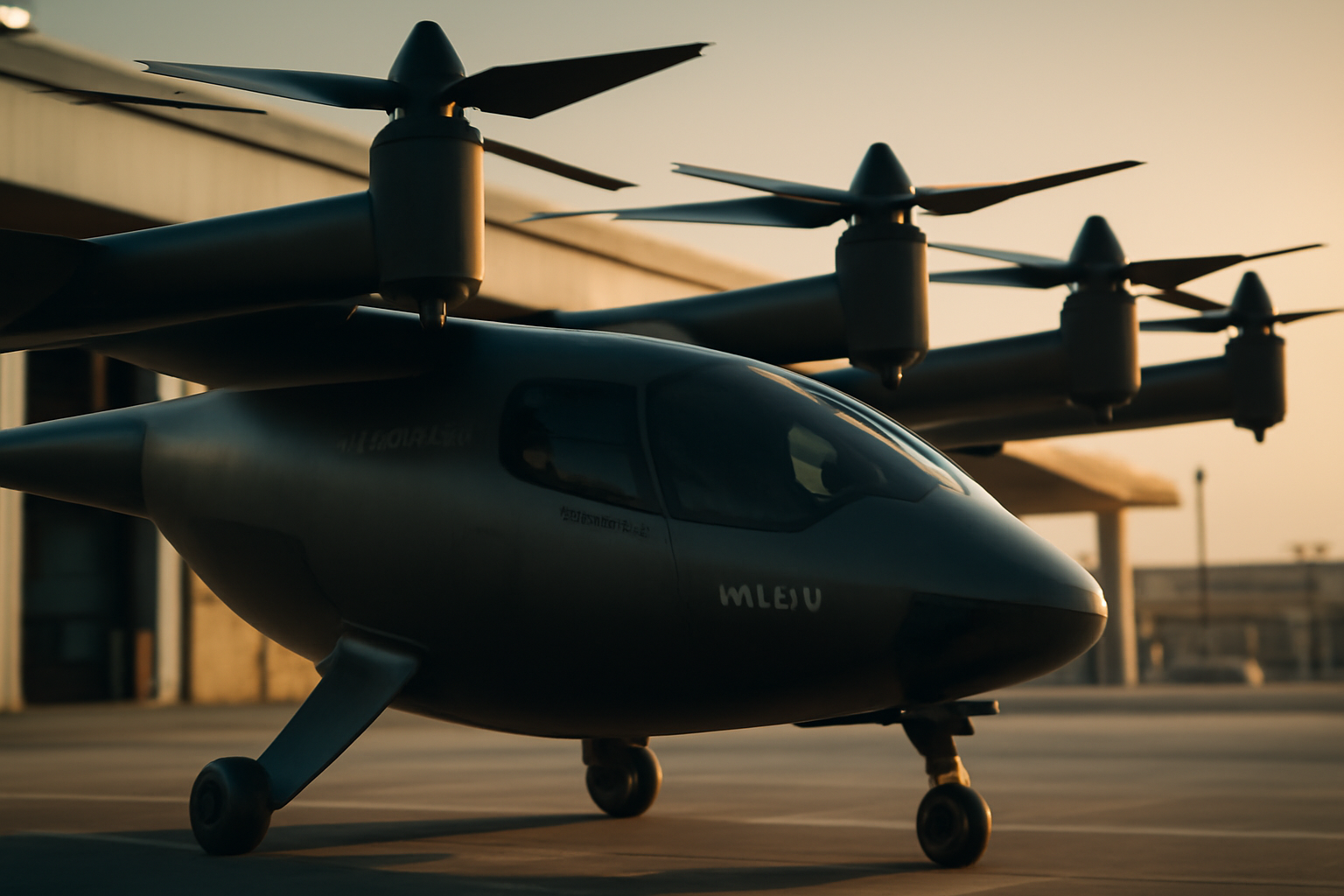
The intersection of military innovation and commercial aviation has always been a catalyst for technological breakthroughs. In a fascinating convergence of defense and civilian air mobility, Archer Aviation’s Halo eVTOL has emerged as the commercial counterpart to Anduril’s Thunder Attack VTOL platform. This development represents a pivotal moment for the personal air mobility (PAM) industry, blending cutting-edge engineering from both sectors to create aircraft designed for practical, scalable deployment in urban and regional markets.
The Thunder Attack Foundation
Anduril’s Thunder Attack VTOL was designed with military precision and operational demands in mind. This aircraft embodies years of research into vertical takeoff and landing capabilities, advanced materials science, and autonomous systems integration. The platform represents the pinnacle of what military aviation contractors can achieve when given specific performance requirements and extended development timelines.
The Thunder Attack’s architecture prioritizes reliability, speed, and versatility in challenging operational environments. Its design philosophy emphasized real-world performance metrics that military operators demand: rapid deployment, sustained operation, and the ability to operate from unprepared or minimal infrastructure. These core principles have proven so robust that they caught the attention of commercial aviation developers seeking similar architectural foundations.
By leveraging Anduril’s proven VTOL framework, Archer Aviation has accelerated its path to commercial certification while benefiting from lessons learned through rigorous military testing and validation protocols. This approach allows Archer to focus on adapting proven technology for the civilian marketplace rather than reinventing fundamental systems.
Archer Halo: Adapting Military Innovation for Commercial Markets
The Archer Halo represents a strategic pivot in how the eVTOL industry approaches design and development. Rather than building entirely from scratch, Archer has recognized the value in established platforms and adapted them for commercial passenger and cargo applications. The Halo maintains the structural and aerodynamic DNA of the Thunder Attack while incorporating modifications essential for commercial operations, passenger comfort, and regulatory compliance.
Archer’s design team has carefully balanced performance capabilities with practical considerations that commercial operators prioritize: efficiency, reliability, maintainability, and cost-effectiveness. The Halo is engineered to operate on regular schedules between established vertiports, carrying passengers on regional routes that represent the near-term market opportunity for eVTOL services. The aircraft’s configuration reflects this commercial focus while retaining the robustness inherited from its military cousin.
The decision to base the Halo on proven military architecture signals confidence in the underlying design principles. Commercial aviation has a long history of benefiting from military developments—jet engines, composites, avionics, and flight control systems all have roots in defense research. The Halo continues this tradition, demonstrating how government-funded aerospace innovation can ultimately serve broader societal transportation needs.
Engineering Excellence and Shared Development Benefits
The relationship between Thunder Attack and Archer Halo exemplifies how defense contractors and commercial aerospace companies can collaborate to accelerate innovation cycles. By sharing fundamental engineering solutions, both platforms benefit from expanded testing scenarios, operational feedback, and continuous improvement iterations. This creates a virtuous cycle where military and commercial applications inform and strengthen each other.
From an engineering standpoint, the dual-use approach allows Archer to invest in development with confidence that the core platform has undergone stringent validation. Military specifications often exceed commercial requirements, meaning that systems proven for defense applications typically exceed civilian safety and performance standards. This provides a significant headstart in meeting FAA and international aviation certification requirements.
The shared DNA also enables economies of scale in manufacturing, supply chain management, and maintenance protocols. As production volumes increase across both military and commercial variants, suppliers and manufacturing partners can optimize processes that benefit both applications, ultimately reducing costs for commercial operators and passengers.
Market Implications for Urban Air Mobility
The emergence of Archer Halo as a commercial eVTOL with military-grade engineering represents a maturation of the industry. Early eVTOL startups often developed aircraft in isolation, building platforms from the ground up without access to established aerospace frameworks. The Halo’s approach suggests a more pragmatic path forward, one where proven technologies are adapted for commercial deployment rather than entirely novel solutions attempted in parallel.
This strategy could accelerate the timeline for commercial eVTOL services in major metropolitan areas. If the Halo can reach certification and service entry on a competitive schedule, it would validate the model for other developers seeking partnerships with established aerospace or defense contractors. The success of this platform could influence how future eVTOL programs are structured, favoring collaboration over solo development efforts.
For potential operators and investors, the Halo’s military pedigree offers reassurance regarding fundamental engineering quality and system reliability. Commercial air taxi services depend on achieving extremely high operational availability and safety standards. An aircraft design vetted through military procurement and testing processes enters the commercial market with a significant credibility advantage over platforms developed solely for civilian markets without defense-grade validation.
Key Takeaways: Why Archer Halo Matters
- Archer Aviation’s Halo eVTOL leverages proven design principles from Anduril’s military Thunder Attack VTOL, accelerating development and validation for commercial deployment
- Military-grade engineering standards exceed civilian requirements, providing Archer with a competitive advantage in achieving FAA certification and operational reliability
- This defense-to-commercial technology transfer model could reshape the eVTOL industry, encouraging partnerships with established aerospace contractors over independent startups
The emergence of Archer Halo as a commercial eVTOL with deep roots in military innovation marks a significant inflection point for personal air mobility. By adapting proven technology from Anduril’s Thunder Attack VTOL, Archer Aviation demonstrates a pragmatic approach to bringing advanced aircraft to market efficiently. This synergy between defense and commercial aerospace could define the next generation of urban air mobility solutions, ultimately accelerating the timeline for practical, reliable eVTOL services in cities worldwide. As the industry matures, this model of technology transfer and collaborative development may become the standard path for successful eVTOL commercialization.