HIGHLIGHTS
- A Livonia couple successfully completed a civilian eVTOL flight, proving electric aircraft technology has transitioned from experimental testing to publicly accessible personal air mobility experiences.
- Secondary markets beyond major metropolitan hubs are emerging as viable eVTOL operation zones, expanding the geographic footprint and economic impact of personal air mobility infrastructure.
- Successful civilian flights accumulate essential safety validation data and public confidence, accelerating insurance product development and regulatory approval for commercial eVTOL services.
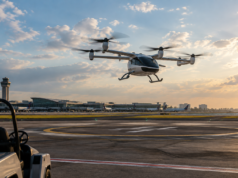
The future of personal transportation has officially arrived. A Livonia couple recently took to the skies in an electric vertical takeoff and landing (eVTOL) aircraft, marking a significant milestone in the democratization of personal air mobility. This historic flight represents not just a thrilling personal experience, but a powerful validation of technology that promises to revolutionize how we travel in urban and suburban environments within the next decade.
A Milestone Moment for eVTOL Adoption
The flight undertaken by the Livonia couple represents a turning point in public perception of electric aircraft technology. For years, eVTOLs existed primarily in the realm of industry demonstrations and closely controlled test flights conducted by aerospace engineers and manufacturers. Now, ordinary citizens are experiencing firsthand the reality of silent, emissions-free vertical flight, dispelling myths about safety, noise, and practicality that have surrounded the industry.
What makes this particular flight newsworthy is its timing and accessibility. As regulatory frameworks continue to mature and manufacturing scales up globally, we’re witnessing the transition from “concept vehicle” to “available experience.” This Livonia flight captures the public imagination precisely because it demonstrates that the technology is no longer theoretical—it’s tangible, and it’s available today.
The couple’s enthusiasm and willingness to pioneer this experience also underscore a crucial demographic insight: early adopters aren’t always tech billionaires or extreme sports enthusiasts. They’re everyday people in Midwest communities who recognize an opportunity to participate in technological progress. This accessibility factor will be essential to eVTOL market growth as the industry matures.
Electric Aviation and Urban Mobility Integration
Electric aircraft represent the convergence of three major technological trends: battery innovation, autonomous systems, and sustainable transportation. eVTOL platforms specifically solve a critical problem in urban planning: how to move people efficiently without expanding ground infrastructure or generating emissions. In congested metropolitan areas, a 15-minute eVTOL flight could replace a 45-minute commute by car or public transit.
The Livonia flight also highlights regional opportunities that extend beyond major metropolitan hubs. Secondary cities and suburban areas are increasingly attractive markets for eVTOL operators because they offer shorter routes, less complex airspace, and strong demand for point-to-point connectivity. A Livonia couple experiencing eVTOL technology suggests that manufacturers and operators are no longer exclusively focused on dense urban centers like New York or Los Angeles.
Moreover, electric propulsion systems operate at significantly lower noise levels than traditional helicopters—a critical advantage for expanding operational zones. This noise reduction opens possibilities for new vertiports in residential and suburban areas that would never tolerate conventional rotorcraft operations. The regulatory environment is beginning to recognize this distinction, with many jurisdictions considering specialized permits for ultra-quiet eVTOL operations.
Regulatory Progress and Safety Validation
The fact that a civilian couple could legally and safely undertake an eVTOL flight speaks to substantial progress in regulatory frameworks. The FAA and equivalent aviation authorities in other nations have developed operational guidelines and certification pathways specifically for electric aircraft. These regulations address pilot licensing, vehicle airworthiness, route approval, and emergency procedures—all critical elements that must be established before public operations become normalized.
Safety validation through accumulated flight hours and operational data is essential for building public confidence. Every successful civilian flight adds to a growing database that demonstrates real-world reliability and performance characteristics. The Livonia flight contributes to this critical safety record, and such experiences will be referenced by regulators and manufacturers as evidence that eVTOL technology meets or exceeds existing aviation safety standards.
Insurance companies and liability frameworks are also evolving in response to increased civilian eVTOL operations. The availability of insurable flights at accessible price points suggests that the market has reached sufficient maturity for commercial underwriting. This financial infrastructure is often overlooked but represents a crucial milestone—without insurance products, widespread adoption remains impossible.
Economic Implications and Market Expansion
The Livonia eVTOL flight occurs within a context of substantial industry investment and manufacturing scale-up. Major aerospace suppliers, venture-backed startups, and established aviation companies have committed billions of dollars to eVTOL development. Civilian experiences like the Livonia flight generate media coverage and word-of-mouth marketing that amplifies investment confidence and consumer awareness simultaneously.
Pricing and operational economics remain critical variables for mass adoption, but the trajectory is encouraging. Early eVTOL demonstration flights cost thousands of dollars per seat. As production volumes increase and manufacturing processes mature, per-seat costs are projected to decline significantly. Within 5-10 years, eVTOL flights could approach price parity with premium rideshare services or short-distance commercial flights for comparable travel times.
Employment opportunities throughout the eVTOL value chain continue expanding. Pilot training, aircraft maintenance, vertiport operations, battery management, charging infrastructure, and dispatch systems all represent growing job categories. Communities like Livonia that embrace eVTOL technology early position themselves to capture talent and economic activity in this emerging sector.
The Broader Vision for Personal Air Mobility
This Livonia couple’s experience embodies the larger vision articulated by industry leaders and transportation planners: a world where vertical flight becomes a routine transportation option for the average person. Personal air mobility encompasses not only eVTOLs designed for multi-passenger commercial operations but also single-seat vehicles, cargo drones, and fully autonomous aircraft platforms under development globally.
Consumer sentiment and early adoption experiences directly influence regulatory approval timelines and policy support at municipal and state levels. When residents can point to a safe, quiet eVTOL flight experience in their own community, they’re more likely to support infrastructure investments like vertiport development or airspace management systems. The Livonia flight, therefore, functions as both an individual milestone and a community validation event.
Challenges remain substantial—battery energy density limitations, weather-dependent operations, pilot training standardization, and public acceptance in congested airspace all require continued innovation and dialogue. However, the Livonia couple’s successful flight demonstrates that these challenges are surmountable. The future isn’t just theoretical anymore; it’s tangible, accessible, and arriving faster than many skeptics predicted just five years ago.
Key Takeaways for the Personal Air Mobility Industry
- Civilian eVTOL operations are transitioning from exclusive test flights to accessible public experiences, validating market readiness and regulatory maturity.
- Secondary markets like Livonia are emerging alongside major metropolitan hubs, suggesting broad geographic expansion potential for eVTOL infrastructure and services.
- Successful civilian flights accumulate critical safety data and public confidence, directly accelerating insurance availability and commercial viability for next-generation air mobility services.
The Livonia couple’s pioneering flight represents a symbolic moment: the day personal air mobility transformed from industry promise into lived reality for ordinary people. As more civilians experience eVTOL technology firsthand, skepticism yields to enthusiasm, and the path toward integrated air transportation systems becomes increasingly clear. The future isn’t just here—it’s airborne, and gaining altitude daily.