HIGHLIGHTS
- Central Florida confirmed as major eVTOL testing hub with real-world operational validation beginning in a populated region.
- Battery technology and electric propulsion systems have reached maturity levels supporting practical passenger-carrying flight operations.
- FAA regulatory frameworks and insurance structures are advancing in parallel with vehicle development to enable safe commercial deployment.
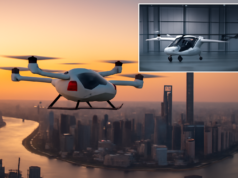
Central Florida is stepping into the future of transportation as electric vertical takeoff and landing (eVTOL) flying cars prepare for testing in the region. This significant development marks another critical milestone in the journey toward making personal air mobility a reality for everyday travelers. The testing initiative represents a substantial commitment to advancing technology that could fundamentally reshape how people commute and travel within and between metropolitan areas.
Central Florida Selected as eVTOL Testing Hub
Central Florida’s selection as a testing ground for flying cars is not coincidental. The region offers ideal conditions for advancing eVTOL operations, including favorable weather patterns, established aviation infrastructure, and diverse urban and suburban environments suitable for comprehensive flight testing. The decision reflects growing confidence in the technology’s maturity and readiness for real-world validation beyond controlled laboratory environments.
The testing program will leverage Central Florida’s existing aerospace expertise and regulatory framework. The region has a long history of aviation innovation, making it a natural choice for pioneering advanced air mobility operations. Local authorities and aviation officials have expressed strong support for the initiative, viewing it as an opportunity to position the region as a leader in next-generation transportation technology.
This development signals that eVTOL manufacturers and operators are moving beyond concept demonstrations and entering practical deployment phases. The shift from controlled testing environments to regional operations indicates substantial progress in vehicle certification, safety protocols, and operational readiness. Central Florida’s involvement suggests the industry is transitioning toward commercial viability.
Technology Advancements Enable Practical Testing
Recent breakthroughs in battery technology, electric propulsion systems, and autonomous flight controls have made practical eVTOL testing increasingly feasible. Modern flying cars are designed to operate safely in populated areas while maintaining the efficiency benefits of electric power. These vehicles represent significant improvements over earlier prototypes, with enhanced reliability, reduced noise pollution, and improved passenger comfort.
Battery performance has been critical to eVTOL viability. Contemporary lithium-ion and emerging solid-state battery technologies now support flight durations that meet practical commuting needs. Charging infrastructure development is keeping pace with vehicle improvements, ensuring that operational testing can proceed without significant logistical constraints. The convergence of these technologies enables realistic deployment scenarios.
Electric propulsion systems have evolved to provide the power density and reliability required for safe commercial operations. Advanced motor designs combined with sophisticated flight control algorithms ensure precise vehicle handling and stability across various flight regimes. These technical achievements address safety concerns that previously limited eVTOL deployment, making public acceptance increasingly likely.
Regulatory Framework Supporting Commercial Deployment
The Federal Aviation Administration (FAA) has been working systematically to establish regulatory pathways for eVTOL operations. Central Florida’s testing program operates within this emerging regulatory framework, providing valuable data to inform ongoing certification standards. The collaboration between vehicle manufacturers, local authorities, and federal regulators demonstrates a coordinated approach to safely integrating flying cars into airspace.
Current regulations focus on ensuring safety while avoiding excessive restrictions that would impede innovation. The testing program in Central Florida will generate essential operational data regarding flight patterns, safety protocols, and integration with existing air traffic. This information will inform future regulatory updates and certification procedures for commercial eVTOL operations nationwide.
Insurance frameworks and liability structures are being developed in parallel with regulatory standards. The insurance industry’s involvement in eVTOL development ensures that risk assessment and financial safeguards align with technical capabilities. This parallel development of commercial infrastructure with vehicle advancement increases the likelihood of successful market introduction.
Economic and Societal Impact of Air Mobility
The successful deployment of flying cars could dramatically reshape transportation economics and urban planning. Reduced commute times, lower operational costs compared to traditional aviation, and decreased reliance on ground infrastructure represent substantial economic benefits. The testing in Central Florida will generate data to quantify these potential advantages and identify implementation challenges requiring regulatory attention.
Urban congestion and traffic-related environmental impacts could diminish significantly with adoption of aerial commuting options. eVTOL vehicles produce zero direct emissions and operate more quietly than helicopter alternatives, addressing environmental and livability concerns. The Central Florida program will help assess the real-world environmental benefits and community acceptance of widespread flying car operations.
Employment opportunities in vehicle manufacturing, maintenance, operations, and infrastructure development will expand substantially as eVTOL services approach commercialization. Central Florida’s aerospace and technology sectors position the region to capture significant economic benefits from this emerging industry. The testing program serves as a foundation for developing skilled workforce capabilities required for long-term commercial success.
Key Takeaways from Central Florida eVTOL Testing Initiative
- Central Florida’s eVTOL testing program represents a critical step toward commercial flying car operations, with comprehensive real-world validation of vehicles and operational procedures in a populated region.
- Advances in battery technology, electric propulsion systems, and autonomous flight controls have matured to support practical testing and deployment of passenger-carrying eVTOL vehicles.
- FAA regulatory frameworks and emerging insurance structures are being developed collaboratively with industry to enable safe commercial operations while maintaining robust safety standards.
The initiation of flying car testing in Central Florida marks a turning point in personal air mobility development. What was once speculative technology is now entering operational validation phases that will determine commercial viability and safety standards. As these vehicles undergo real-world testing, the pathway to mainstream adoption becomes increasingly clear. The next several years will reveal whether eVTOL technology can deliver on its transformative promise, and Central Florida’s testing program will provide crucial evidence to guide that determination.