HIGHLIGHTS
- Polk County’s SunTrax proving ground is now preparing to host eVTOL aircraft and flying car flight tests, marking a major infrastructure milestone for commercial air mobility development.
- Dedicated testing facilities like SunTrax accelerate manufacturer development timelines, reduce costs, and ensure rigorous safety validation before commercial deployment.
- Florida’s expansion as an air mobility innovation hub signals growing industry momentum toward commercialization, with successful tests at SunTrax supporting near-term deployment of flying cars and eVTOL aircraft.
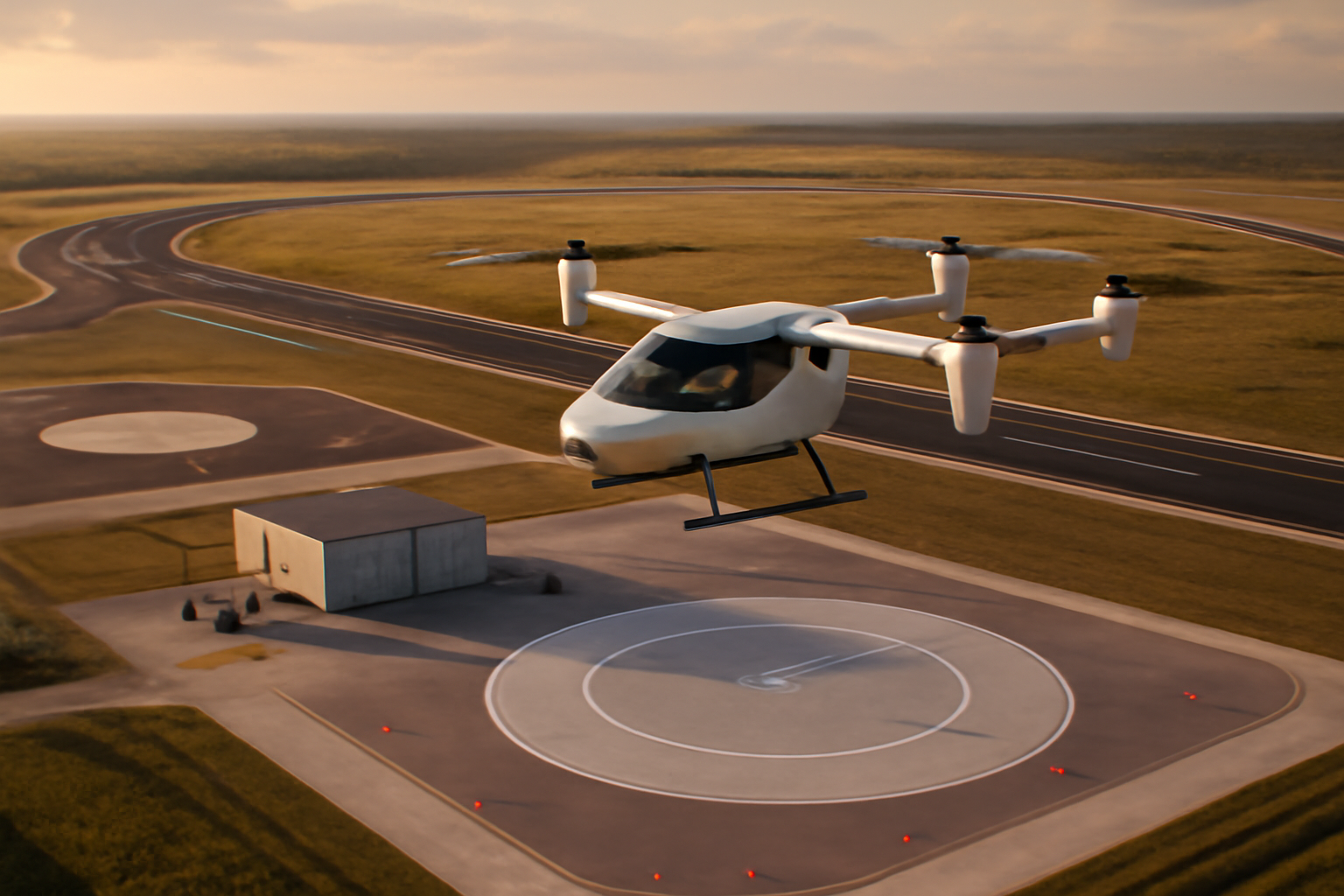
Polk County’s SunTrax proving ground is positioning itself as a critical hub for the future of personal air mobility. The facility, which has long served as a testing ground for automotive innovation, is now preparing to host flight tests for electric vertical takeoff and landing (eVTOL) aircraft and flying cars. This expansion marks a significant milestone in the development of next-generation aviation technologies and demonstrates growing confidence in the near-term viability of urban air mobility solutions.
SunTrax’s Evolution into an Aviation Testing Hub
SunTrax, located in Polk County, Florida, has been instrumental in advancing ground vehicle technology for decades. The facility’s expansion into eVTOL and flying car testing reflects the broader industry trend of preparing infrastructure for the air mobility revolution. By leveraging its existing expertise in controlled testing environments, SunTrax is uniquely positioned to support the complex validation requirements of these emerging aircraft.
The facility’s decision to host flying car tests underscores the importance of dedicated test sites in bringing new aviation technologies to market. Unlike traditional airports or airspace, specialized proving grounds like SunTrax offer controlled conditions, safety protocols, and regulatory oversight necessary for experimental aircraft development. This infrastructure is essential as manufacturers work to meet certification standards and demonstrate reliability.
The transition from automotive to aerospace testing also highlights the convergence of industries. Many of the vehicles being developed for urban air mobility incorporate technologies borrowed from both automotive and aviation sectors, requiring test environments that understand both domains. SunTrax’s existing capabilities and infrastructure make it an ideal location for this interdisciplinary work.
The Role of Testing Facilities in eVTOL Development
Flight testing is one of the most critical phases in bringing eVTOL aircraft to market. These vehicles must undergo rigorous evaluation to ensure safety, performance, and regulatory compliance. Dedicated facilities like SunTrax provide the necessary infrastructure, including airspace access, support equipment, and emergency response capabilities. Without such facilities, manufacturers would face significant delays and increased costs in their development timelines.
The testing process for eVTOL aircraft is considerably more complex than traditional fixed-wing aircraft development. These vehicles must demonstrate reliable vertical takeoff and landing capabilities, stable hover performance, and smooth transitions between flight modes. Additionally, they must prove their ability to operate safely in various environmental conditions, from calm weather to challenging wind scenarios. SunTrax’s commitment to hosting these tests positions the facility as a partner in solving these engineering challenges.
Safety validation is paramount in eVTOL development. Test sites must be equipped to monitor vehicle performance in real-time, collect telemetry data, and provide rapid feedback to development teams. The presence of experienced personnel and modern instrumentation at SunTrax ensures that flying car tests can be conducted with the highest safety standards, protecting both test pilots and the surrounding community.
Implications for Urban Air Mobility Commercialization
The availability of testing facilities like SunTrax significantly accelerates the path to commercial eVTOL operations. Manufacturers can conduct necessary flight validations more efficiently, reducing development timelines and bringing products to market sooner. This acceleration benefits the entire industry, as successful demonstrations build investor confidence and attract additional funding for further innovation.
Florida’s role in advancing air mobility innovation cannot be overstated. With multiple testing facilities, supportive regulatory frameworks, and a growing ecosystem of manufacturers and service providers, the state is becoming a hub for eVTOL development. Polk County, in particular, benefits from SunTrax’s established reputation and infrastructure, positioning the region as an attractive location for aviation companies seeking reliable testing partners.
The expansion of testing capabilities also has economic implications. As manufacturers conduct tests and develop operations at facilities like SunTrax, they create jobs, attract investment, and generate economic activity in the surrounding region. The development of flying car infrastructure and testing operations will likely spark new business opportunities and support the growth of a skilled workforce trained in next-generation aviation technologies.
Future Prospects for Flying Cars and eVTOL Aircraft
The news that SunTrax is preparing to host flying car tests signals growing confidence in the near-term commercialization of personal air mobility. Major manufacturers worldwide are advancing toward certification milestones, and the availability of dedicated testing sites like SunTrax indicates that the industry is moving beyond conceptual development into practical implementation phases. This progression suggests that flying cars and eVTOL aircraft could transition from prototype status to regulated commercial operations within the coming years.
Several factors are driving this momentum forward. Regulatory agencies, including the Federal Aviation Administration (FAA), have established pathways for eVTOL certification. Battery technology continues to improve, offering longer range and better performance. Urban demand for innovative transportation solutions remains strong, with cities and urban planners increasingly interested in air mobility as a solution to congestion. These converging factors create a favorable environment for rapid development and deployment.
The testing conducted at SunTrax will provide invaluable data on real-world performance, operational procedures, and safety protocols. This information will inform regulatory standards, guide manufacturer improvements, and build public confidence in the technology. As successful tests accumulate and data demonstrates the viability and safety of eVTOL operations, the pathway to widespread commercial deployment becomes clearer.
Key Takeaways from SunTrax’s eVTOL Testing Initiative
- SunTrax’s expansion into eVTOL testing represents a critical infrastructure milestone, enabling manufacturers to validate flying cars and advanced aircraft before commercial deployment.
- Dedicated testing facilities accelerate development timelines and reduce costs while ensuring rigorous safety and performance validation for next-generation air mobility vehicles.
- Florida’s growing role as an air mobility innovation hub, anchored by facilities like SunTrax, positions the state to lead the commercialization of eVTOL aircraft and flying cars.
Polk County’s SunTrax facility represents an important step forward in the journey toward mainstream personal air mobility. By providing a dedicated, controlled environment for flying car and eVTOL testing, SunTrax is helping to bridge the gap between innovation and commercialization. As these vehicles undergo rigorous validation at the facility, they move closer to the moment when urban air mobility becomes an everyday reality for passengers and communities worldwide. The significance of this development extends beyond Polk County—it signals global momentum toward a transportation revolution that promises to reshape how people move through cities and regions.