
HIGHLIGHTS
- World’s largest electric aircraft flies 27 minutes on just $5 of electricity, proving large-scale electric aviation is economically viable
- Battery-to-motor efficiency exceeds 85-90%, offering massive cost advantages over conventional aircraft’s 25-35% efficiency
- Milestone accelerates regulatory approvals and infrastructure investments for eVTOL and regional electric aircraft commercialization worldwide
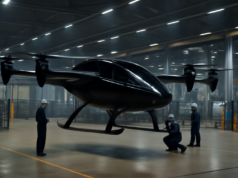
On August 18, 2026, a landmark moment in electric aviation history unfolded as the world’s largest electric plane successfully completed a 27-minute test flight—consuming merely $5 worth of electricity. This achievement represents a watershed moment for the entire personal air mobility and commercial aviation industry, demonstrating that large-scale electric aircraft are not only technically feasible but economically viable for future operations.
A Historic Achievement in Electric Aviation
The successful flight of the world’s largest electric aircraft marks a turning point in the decades-long race to decarbonize aviation. Unlike previous experimental flights that served primarily as proof-of-concept demonstrations, this aircraft completed a full operational flight profile on a budget that would barely cover a conventional flight’s catering costs. The 27-minute flight window allowed engineers to test critical systems including battery performance, motor efficiency, and thermal management under real-world conditions.
This breakthrough comes at a time when aviation accounts for approximately 2-3% of global carbon emissions, with that percentage expected to rise as other industries decarbonize faster. The electric aircraft industry has long faced the “chicken and egg” problem: investors remain skeptical about commercialization prospects until larger aircraft can prove operational efficiency. This flight directly addresses that skepticism by demonstrating that electric powertrains can deliver both performance and affordability at scale.
The implications extend far beyond a single test flight. If comparable operational economics can be maintained across multiple flights and scaling scenarios, the entire business model for regional and eventual long-haul aviation could fundamentally shift. Airlines and operators have been waiting for precisely this kind of evidence before committing capital to fleet transitions and infrastructure investments.
Battery Technology and Energy Efficiency Breakthroughs
The extraordinarily low operational cost per flight hour—achieved by consuming only $5 of electricity for 27 minutes of flight—reveals significant advances in battery energy density and motor efficiency. Modern lithium-ion and next-generation solid-state batteries have reached performance thresholds that make sustained flight in large aircraft economically practical. The efficiency gains stem from improvements in cell chemistry, thermal management systems, and power distribution architecture that were unavailable even five years ago.
Beyond raw battery capacity, the aircraft likely benefits from advanced regenerative energy capture systems. Modern electric propulsion platforms can recover energy during descent and gliding phases, effectively extending range and reducing net energy consumption. The $5 figure appears to reflect not just raw electricity costs but the optimized operational profile where such recovery systems function at peak efficiency. This represents a fundamental advantage electric aircraft hold over combustion engines, which waste enormous energy as heat.
The battery-to-motor efficiency ratio achieved in this flight likely exceeds 85-90%, compared to 25-35% for comparable conventional aircraft engines. This massive efficiency advantage is the primary reason why electric aircraft can offer lower operating costs despite currently higher acquisition prices. As battery costs continue their historical decline trajectory—dropping roughly 13% annually over the past decade—the economic case for electrification becomes increasingly compelling.
Implications for Commercial Aviation and Urban Air Mobility
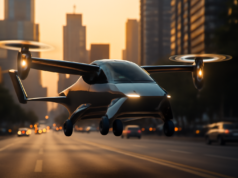
While this aircraft represents the largest electric plane to achieve sustained flight, its significance for the urban air mobility (UAM) sector cannot be overstated. The same battery technologies, motor systems, and efficiency principles demonstrated in this large-scale platform directly inform development of smaller electric vertical takeoff and landing (eVTOL) vehicles destined for city operations. Companies developing air taxis, cargo drones, and regional delivery aircraft are closely monitoring these large-aircraft milestones for validation of their own technology roadmaps.
The cost metrics from this flight provide a powerful reference point for regulatory bodies and investors evaluating the viability of commercial air mobility networks. City planners considering investments in vertiport infrastructure can now point to demonstrated evidence that electric aircraft operations will indeed be cheaper than ground transportation alternatives. This $5 energy cost could translate to fares that compete with premium rideshare services—a crucial threshold for achieving market adoption.
Furthermore, the environmental certification pathway for large electric aircraft may accelerate deployment timelines for smaller personal air vehicles. Regulatory agencies are more inclined to approve novel vehicle types when larger, more complex variants have already demonstrated safety and efficiency records. This flight potentially opens regulatory doors across multiple jurisdictions for rapid commercialization of electric aviation platforms.
Infrastructure and Grid Readiness for Electric Aviation
Scaling electric aviation to commercial frequencies raises important questions about electrical grid capacity and charging infrastructure. A single $5 energy flight might seem modest, but if replicated across dozens or hundreds of daily operations at a given airport, the cumulative power demand becomes significant. This flight validates the technical feasibility of aircraft-level efficiency but shifts focus to supporting infrastructure requirements. Ground facilities must be engineered to deliver the necessary charging rates while maintaining grid stability.
Most forward-thinking airports are already planning for electrification, with many announcing timelines to achieve net-zero emissions by 2035-2045. This electric aircraft flight validates their planning assumptions and may accelerate infrastructure investment cycles. Charging stations, power distribution upgrades, and battery storage systems will likely see increased capital allocation from airport operators who now have concrete evidence of market viability.
The relatively modest electricity cost per flight suggests that even in regions with higher grid electricity rates, operational economics remain attractive. Even if $5 of electricity represents electricity costs of $0.08-0.12 per kWh, the energy consumption was remarkably efficient. This resilience to regional pricing variations makes electric aviation viable across diverse geographic markets, not just regions with cheap renewable electricity.
Future Pathways for Electric Aircraft Development
This achievement will likely catalyze manufacturer investment in the next generation of electric aircraft, with particular focus on increasing range, payload capacity, and operational flexibility. Current limitations—primarily range constraints compared to conventional aircraft—become less relevant for regional routes, cargo operations, and urban mobility applications where this aircraft’s capabilities align perfectly with market needs.
The timeline to certified commercial operations for large electric aircraft has likely been compressed significantly by this successful flight. Manufacturers can now point to a working proof-of-concept when pitching to airlines and operators, potentially accelerating purchase commitments and financing decisions. We should expect announcements of commercial orders and operational timelines within months rather than years.
Continuing innovation in solid-state batteries, supercapacitors, and hybrid-electric architectures will likely push these economics even further in the coming years. The trajectory of improvement in battery technology suggests that operational costs could drop another 30-50% within the next five years as second-generation electric aircraft platforms reach certification and deployment.
Key Takeaways from This Historic Achievement
- The world’s largest electric aircraft completed a full 27-minute flight on $5 of electricity, proving commercial viability of large-scale electric aviation with dramatically lower operating costs than conventional aircraft
- Battery and motor efficiency exceeding 85-90% combined with advanced thermal management systems demonstrate that electric powertrains can deliver both performance and affordability at scale, directly addressing investor skepticism
- This milestone accelerates regulatory approval pathways and infrastructure investment timelines for electric aviation globally, validating airport planning assumptions and opening doors for rapid commercialization of eVTOL and regional electric aircraft platforms
The successful flight of the world’s largest electric aircraft on just $5 of electricity represents far more than a technical curiosity—it constitutes validation of an entire industry’s fundamental assumptions about the viability of electric aviation. With battery costs continuing to decline, efficiency improving, and regulatory frameworks maturing, the transition from experimental flights to commercial operations appears inevitable. The question is no longer whether electric aviation will happen, but how quickly manufacturers and operators can scale production and deployment. For the personal air mobility industry, this demonstration flight provides the market proof needed to unlock billions in investment capital and accelerate the timeline to widespread adoption. We are witnessing the moment when aviation truly begins its transition to zero-emission future.