HIGHLIGHTS
- SkyFly unveils Longbow Hybrid Mission Platform at EAA AirVenture Oshkosh, combining hybrid propulsion with modular design for extended-range aerial operations beyond urban air taxi services.
- Hybrid architecture enables switchable electric-to-combustion propulsion, extending range while maintaining sustainability benefits and providing backup power for enhanced safety redundancy.
- Modular platform supports diverse mission profiles including cargo delivery, emergency response, and industrial applications, maximizing asset utilization from a single airframe.
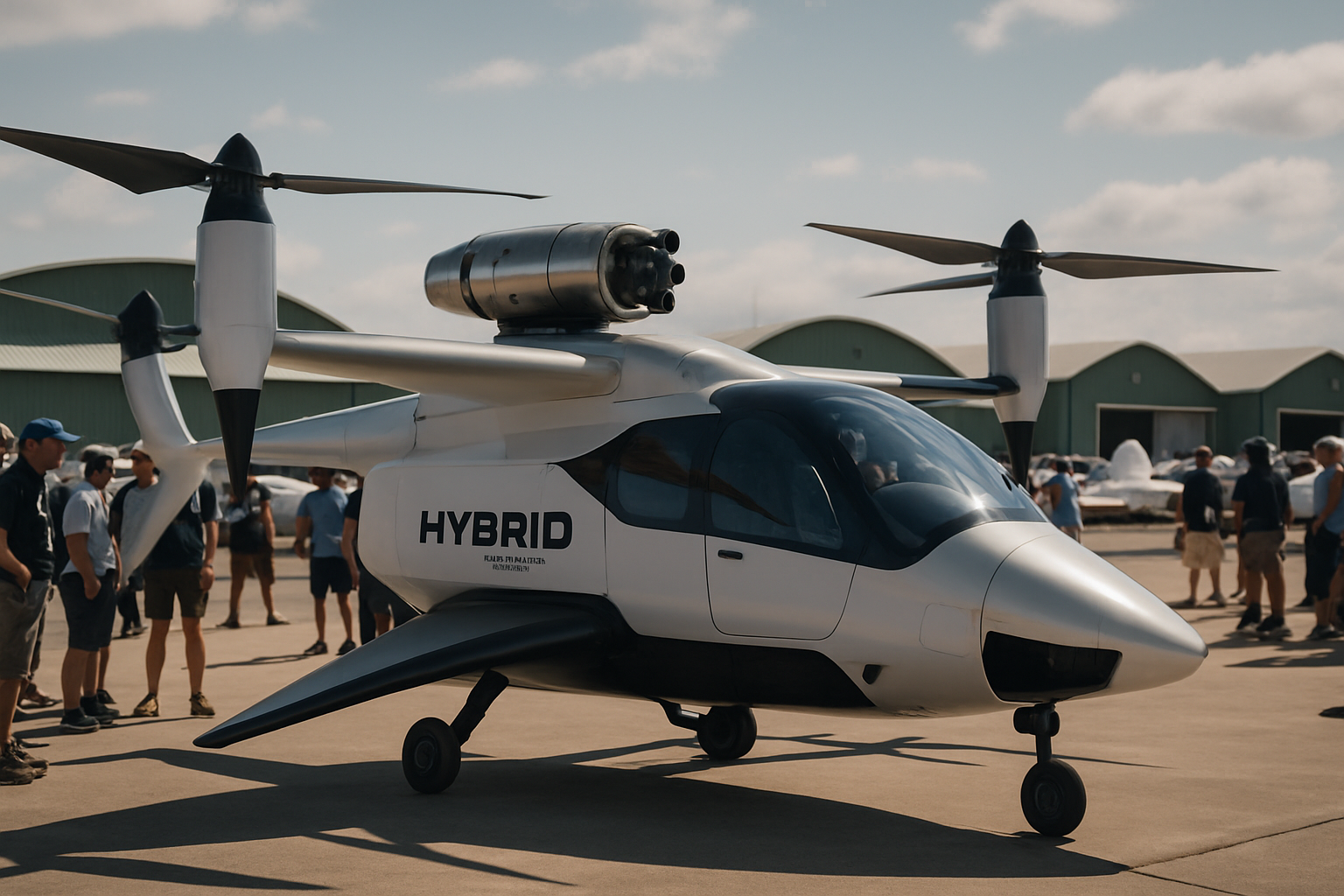
SkyFly has officially unveiled its Longbow Hybrid Mission Platform at EAA AirVenture Oshkosh, marking a significant advancement in electric vertical takeoff and landing (eVTOL) technology. The platform combines innovative hybrid propulsion systems with modular design principles, positioning SkyFly as a key player in the rapidly evolving personal air mobility ecosystem. This introduction showcases the company’s commitment to delivering practical, efficient solutions for diverse aerial operations beyond traditional urban air taxi services.
The Longbow Platform: Engineering Innovation Meets Practical Design
The Longbow Hybrid Mission Platform represents a strategic departure from conventional eVTOL designs by incorporating hybrid propulsion technology that extends operational range while maintaining electric efficiency benefits. The platform’s architecture allows operators to switch between purely electric mode for short-range urban flights and hybrid mode for longer-distance missions, providing unparalleled operational flexibility. This hybrid approach addresses one of the most significant barriers to eVTOL adoption: the range limitations that have constrained practical real-world applications.
SkyFly’s engineering team designed the Longbow with modularity at its core, enabling operators to swap mission-specific payloads and configurations without extensive aircraft reconfiguration. The platform’s airframe incorporates advanced materials and aerodynamic optimizations that reduce power consumption while increasing structural efficiency. This thoughtful design philosophy demonstrates SkyFly’s understanding that future air mobility systems must be versatile enough to serve multiple mission profiles beyond passenger transport.
The unveiling at Oshkosh provides industry professionals with hands-on access to the platform’s innovations, allowing potential operators, regulators, and investors to directly evaluate the Longbow’s technical capabilities. This transparency strengthens SkyFly’s position within the aviation community and builds confidence in the platform’s readiness for near-term deployment.
Hybrid Propulsion: Extending Range Without Sacrificing Sustainability
The Longbow’s hybrid propulsion system represents a pragmatic middle ground between pure electric vehicles limited by battery technology and conventional fuel-burning aircraft. By deploying a lightweight internal combustion engine that activates only when battery reserves reach a predetermined threshold, the platform achieves significantly extended range while maintaining the environmental benefits of electric propulsion during the majority of flight operations. This approach acknowledges current battery limitations while advancing toward future all-electric capability as energy storage technology improves.
The hybrid architecture particularly benefits cargo and specialized mission operators who require range beyond what current pure-electric eVTOLs can deliver. SkyFly’s engineering allows operators to choose between mission duration and environmental impact, enabling a gradual transition toward fully electric operations as battery density improvements make all-electric long-range flights economically viable. This flexibility positions the Longbow as a bridge technology that serves real operational needs while the broader industry matures.
Fuel efficiency and reduced emissions remain central to the Longbow’s design philosophy, even with hybrid propulsion. The platform’s lightweight construction and optimized aerodynamics minimize overall energy consumption, whether drawing from batteries or internal power sources. This commitment to efficiency ensures that Longbow operators benefit from lower operating costs and reduced environmental impact compared to traditional helicopter and fixed-wing alternatives for equivalent missions.
Market Positioning and Operational Versatility
SkyFly’s decision to debut the Longbow at EAA AirVenture Oshkosh—North America’s largest aviation gathering—signals the company’s confidence in the platform’s market relevance and appeal to diverse operator categories. The Oshkosh venue attracts aviation enthusiasts, professional operators, and industry decision-makers who represent key customer segments for innovative air mobility solutions. By showcasing the Longbow alongside traditional general aviation aircraft, SkyFly positions the platform as a natural evolution of aviation technology rather than a disruptive outlier.
The Longbow’s modular design enables deployment across multiple mission profiles: urban air mobility, cargo delivery, emergency medical services, search and rescue operations, and specialized industrial applications. This versatility creates numerous revenue pathways and reduces the platform’s dependence on any single market segment. Operators can deploy identical airframes configured differently for different missions, maximizing asset utilization and return on investment.
SkyFly’s platform approach also creates an ecosystem opportunity, where third-party developers can design and integrate mission-specific modules, sensors, and software solutions. This extensibility has proven successful in automotive and computing industries, and its application to eVTOL platforms could accelerate innovation and market adoption. The Longbow’s modular architecture essentially transforms SkyFly’s offering from a single aircraft into a technology platform enabling diverse applications.
Regulatory Pathway and Industry Impact
The Longbow’s introduction occurs at a critical juncture for eVTOL regulatory development, with aviation authorities worldwide establishing certification frameworks for these novel aircraft. SkyFly’s transparent engagement with the aviation community through events like Oshkosh demonstrates the company’s commitment to working collaboratively with regulators to establish practical certification standards. This proactive approach helps ensure that the Longbow can transition from demonstration to operational certification with minimal delays.
The platform’s hybrid propulsion system may actually simplify certain aspects of regulatory compliance by providing backup power systems that enhance safety characteristics. Aviation regulators have increasingly focused on single-point-failure scenarios, and the Longbow’s hybrid architecture provides inherent redundancy. The internal combustion engine serves as a backup power source should primary battery systems experience degradation, offering an additional safety margin that could accelerate certification approval.
SkyFly’s visibility at Oshkosh also signals to potential operators and investors that the company has achieved a development milestone worthy of public demonstration. This confidence building is crucial for the eVTOL industry, which has experienced setbacks and delayed timelines that have created skepticism among cautious adopters. Demonstrating a fully integrated platform with operational readiness helps restore faith in the industry’s technical viability and near-term deployment potential.
Key Takeaways: Longbow’s Position in Personal Air Mobility
- SkyFly’s Longbow Hybrid Mission Platform extends operational range beyond pure-electric eVTOLs by incorporating switchable hybrid propulsion that activates only when needed, enabling longer-distance missions while maintaining electric efficiency benefits.
- The platform’s modular design enables reconfiguration for diverse missions—urban mobility, cargo delivery, emergency response, and industrial applications—from a single airframe, maximizing operator asset utilization and reducing deployment costs.
- The Oshkosh introduction demonstrates SkyFly’s technical maturity and regulatory confidence, positioning the Longbow as a bridge technology that addresses current battery limitations while advancing toward the all-electric future.
SkyFly’s Longbow Hybrid Mission Platform represents a meaningful advancement in eVTOL technology that addresses practical operational constraints while maintaining the sustainability promise of electric aviation. By combining hybrid propulsion flexibility with modular mission architecture, SkyFly has created a platform capable of serving diverse market segments and use cases. The Oshkosh unveiling signals the company’s confidence in the technology’s readiness and commitment to transparent industry engagement. As the personal air mobility sector matures, platforms like the Longbow that balance current operational needs with long-term sustainability goals will increasingly define which companies successfully transition from promising startups to established operators. The coming months will reveal whether regulatory authorities embrace the hybrid approach and whether the market’s diverse operator categories adopt the Longbow as their preferred platform for expanded aerial operations.