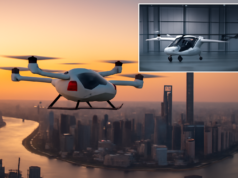

The personal air mobility sector is experiencing a significant milestone as Orlando International Airport announces plans to add a dedicated flying taxi landing pad near its train station. This development represents a crucial step toward integrating electric vertical takeoff and landing (eVTOL) aircraft into major transportation hubs across the United States. The project demonstrates how airports are adapting their infrastructure to accommodate the emerging air taxi industry and create seamless multimodal transportation experiences for travelers.
Orlando International Airport Embraces eVTOL Innovation
Orlando International Airport (MCO) has long been a pioneer in adopting new transportation technologies. The addition of an eVTOL landing pad near the train station marks a significant commitment to sustainable urban mobility solutions. This strategic placement near the airport’s ground transportation hub will enable travelers to access flying taxis as an alternative to traditional ground-based transit options.
The decision to position the landing pad adjacent to the train station reflects comprehensive urban planning that prioritizes connectivity and convenience. Passengers arriving at or departing from the airport will have immediate access to multiple transportation modes, reducing congestion on traditional roadways and promoting the adoption of clean energy alternatives. This integrated approach aligns with Florida’s broader sustainability goals and positions Orlando as a leader in the eVTOL market.
Airport authorities have been working closely with eVTOL operators and city planners to ensure the landing pad meets all safety and operational requirements. The facility will accommodate various aircraft designs and sizes, providing flexibility for multiple operators to serve the Orlando market. This infrastructure investment sends a strong signal that major transportation hubs are ready for commercial eVTOL services.
Infrastructure Requirements for eVTOL Operations
- Designated landing pad with appropriate safety buffers and visual markers
- Ground support equipment for passenger loading and baggage handling
- Weather monitoring systems for safe flight operations
- Integration with airport security and passenger screening procedures
- Power infrastructure for aircraft charging stations
- Emergency response protocols and medical facilities
The Rise of Air Taxi Services in Urban Transportation
Electric vertical takeoff and landing aircraft are poised to revolutionize urban transportation networks. Unlike traditional helicopters, eVTOLs operate with minimal noise and zero direct emissions, making them suitable for integration into urban environments. The technology addresses critical challenges in metropolitan areas, including traffic congestion, air quality concerns, and the need for rapid point-to-point transportation.
Air taxi services offer significant time savings for travelers. A flight from Orlando Airport to downtown areas or nearby attractions could reduce journey times from 45-60 minutes by car to just 10-15 minutes by air. This dramatic improvement in transportation efficiency appeals to business travelers, tourists, and commuters seeking faster alternatives to ground-based transit. The cost-benefit analysis increasingly favors eVTOL adoption as aircraft manufacturing scales and operational costs decrease.
Several companies are actively developing eVTOL aircraft specifically designed for commercial air taxi operations. These manufacturers are pursuing Federal Aviation Administration (FAA) certification and conducting extensive testing to ensure safety and reliability. The Florida market represents an attractive opportunity for air taxi operators due to Orlando’s role as a major tourism destination and its favorable climate conditions for year-round operations.
Market Opportunities and Growth Projections
- Tourism transportation connecting airport to hotels and attractions
- Business travel between Orlando and Tampa Bay region
- Emergency medical transport services
- Corporate shuttle services for local companies
- Experiential tourism and recreational flights
- Logistics and cargo delivery applications
Regulatory Framework Supporting eVTOL Development
The Federal Aviation Administration has established a regulatory pathway for commercial eVTOL operations under Special Federal Airworthiness Certification (SFAC). This streamlined approval process enables manufacturers to demonstrate safety compliance and begin limited commercial operations while undergoing full certification. Orlando’s eVTOL landing pad project benefits from this regulatory clarity, allowing airport authorities to proceed with confidence in their infrastructure investments.
State and local regulations in Florida have proven supportive of eVTOL innovation. The Florida Department of Transportation and city governments have recognized the potential economic benefits and sustainability advantages of personal air mobility technologies. Regulatory coordination between federal, state, and local authorities is essential for successful eVTOL integration into existing transportation networks.
Safety standards for eVTOL operations are comprehensive and rigorous. Aircraft must demonstrate compliance with airworthiness standards, pilots require appropriate certifications, and operational procedures must meet or exceed those established for traditional aviation. The landing pad near Orlando Airport will operate under strict protocols to ensure passenger safety and minimize environmental impact on surrounding communities.
Key Regulatory Milestones
- FAA Special Federal Airworthiness Certification pathway established
- Remote pilot certification standards developed and implemented
- Airspace integration procedures for low-altitude operations
- Noise and emissions standards for urban operations
- Insurance and liability frameworks for air taxi services
- Ground infrastructure safety certifications
Multimodal Transportation Integration at Major Hubs
The placement of the eVTOL landing pad near Orlando Airport’s train station exemplifies the broader trend of integrating multiple transportation modes at major transportation hubs. This multimodal approach enhances overall transportation efficiency and provides travelers with seamless connectivity across different transit systems. Passengers can arrive via airplane, train, or automobile, and then select the most convenient option for their final destination.
Major metropolitan areas worldwide are developing similar multimodal transportation strategies. Singapore, Los Angeles, Paris, and other cities are planning eVTOL infrastructure as part of comprehensive urban mobility solutions. Orlando’s project contributes to this global movement toward sustainable, efficient, and connected transportation networks. The success of integrated transportation hubs will likely influence similar projects throughout Florida and beyond.
Investment in eVTOL infrastructure generates economic benefits beyond the immediate transportation services. Construction of landing pads, maintenance facilities, and support infrastructure creates jobs and stimulates local economies. As the air taxi market matures, it will attract technology companies, aircraft manufacturers, and service providers to the Orlando region, establishing the city as a hub for personal air mobility innovation.
Expected Economic and Environmental Benefits
- Reduced ground transportation congestion and emissions
- Improved air quality in urban areas through zero-emission operations
- Job creation in aircraft maintenance and operations
- Enhanced tourism competitiveness for Orlando destination
- Shortened travel times reducing overall transportation costs
- Attraction of advanced technology companies and research institutions
The addition of an eVTOL landing pad near Orlando International Airport’s train station represents a pivotal moment in the commercialization of personal air mobility. This infrastructure investment demonstrates that major transportation hubs are preparing for a future in which electric vertical takeoff and landing aircraft play an integral role in urban transportation networks. As regulatory frameworks mature, aircraft manufacturers achieve certification, and operators establish commercial routes, eVTOL services will become increasingly accessible to travelers seeking fast, clean, and convenient transportation options. Orlando’s commitment to this emerging technology positions the city as a leader in sustainable mobility innovation and sets the stage for the broader adoption of air taxi services throughout North America.