HIGHLIGHTS
- PHIL technology integrates real hardware components into real-time digital simulations, compressing eVTOL development timelines from years to months while validating safety without expensive flight testing.
- Regulatory bodies including EASA and FAA now accept PHIL-validated simulation results as formal airworthiness evidence, enabling faster certification pathways for companies adopting digital engineering practices.
- By catching design issues during simulation rather than flight testing, eVTOL programs reduce development costs by millions while enabling startups to compete with well-funded incumbents through more efficient innovation.
The eVTOL industry is experiencing a fundamental shift in how aircraft are designed, tested, and validated. Power Hardware-in-the-Loop (PHIL) simulation technology has emerged as a critical breakthrough, allowing aerospace engineers to conduct real-time testing of complex electrical and propulsion systems without building physical prototypes for every iteration. This advancement is accelerating the path from concept to certification while significantly reducing development costs and technical risks.
Understanding Power Hardware-in-the-Loop Technology
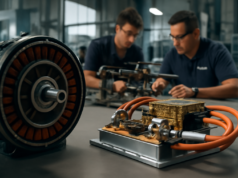
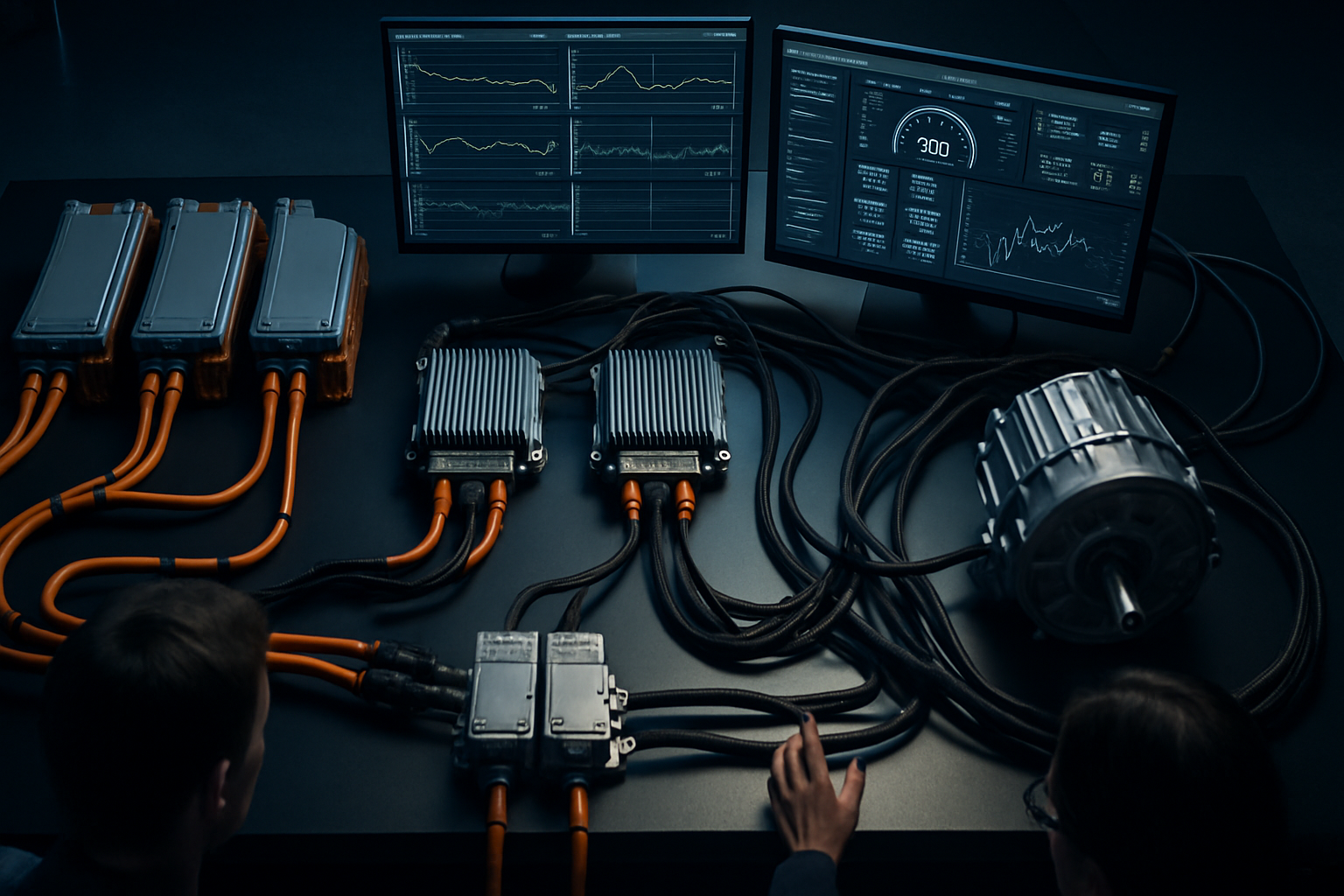
Power Hardware-in-the-Loop (PHIL) is an advanced simulation methodology that bridges the gap between purely digital modeling and physical testing. Rather than running complete simulations in software, PHIL integrates actual hardware components—such as battery packs, power electronics, and motor controllers—into a real-time digital environment. This hybrid approach allows engineers to test how real hardware responds to simulated conditions that would be impossible, dangerous, or prohibitively expensive to replicate in flight tests.
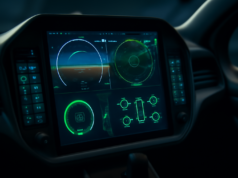
In the context of eVTOL development, PHIL systems can simulate everything from complex electrical faults and system interactions to extreme environmental conditions and failure scenarios. A motor controller can be physically connected to the simulation environment, allowing it to receive realistic signals while operating in a controlled lab setting. The simulation system responds in real-time to the hardware’s behavior, creating a closed-loop testing environment that mirrors actual flight conditions with remarkable accuracy.
The technology represents a paradigm shift from traditional testing methodologies. Instead of waiting months for specialized test facilities or conducting expensive flight trials, development teams can rapidly iterate on designs, test multiple scenarios, and validate system performance in weeks rather than years. This speed-to-insight capability is particularly valuable in the competitive eVTOL market, where first-mover advantage and rapid iteration cycles are crucial to success.
Accelerating eVTOL Development Timelines
One of the most significant impacts of PHIL technology is its ability to compress development schedules. Traditional eVTOL programs typically require multiple phases of testing: bench testing, bench-to-flight correlation, flight testing, and certification validation. Each phase can take months or years, and surprises discovered late in development can force costly redesigns. PHIL technology allows teams to discover and address issues much earlier in the process.
By validating propulsion systems, battery management systems, and flight control algorithms in real-time simulations before hardware is fully integrated, teams can identify compatibility issues, performance bottlenecks, and safety concerns during the design phase. This early detection prevents costly surprises during expensive flight test campaigns. Engineers can validate multiple design iterations in parallel, testing different motor configurations, battery chemistries, or control strategies simultaneously—something that would be impossible with sequential physical testing.
Companies pursuing certification under emerging eVTOL regulations are finding that PHIL testing data provides compelling evidence of system safety and reliability. Certification authorities increasingly recognize PHIL simulation results as valid evidence of airworthiness when the simulation fidelity is properly validated. This regulatory acceptance further accelerates development by reducing the need for extensive flight testing to prove compliance with safety requirements.
Cost Reduction and Resource Optimization
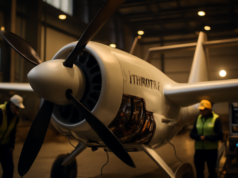
The financial impact of PHIL adoption is substantial. Flight testing for advanced aircraft is extraordinarily expensive—test pilots, chase aircraft, instrumentation, airspace access, and data analysis can cost hundreds of thousands of dollars per flight hour. Prototype aircraft development, testing, and iteration represents one of the largest budget items in any eVTOL program. PHIL technology significantly reduces reliance on expensive physical prototypes and flight test hours.
A single PHIL test facility can support multiple simultaneous testing campaigns, allowing teams to maximize asset utilization and reduce per-program costs. The same hardware components can be tested in different simulated scenarios by simply changing the software environment. This flexibility means development budgets can be stretched further, enabling smaller companies and startups to compete with well-funded incumbents by working smarter rather than spending more.
Beyond direct testing costs, PHIL technology reduces the overhead associated with managing complex flight test programs. There are no weather delays, no regulatory hurdles for airspace access, and no pilot scheduling constraints. Testing can occur 24/7 in a controlled environment, dramatically increasing the number of test points that can be completed in a given timeframe. For resource-constrained organizations, this efficiency gain is transformative.
Digital Engineering as a Competitive Advantage
The adoption of PHIL and advanced digital engineering methodologies is becoming a key competitive differentiator in the eVTOL industry. Companies that master real-time simulation technologies can bring products to market faster, with higher confidence in safety and performance. This advantage extends beyond speed—it also enables more ambitious technical innovation, as teams can safely explore novel architectures and control strategies in simulation before committing resources to physical implementation.
The integration of PHIL with other digital engineering tools—such as digital twins, AI-powered design optimization, and predictive analytics—creates a comprehensive digital ecosystem that guides development from initial concept through certification and beyond. This holistic approach to digital engineering allows teams to make data-driven decisions at every stage, reducing guesswork and improving outcomes.
As the eVTOL market matures and competition intensifies, the efficiency gains from advanced digital engineering will increasingly separate industry leaders from followers. Early adopters are establishing development processes, expertise, and institutional knowledge that will give them lasting advantages. For investors and customers evaluating eVTOL companies, the sophistication of their digital engineering capabilities should be an important factor in assessing execution risk and time-to-market credibility.
Real-Time Simulation in Aerospace Validation
The aerospace industry has been leveraging real-time simulation for decades in domains like avionics and flight control systems, but the application of PHIL specifically to propulsion and power system validation is relatively new. This represents the maturation of digital engineering practices from established fields into the emerging eVTOL sector. As certification standards for electric vertical takeoff and landing aircraft continue to develop, real-time simulation methods are being formally incorporated into regulatory frameworks.
Regulatory bodies such as EASA and the FAA are increasingly accepting PHIL-based testing and simulation results as valid evidence of compliance with airworthiness standards. This regulatory alignment creates a virtuous cycle: as more companies adopt PHIL methods, more test data is generated, confidence in the methodology increases, and regulatory acceptance strengthens. For newer eVTOL programs, this means PHIL-validated systems can progress toward certification faster than systems relying solely on physical testing.
The success of PHIL in eVTOL development is encouraging further innovation in real-time aerospace simulation. New software platforms, more sophisticated modeling capabilities, and improved hardware integration techniques are continuously expanding what can be validated in simulation. The trajectory is clear: real-time simulation will become standard practice for all eVTOL propulsion and power system development, similar to how it is already standard in aviation for avionics and flight control validation.
Key Takeaways from PHIL Advancement
- PHIL technology enables real-time testing of actual hardware components in simulated environments, accelerating eVTOL development cycles from years to months while maintaining safety validation rigor.
- By identifying design issues during simulation rather than flight testing, companies reduce costs by millions of dollars and avoid expensive late-stage redesigns.
- Regulatory acceptance of PHIL-validated testing data is reshaping eVTOL certification pathways, allowing faster airworthiness approval for companies that master digital engineering practices.
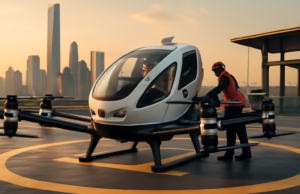
The adoption of Power Hardware-in-the-Loop simulation represents a watershed moment for the eVTOL industry. By combining real hardware with digital simulation in real-time environments, aerospace engineers are solving the fundamental challenge of how to safely and efficiently develop revolutionary new aircraft. Companies that embrace these digital engineering methodologies are positioning themselves to lead the transition to urban air mobility, while those that rely on traditional development approaches will find themselves at a significant competitive disadvantage. As the technology matures and regulatory acceptance solidifies, PHIL-based development will become the industry standard for validating safe, reliable, and certified electric vertical takeoff and landing systems.