HIGHLIGHTS
- UAE’s General Civil Aviation Authority (GCAA) is developing progressive regulations for eVTOL operations while maintaining rigorous safety standards through international aviation body coordination.
- Strategic infrastructure investments in vertiports, charging stations, and air traffic management systems are creating the backbone for wide-scale eVTOL deployment across the Emirates.
- Early adoption of air taxi and autonomous aircraft services is expected to generate substantial revenue while creating high-skilled jobs in aerospace engineering, software development, and operations management.
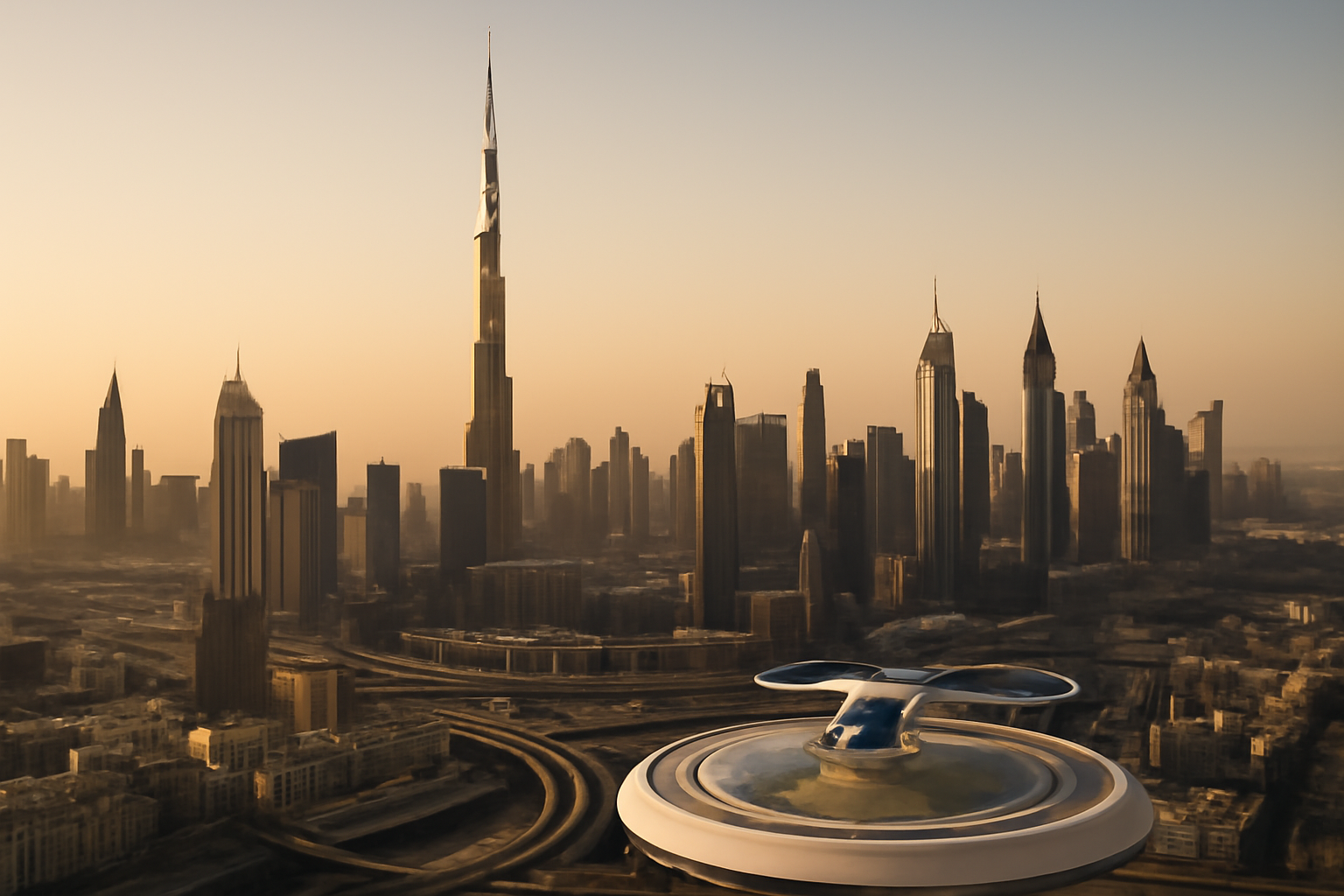
The United Arab Emirates is accelerating its transformation toward smart, sustainable mobility solutions, marking a significant milestone in the global race to establish advanced urban air transportation networks. As one of the world’s most forward-thinking nations in aviation innovation, the UAE is strategically positioning itself at the forefront of electric vertical takeoff and landing (eVTOL) technology and autonomous aerospace development, reshaping how citizens and visitors will move through and between cities in the coming decades.
UAE’s Vision for Smart Urban Air Mobility
The UAE’s commitment to smart mobility extends beyond traditional ground transportation, encompassing a comprehensive ecosystem of airborne solutions designed to reduce congestion, lower emissions, and enhance quality of life. Government initiatives and private sector partnerships are working in concert to establish regulatory frameworks, testing zones, and infrastructure that will support the rapid deployment of autonomous aircraft and eVTOL vehicles throughout the Emirates and beyond.
Dubai and Abu Dhabi have emerged as innovation hubs, attracting international aerospace companies and startups eager to pilot next-generation mobility solutions. These emirates have demonstrated their willingness to embrace experimental technologies through regulatory sandboxes and strategic investments in research and development, creating an environment where eVTOL manufacturers and operators can test and refine their platforms in real-world conditions.
The strategic focus on sustainability reflects the UAE’s broader environmental goals and its vision to become a global leader in green technology adoption. By prioritizing electric and autonomous mobility options, the nation aims to reduce its carbon footprint while maintaining its reputation as a cutting-edge destination for business, tourism, and technological innovation.
Regulatory Framework and Infrastructure Development
Establishing robust regulatory infrastructure is essential to the success of any eVTOL ecosystem, and the UAE has taken decisive steps to create clear guidelines for aircraft certification, pilot training, airspace management, and operational safety. These regulatory measures ensure that new mobility technologies can be deployed responsibly while protecting public safety and maintaining the integrity of existing air traffic systems.
The UAE’s General Civil Aviation Authority (GCAA) has been instrumental in developing policies that facilitate innovation without compromising safety standards. By working closely with international aviation bodies and consulting with industry experts, the GCAA has crafted regulations that are both progressive and pragmatic, allowing companies to advance their technologies while adhering to rigorous safety protocols.
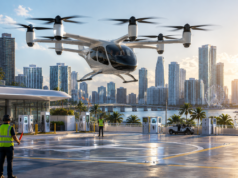
Infrastructure investments are equally critical to the UAE’s smart mobility agenda. The development of vertiports, charging stations, and air traffic management systems will create the physical and digital backbone needed to support widespread eVTOL operations. These infrastructure projects are being designed with future scalability in mind, ensuring that early investments will support exponential growth as the market matures.
Economic Impact and Industry Growth
The UAE’s push toward smart, sustainable mobility is expected to generate substantial economic benefits, creating high-skilled jobs in aerospace engineering, software development, and operations management. As the nation establishes itself as a regional and global center for eVTOL innovation, it will attract talent and investment from around the world, further accelerating technological advancement and market growth.
The private sector response has been overwhelmingly positive, with numerous international eVTOL developers and air taxi operators expressing strong interest in the UAE market. Companies are eager to establish regional headquarters, testing facilities, and manufacturing operations in the Emirates, drawn by the nation’s regulatory clarity, financial incentives, and strategic geographic position connecting Europe, Asia, and Africa.
Early adoption of eVTOL services and autonomous air taxi operations is expected to generate revenue streams not only from passenger operations but also from cargo delivery, emergency services, and specialized industrial applications. The UAE’s position as a logistics and tourism hub amplifies these economic opportunities, creating multiple pathways to profitability for operators and suppliers.
Sustainability and Environmental Goals
Electric propulsion and autonomous flight control systems offer transformative environmental benefits compared to conventional ground and air transportation. By transitioning to eVTOL vehicles powered by renewable energy, the UAE can dramatically reduce transportation-related emissions while improving air quality in urban areas and contributing to broader climate change mitigation efforts.
The UAE’s commitment to sustainability extends beyond vehicle electrification to encompass the entire lifecycle of mobility infrastructure. Vertiports are being designed with green building standards, renewable energy integration, and minimal environmental disruption, ensuring that the deployment of smart mobility technology advances rather than undermines environmental conservation goals.
Integration of eVTOL services with smart city infrastructure enables real-time optimization of urban air mobility networks, reducing energy consumption and environmental impact. By leveraging artificial intelligence and predictive analytics, cities can manage air traffic flows more efficiently, minimize wait times, and maximize the environmental benefits of switching from ground-based to air-based transportation for certain routes and applications.
Key Strategic Takeaways
- The UAE is establishing itself as a regional and global leader in eVTOL technology and smart urban air mobility through clear regulatory frameworks and strategic infrastructure investments.
- Private sector partnerships and government incentives are attracting international aerospace companies to establish operations in the Emirates, accelerating innovation and economic growth.
- Electrification and autonomous operation of air mobility systems will significantly reduce transportation emissions while creating high-skilled employment opportunities and new revenue streams for the UAE economy.
The UAE’s acceleration toward smart, sustainable mobility represents a pivotal moment in global transportation evolution. By combining visionary leadership, pragmatic regulation, and strategic investment, the nation is not merely adopting emerging technologies—it is actively shaping the future of urban air transportation. As eVTOL services mature and autonomous aircraft become commonplace, the UAE’s early commitment to building the necessary infrastructure and regulatory frameworks will position it as the world’s most advanced smart mobility ecosystem, attracting operators, investors, and innovators from across the globe.